


Ryman Healthcare (NZSE:RYM) has been removed from the FTSE All-World Index (USD), an index change that can prompt selling by passive funds and may alter how large investors view the stock.
Set against that index exit, Ryman Healthcare’s recent trading tells a mixed story, with the share price at NZ$2.05 after a 1-day share price return of 3.27% and 7-day share price return of 5.67%, yet a year-to-date share price return down 30.74% and a 5-year total shareholder return down 83.66%. This points to short-term momentum building from a much weaker longer-term base as investors reassess both risk and potential after the index change.
Scan how Ryman Healthcare compares with other potential rebound stories using our hand picked list of 174 high quality undervalued stocks.
After a sharp bounce from a heavily beaten up base and a forced wave of index selling, the real question on Ryman Healthcare now is whether most of the upside has already passed or still lies ahead as the valuation resets.
Most Popular Narrative: 32% Undervalued
Ryman Healthcare’s most followed narrative anchors fair value at about NZ$3.01 per share against a last close of NZ$2.05. This means the current price sits well below the story that long term followers are using to frame the stock.
The company has embarked on a significant business reorganization to reduce costs and improve operational efficiency, including a focus on centralizing overheads and systems. This effort, resulting in $18 million in annualized savings, is expected to improve net margins over time.
See why 36 investors see Ryman Healthcare as 32% undervalued.
Result: Fair Value of NZ$3.01 (UNDERVALUED)
Still, the narrative can unravel if high debt of about NZ$2.56b pressures cash flow, or if weak property conditions keep settlements and liquidity under strain.
Find out about the key risks to this Ryman Healthcare narrative.
Another View On Ryman Healthcare’s Valuation
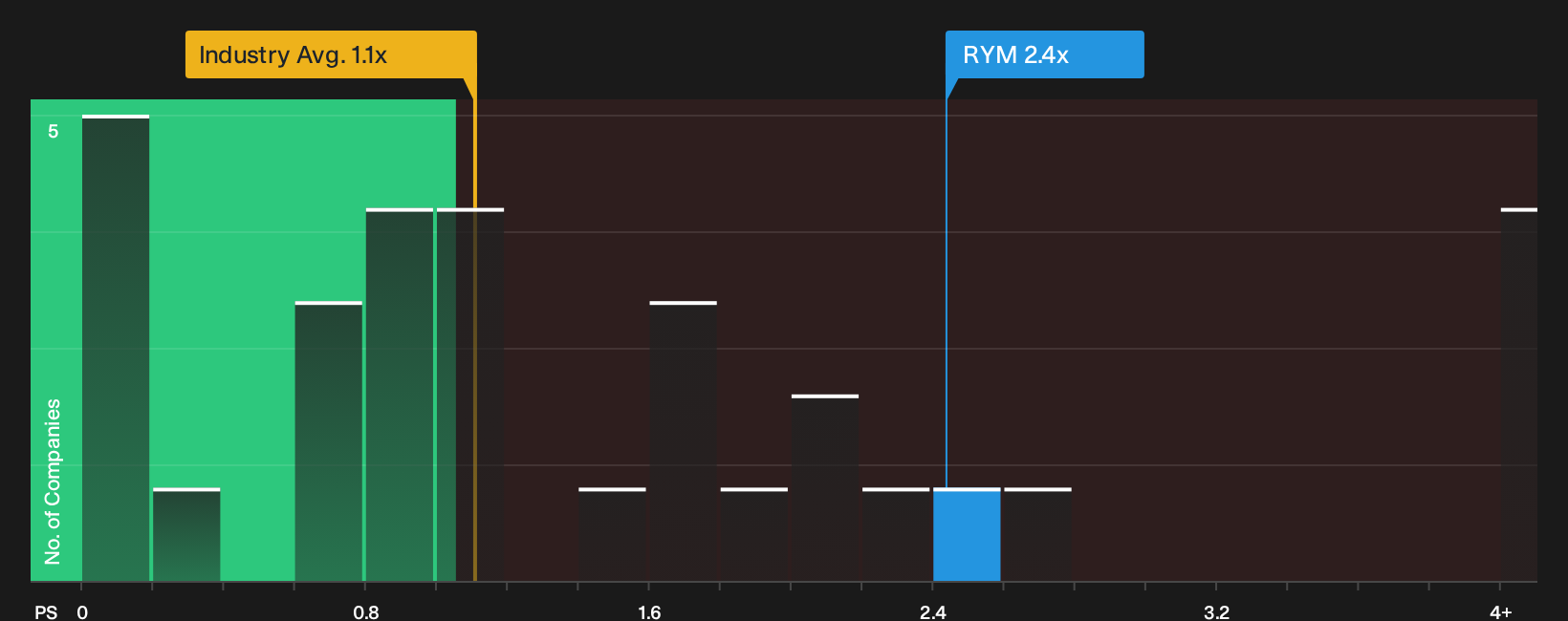
That 32% undervalued story collides with a very different picture once you look at Ryman Healthcare through its sales multiple. The stock trades on a P/S of 2.4x, compared with about 1.1x for the wider Oceanic healthcare group and 2.1x for closer peers, while the fair ratio sits at 1.2x. That gap suggests investors are already paying up relative to both the sector and where the multiple could move over time. The question is whether the turnaround narrative is strong enough for you to accept that valuation risk.
For a closer look at how this pricing stacks up against fundamentals and peers in one place, See what the numbers say about this price — find out in our valuation breakdown..
Next Steps
Reading through the mix of valuation tension and recovery hopes around Ryman Healthcare, you can now pressure test the story yourself, move quickly, and weigh both the risks and potential rewards by reviewing the 2 key rewards.
Looking For More Investment Ideas Beyond Ryman Healthcare?
If you stop with Ryman Healthcare, you risk missing other opportunities that might fit your style even better. Widen the lens before making your next move.
- Target higher potential upside with carefully filtered smaller companies by scanning the 137 elite penny stocks with strong financials that pass strict financial quality checks.
- Prioritise resilience and sleep-better-at-night holdings by reviewing a 229 resilient stocks with low risk scores that score well on financial strength and risk metrics.
- Hunt for fresh ideas off the beaten track by checking a 616 high quality undiscovered gems that pair strong fundamentals with relatively low investor attention.
This article by Simply Wall St is general in nature. We provide commentary based on historical data and analyst forecasts only using an unbiased methodology and our articles are not intended to be financial advice. It does not constitute a recommendation to buy or sell any stock, and does not take account of your objectives, or your financial situation. We aim to bring you long-term focused analysis driven by fundamental data. Note that our analysis may not factor in the latest price-sensitive company announcements or qualitative material. Simply Wall St has no position in any stocks mentioned.
Have feedback on this article? Concerned about the content? Get in touch with us directly. Alternatively, email editorial-team@simplywallst.com