


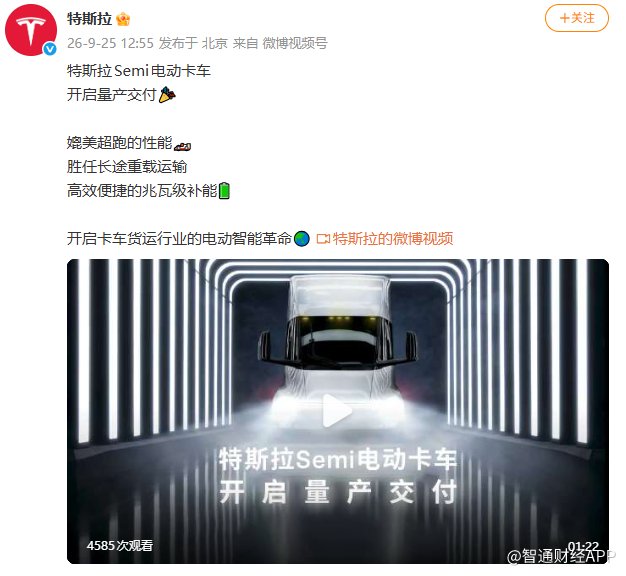
The Zhitong Finance App learned that on September 25, Tesla (TSLA.US) announced that the Semi electric truck will begin mass production and delivery. Tesla executives previously said at the Sparks plant in Nevada that delivery of the Semi to the first batch of customers will begin this week. Nearly nine years have passed since CEO Elon Musk first unveiled this electric heavy truck. Designed specifically for long-haul freight, the Semi expanded Tesla from the electric car and SUV market to the commercial freight sector, and currently the price of diesel in the US has risen to record highs.
On Thursday evening local time, Tesla held a webcast event at the factory. The company did not disclose production plans or pricing for the Semi, but reiterated plans to produce 50,000 Semis per year at the Nevada plant.
Musk did not attend the event. In the video recording, he said, “If you haven't placed an order yet, I recommend you order a few more, but the waiting list is already quite long.”
Customers including Pepsi, DHL, and US Foods were invited to take the stage, and Semi trucks bearing these companies' logos were parked outside the venue for display.
Semi is designed for long-haul freight. The long battery life version can drive 500 miles (about 805 km) on a single charge when fully loaded. “This is 500 miles in real road conditions, and our customers have verified this,” said Dan Priestley, director of engineering for Tesla Semi Trucks. The standard version has a battery life of 325 miles (about 523 km).
Semi debuted in 2017 and was originally scheduled to be put into production in 2019. The first Semi was finally rolled off the high-capacity production line in April, and mass production is expected to begin this year. However, Tesla said in a letter to shareholders in July that Semi will begin production in 2026, removing previous predictions for mass production this year.
Tesla began limited deliveries of Semi to customers such as PepsiCo in the US at the end of 2022. Since then, project delays, increased competition, and a reversal of the US electric vehicle policy have raised market concerns about demand.
Despite this, the clean transportation non-profit organization Catalyst Mobility said Tesla received an order for 2,500 Semi vehicles from the world's largest consortium of freight companies this week, including Microsoft and PepsiCo. According to the organization, the order is almost double the size of the current US Class 8 electric truck fleet.
Last month, Swedish freight technology company Einride AB announced an agreement to add 500 Semi trucks to its fleet.