


The automobile industry is the crown jewel of manufacturing, and it is also an important yardstick for measuring a country's industrial strength. As the wave of electrification and intelligence continues to advance, China is speeding up its journey from an “automobile power” to an “automobile power.” In this historic process, the competitive focus of car companies is no longer limited to the scale of sales, but is also gradually expanding to the “deep-water zone” of ecological services.
On September 28, Geely Holding Group and NIO reached a comprehensive strategic cooperation in the field of charging and switching. NIO officially joined the Geely Smart Charging Network and became the first car company brand connected to the Geely Smart Charging Network. Zhitong Finance believes that the deepening of strategic cooperation between Geely and NIO this time is of great significance. From an industry perspective, the energy supplement network is a public infrastructure for the whole society. Jointly built, shared, and connected by multiple parties, it can truly reduce the total cost of society and improve the efficiency of resource utilization. Open sharing and industrial collaboration are becoming the core direction of the future automotive energy ecosystem, and this collaboration between Geely and NIO can be seen as the first response of both sides to this trend.
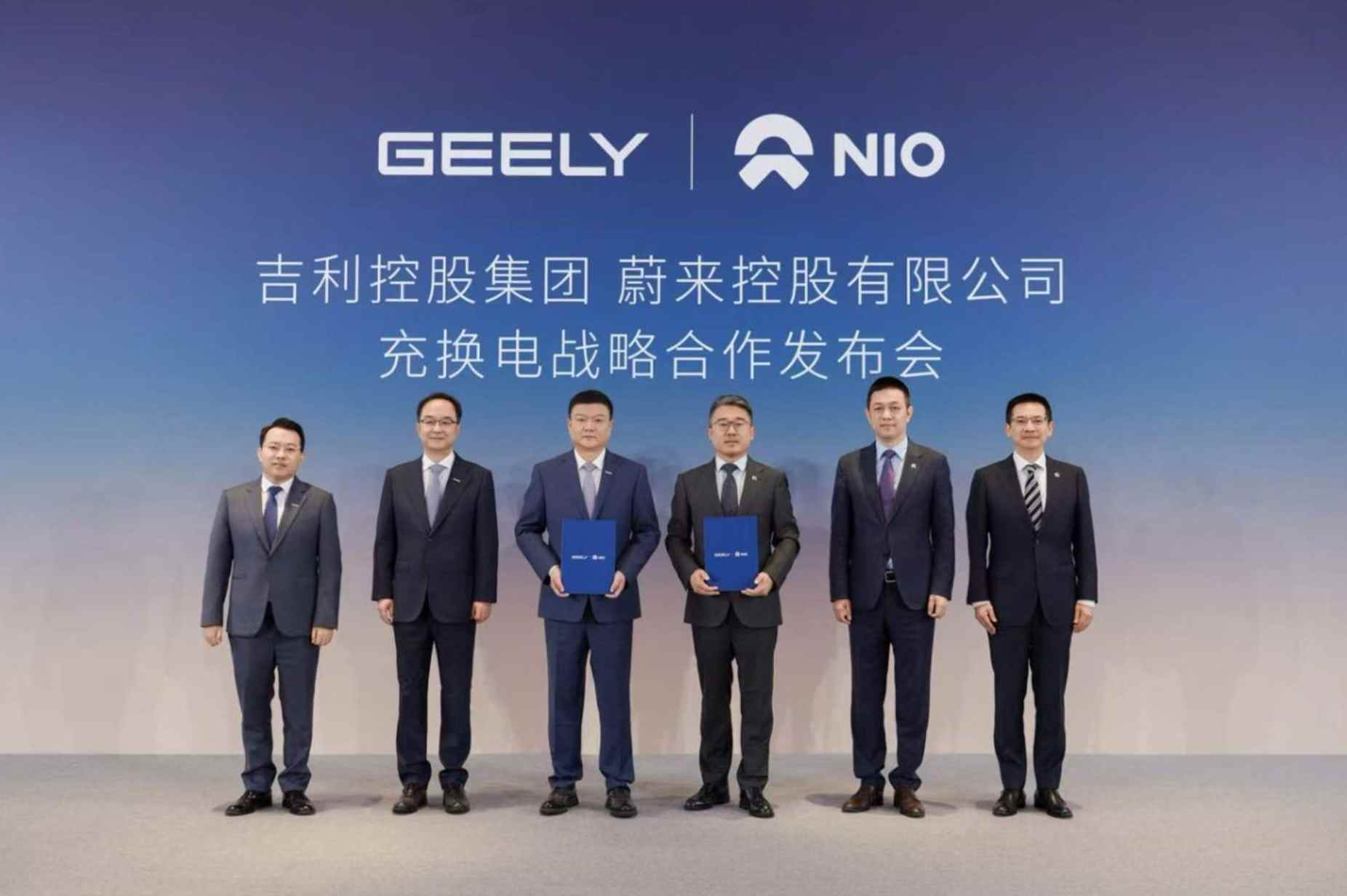
Joining hands with NIO to build a Geely sample energy ecosystem
After the “Taizhou Declaration” was issued two years ago, Ji Fu has entered a new stage of development, and strategic focus and resource collaboration have become the core main lines of enterprise development since then. However, deepening strategic cooperation with NIO this time can be seen as a key step taken by Geely to comprehensively lay out a full range of scenarios and a global energy replenishment ecosystem for all users under the “One Geely” strategy.
In the past, car companies mostly chose to build their own stations, but megawatt-class overcharging stations and large-scale power exchange stations are typical asset-heavy projects. Not only are there high single-seat investment, long approval cycles, and rigid operation and maintenance costs, but there is also high uncertainty about economic sustainability and the utilization rate of charging piles.
Geely's solution to this is to use a series of combo punches to solve pain points and open up space for energy ecological growth outside the vehicle. Judging from the details of this cooperation, Geely and NIO will form a deep capital and business bond through cross-shareholding. In the field of charging, NIO will take a stake in Haohan Energy, a subsidiary of Geely Holdings, and will hold 10% of the shares after the transaction is completed. The addition of NIO will further accelerate the implementation of the Geely Smart Charging Network. At that time, NIO will connect about 10,000 independent charging guns to the Geely Smart Charging Network, and the coverage density and service capabilities of the Geely Smart Charging Network will be substantially enhanced.
It is worth noting that just five days before the announcement of this cooperation, Geely just released “Geely Smart Charging”. For the first time, AI was applied to the field of energy supplementation to build an integrated energy replenishment system of “people, vehicles, piles, clouds, networks, and storage” to achieve all-round breakthroughs in safety, speed, intelligence, and convenience. The release of Geely Smart Charging provided a mature technical foundation for the open sharing of energy charging networks; NIO, as the first car brand to connect to the Geely Smart Charging Network, is a strong verification of the leadership, implementation, and sustainability of this system.
In the power exchange sector, Geely Holdings will invest 100% of its shares in NIO Energy and 640 million yuan in cash, and will hold 30% of Geely's shares after the transaction is completed. The vehicle power exchange business operated by Geely Holdings will be merged into NIO Energy, and the two sides will jointly promote the collaborative development of power exchange networks. Relying on its large-scale fleet of Cao Cao's travel fleet, Geely already has deep accumulation in operating vehicle power exchange scenarios. This complements NIO's technical and operational experience in the field of passenger car power exchange. After integrating the resources of the two parties, a multi-level power exchange service system covering B-side operating vehicles and C-end passenger cars will be built.
From leading scale and technology to ecological inclusiveness
Under the development idea of “one Geely”, Geely is accelerating its growth into an automobile company with global influence. Geely's evolution over the past two years has not been limited to the automotive sector; in terms of the layout of the energy ecosystem, Geely has also achieved remarkable results.
As far as network scale is concerned, Geely's Haohan Energy has deployed more than 2,500 charging stations and more than 12,000 charging guns in 232 cities across the country, ranking first in the industry. According to the plan, by the end of 2027, Geely will build more than 22,000 charging stations and more than 100,000 charging guns, including more than 15,000 Geely smart charging stations, taking the lead in achieving full coverage of county-level cities across the country and building a “3-kilometer smart charging circle”. The huge infrastructure network gives Geely the ability to handle large-scale access from external brands. The fact that NIO first entered the Internet was essentially a confirmation of this ability.
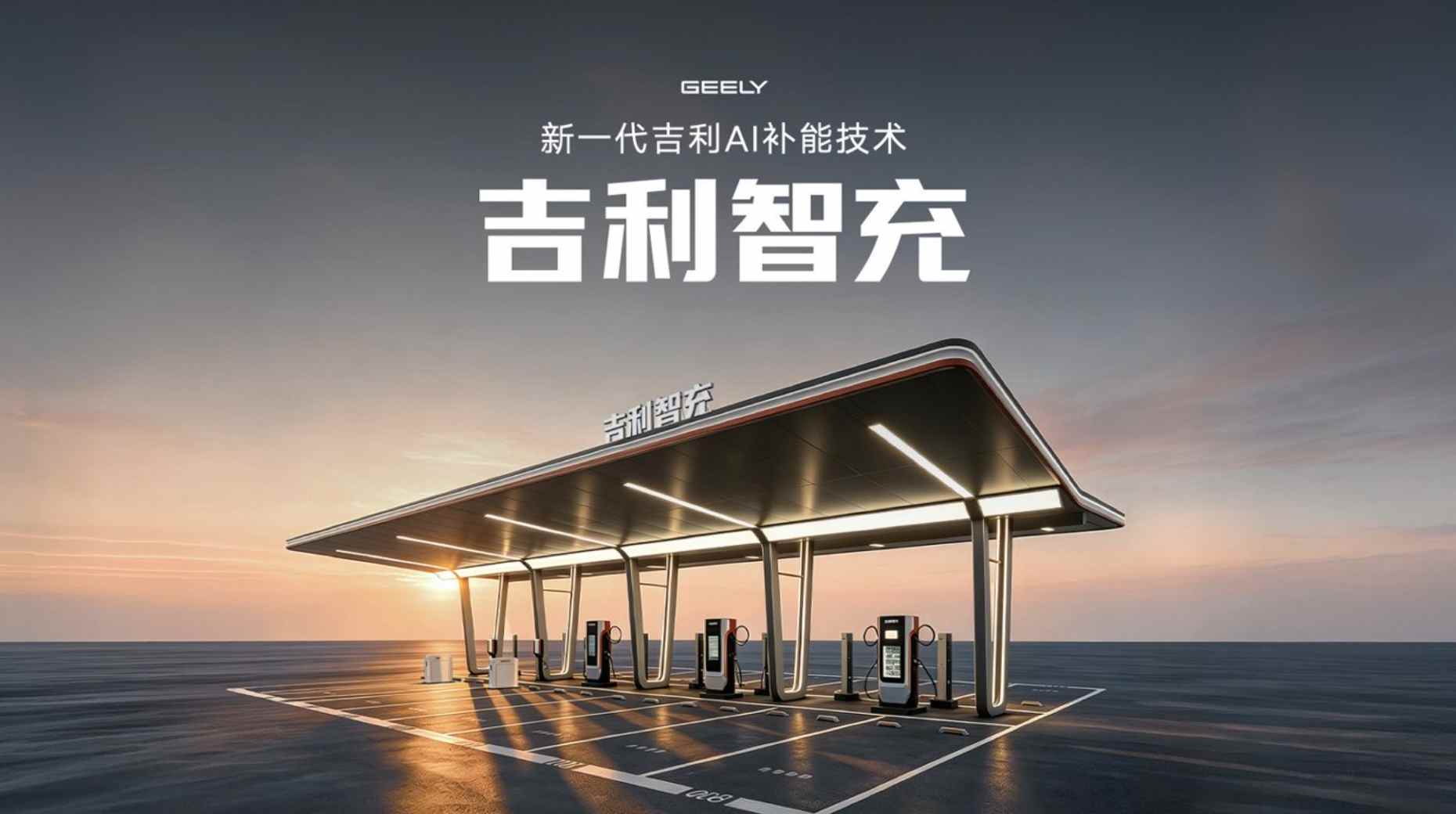
At the technical level, Geely's smart charging system uses a full-link five-terminal liquid cooling scheme to achieve extremely fast charging. The peak charging power of a single gun reached 2.2 megawatts, setting the upper charging power limit for the entire industry. In terms of charging safety and battery health, through AI temperature control and liquid cooling, the maximum battery temperature can be controlled below 65℃; lithium-ion pulse repair technology can increase battery cycle life by more than 20%. The significance of these technical capabilities goes beyond optimizing the single charge experience. From the perspective of network operation, higher single-gun power means an increase in single-pile service efficiency, and lower battery loss means a reduction in the cost of operating vehicles throughout the life cycle. The two together point to the core proposition of charging pile utilization and economic sustainability in the energy supplementation industry.
In the author's view, Geely's expansion of its “circle of friends” to supplement its energy is an active choice made by Geely under the “One Geely” strategy. As the penetration rate of new energy sources continues to increase, competition for energy supplementation networks has moved from an early competition in the number of stations to a comprehensive competition of network density, service efficiency, and operating economy. The model where a single car company builds its own business makes it difficult not only to dilute investment in heavy assets, but also to support a sufficiently dense service network. Geely chose to open up its accumulated scale and technical capabilities to the industry, bind partner interests through cross-shareholding, lower the access threshold through technology sharing, and dilute the cost of a single site through scale effects. Essentially, it is exploring a path of energy supplementation network led by leading companies and co-built and shared by multiple parties. The significance of this path is that it returns the energy supply network from the private circuit of car companies to the attributes of public infrastructure — when more brands and more resources flow on the same network, the operational efficiency and economic sustainability of the entire system can be truly improved. This is the role that leading companies should play in this round of industrial integration.
Moving from a “automobile powerhouse” to an “automobile powerhouse,” what is needed is just such an energy supplement transformation from closure to openness, and from single-point breakthroughs to ecological collaboration. As the first car company brand to join Geely's energy supplement ecosystem, NIO has strongly verified the system's leadership, implementation and sustainability. Geely and NIO have joined forces to provide a clear path for the industry: in the asset-heavy and long-term field of energy supplementation, open collaboration has more vitality than fighting alone, and is also more in line with the intrinsic requirements for high-quality development of the industry.