


The Zhitong Finance App learned that the EUR/USD exchange rate is currently trading not far from the lowest level in the year, and the trend is being influenced by a global energy shock and rising political risks in Europe. The euro was close to 1.20 against the US dollar in August, but this month it has fallen by about 2% to a two-month low of slightly below 1.14. Currently, EUR/USD was recently traded at around 1.137.
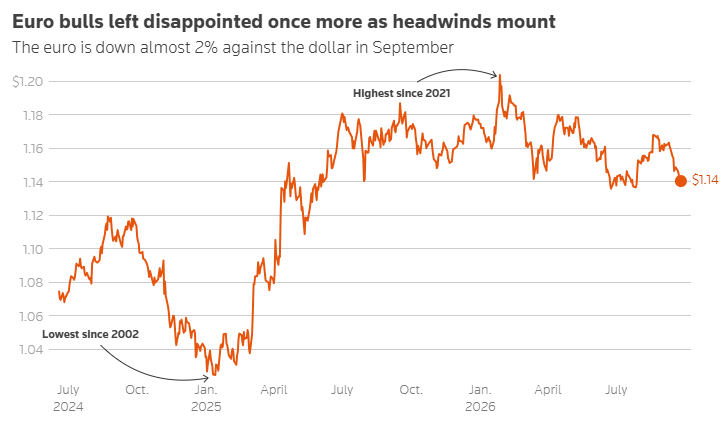
The Federal Reserve's interest rate hike restored its credibility to fight inflation, thereby boosting the dollar; at the same time, the outlook for the euro has also been blurred by political factors and another rise in oil prices, which may hurt an economy that previously performed better than expected.
“How long can this growth resilience continue? Can it really last the whole winter? Then we enter spring, and we may also encounter some difficult political situations,” said Jane Foley (Jane Foley), senior forex strategist at Rabobank.
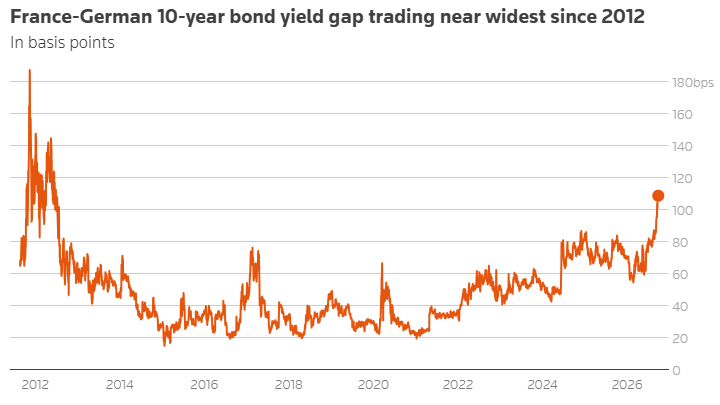
German Chancellor Friedrich Merz (Friedrich Merz) is being hit hard by the far-right's rise in recent state elections, an unexpected result that may force him to downplay his previously promised reform agenda; while the French market is under pressure due to high debt concerns and the political impasse ahead of the 2027 presidential election.
“In this environment, I'm a little concerned about the euro,” Fowler said, adding that her forecast for EUR/USD to be 1.16 in three months is being re-evaluated.
The premium required for investors to hold French 10-year treasury bonds over AAA-rated German treasury bonds has risen above 110 basis points, which is a warning sign for the euro. Bank of America forex strategists estimate that for every additional 10 basis points in interest spreads, EUR/USD will fall by 0.4%.
Options traders are also becoming more negative about the euro. The euro's three-month risk reversal — reflecting the difference between the price of buying the currency option and the price of selling the currency option — recorded its biggest weekly decline since the outbreak of the war in Iran last week.
European gas prices need to fall
Analysts and investors said that the euro bulls still have reason not to be discouraged, because traders are currently pricing that the ECB will raise interest rates at least once more this year, and the economy is showing resilience; however, almost no one denies that high energy prices have blurred the currency's near future prospects.
The euro rose about 13% against the US dollar last year, but the war in Iran damaged the euro this year. The conflict impeded the transportation of liquefied natural gas through the Strait of Hormuz, and this month pushed gas prices above €80 per megawatt hour, the highest since late 2022. Analysts say European gas prices need to weaken before the euro can resume gains, but this is hopeless in the near future.
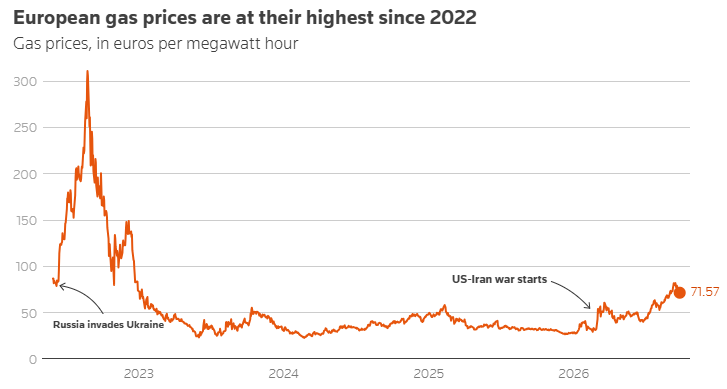
“If you look at commodity forecasting agencies' forecasts, most predict European gas prices in the 85 to 100 range,” said Kaspar Hense (Kaspar Hense), senior portfolio manager at Royal Bank of Canada BlueBay Asset Management. “If that happens, the euro (against the US dollar) could easily fall to 1.12,” Hens added.
Meanwhile, discussions on a possible US ban on diesel exports will exacerbate the problems faced by the euro, but analysts say this is not their main scenario assumption.
Francesco Pesole (Francesco Pesole), a foreign exchange strategist at ING, said that a jump in oil prices to $115 per barrel would increase pressure because such a level would heighten concerns about economic growth. “But if central banks maintain their hawkish stance, the euro should not depreciate sharply,” he said, adding that ING maintained its forecast of 1.16 against the dollar at the end of the year.