


Australian bank stocks are back in the spotlight as the RBA lifts rates to 4.6%, pushing borrowing costs to a 15 year peak and sharpening the focus on who copes best with pricier money. Higher interest charges, stickier inflation and rising mortgage stress can reshape where profits and risks sit in the financial system. This article examines three Australian Bank Stocks screener candidates that appear positioned to be positively exposed to this new rate environment.
The three Australian bank stocks covered below are only a sample, as the wider screen surfaced 6 more lenders with equally interesting narratives that are not unpacked in this article. To identify and analyze your own highest conviction Australian interest rate beneficiaries directly, head into the Australian Bank Stocks (Interest-Rate Beneficiaries) screener.
Bendigo and Adelaide Bank (ASX:BEN)
Overview: Bendigo and Adelaide Bank is a regional Australian lender that provides everyday banking, mortgages and business finance to households and SMEs, making it closely tied to RBA rate shifts through its interest income.
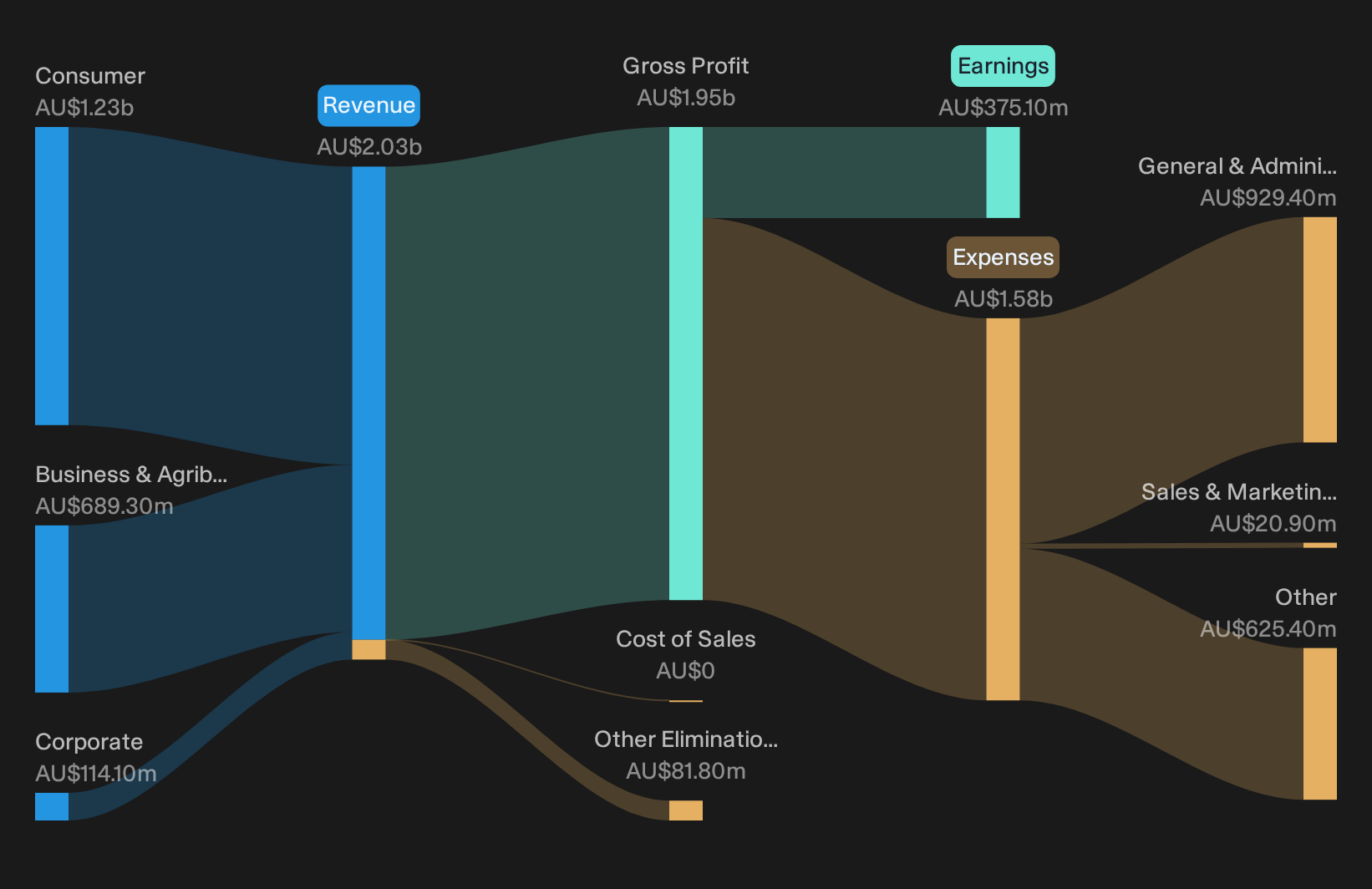
Operations: Bendigo and Adelaide Bank generates about A$1.2b from Consumer, A$689 million from Business & Agribusiness and A$114 million from Corporate activities, all in Australia.
Market Cap: A$6.0b
Bendigo and Adelaide Bank matters for this higher-rate screener because its everyday mortgage and business lending book reacts directly to RBA moves. As a result, small changes in the cash rate can meaningfully alter what it earns on every dollar it lends.
"Higher investment spend and increasing operating expenses, particularly in technology and risk management, may suppress net margins and earnings in the short to medium term.
Where profits land from here hinges heavily on a quiet shift in how much it must pay to keep and attract deposit funding.
That funding pressure is the real pivot point, and the full narrative for Bendigo and Adelaide Bank shows how Bendigo and Adelaide Bank could turn heavier investment spend into a more resilient earnings engine.
Australian Finance Group (ASX:AFG)
Overview: Australian Finance Group runs a large mortgage broking and non bank lending platform that links borrowers, brokers and housing credit in Australia.
Operations: Australian Finance Group generates A$1,074.6 million from Distribution and A$378.9 million from Manufacturing activities, all within Australia.
Market Cap: A$349.4 million
Australian Finance Group plugs directly into the Australian Bank Stocks screener theme because higher RBA rates can push borrowers to refinance, lift demand for broker advice and put more focus on which lenders manage funding costs best.
"Ongoing technology investments and diversified product expansion are anticipated to drive operational efficiencies and earnings growth, even amid rising costs and competition."
What ultimately happens to investor returns may hinge on one quiet funding pressure that either supports margins or steadily erodes them.
That quiet funding pressure is exactly what the full narrative for Australian Finance Group unpacks, showing where refinancing flows, broker power and platform economics could be quietly accelerating Australian Finance Group’s story.

MyState (ASX:MYS)
Overview: MyState is a Hobart based retail bank that focuses on Australian home loans, everyday deposits and wealth products tied to domestic interest rates.
Operations: MyState generates about A$235 million from the MSF Group and A$16 million from Wealth Management, all from Australian customers.
Market Cap: A$849 million
MyState plugs directly into the Australian Bank Stocks interest rate beneficiary theme because its mortgage heavy book and local deposit base translate RBA decisions into net interest income in a very direct way.
"The successful merger with Auswide has already delivered substantial realized synergies and is targeting $20 to $25 million in annual pretax cost synergies, which is expected to significantly increase operating leverage and support double-digit EPS growth as integration continues."
What happens if a single unseen pressure on funding costs or arrears trends shifts now could matter a great deal for MyState’s margins.
If that pressure shifts even slightly, the full narrative for MyState shows how MyState’s merger synergies, arrears trends and capital choices could be quietly accelerating or masking the real story.

Seeking Alternatives Before Momentum Flies
Fresh ideas often move first. Once momentum builds and prices start flying, the most attractive entry points can disappear. Review these under the radar picks now and consider them before they become widely followed.
- Target reliable income streams while scanning a curated 3 dividend fortresses that could help you spot payouts with stamina before yield hunters crowd the trade.
- Hunt resilient balance sheets using a focused list of solid balance sheet and fundamentals (11 results) that filters for fundamental strength while it still flies under broader market attention.
- Look for early momentum with a tight 7 resilient stocks with low risk scores that highlights sturdier performers before more defensive money finishes rotating into them.
This article by Simply Wall St is general in nature. We provide commentary based on historical data and analyst forecasts only using an unbiased methodology and our articles are not intended to be financial advice. It does not constitute a recommendation to buy or sell any stock, and does not take account of your objectives, or your financial situation. We aim to bring you long-term focused analysis driven by fundamental data. Note that our analysis may not factor in the latest price-sensitive company announcements or qualitative material. Simply Wall St has no position in any stocks mentioned.
Have feedback on this article? Concerned about the content? Get in touch with us directly. Alternatively, email editorial-team@simplywallst.com