


Global trade is back in the spotlight as talk of a broad U.S. EU free trade deal collides with lingering tariff uncertainty, and that tension is starting to reshape how capital moves through European and UK markets. Investors watching this moment risk missing it if they look only at headlines. This article unpacks the story and then walks through three individual stocks that appear closely tied to this evolving policy backdrop.
The three stocks below are a starting sample only. The full screen on Simply Wall St surfaced 2 other Eurozone and UK financial and market-infrastructure companies with equally compelling narratives that are not covered in this article. To identify and analyze the broader opportunity set across banks, insurers, exchanges, custodians, brokers, and asset managers, head straight into the Eurozone and UK Listed Financials & Market Infrastructure screener.
Euronext (ENXTPA:ENX)
Overview: Euronext runs a network of securities and derivatives exchanges across Europe, connecting issuers and investors to support cross border capital markets integration.
Operations: Euronext reports €1.96b of unclassified services revenue, with activity spanning major European venues including Italy, France, Norway and the Netherlands.
Market Cap: €16.3b
Euronext matters here because its trading, clearing and data rails are where a more joined up European savings and investment system would actually show up.
"The accelerating digitization of financial assets and trading across Europe, coupled with the integration of more exchanges like ATHEX, could drive a step-change in volumes and create new fee streams, affecting future revenue as more issuers and investors potentially migrate to Euronext's platform."
What happens to Euronext's earnings power if a single key assumption about how much retail savings move into public markets breaks?
If that assumption matters to your thesis, read the full narrative for Euronext and see how different policy paths could reshape volumes, fees and capital flows.

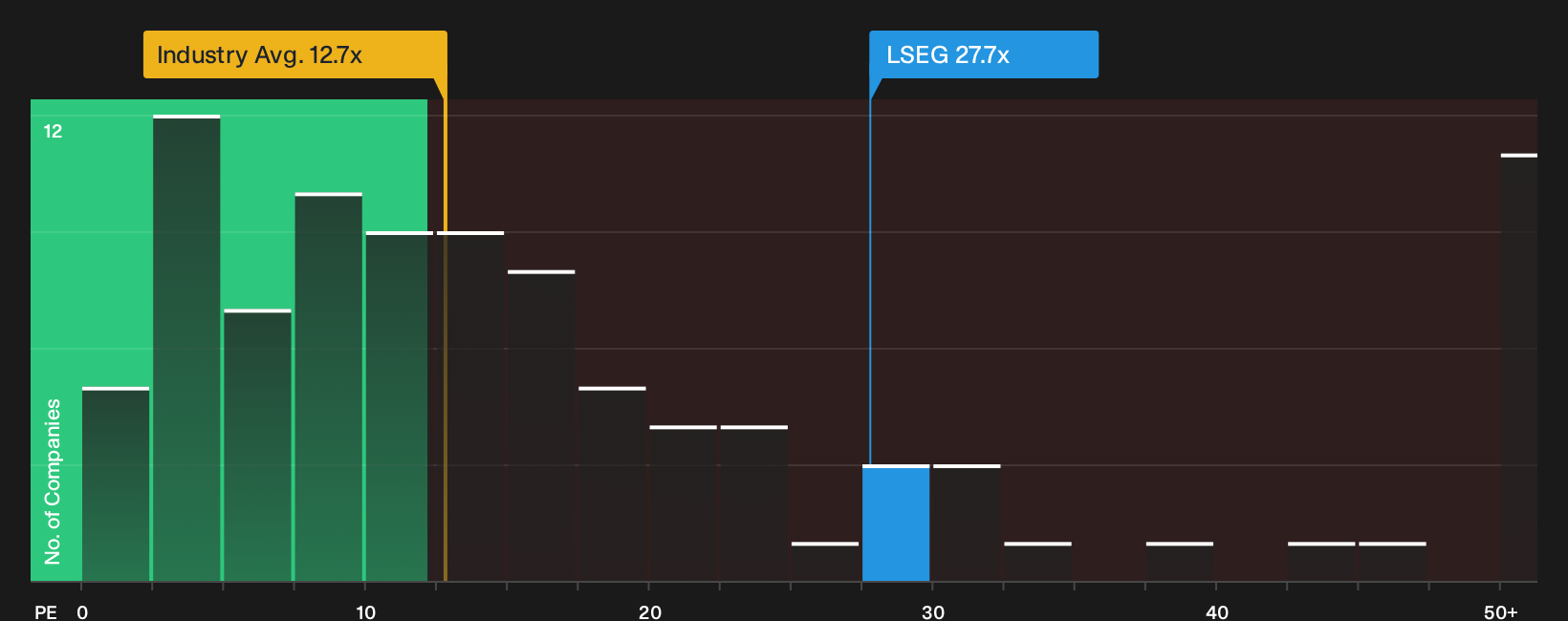
London Stock Exchange Group (LSE:LSEG)
Overview: London Stock Exchange Group runs trading venues, clearing services, and data and analytics platforms that support global cross border capital markets.
Operations: London Stock Exchange Group generates £4.41b from Data & Analytics, £3.65b from Markets, £986m from FTSE Russell, £602m from Risk Intelligence, and £8m from other activities.
Market Cap: £39.2b
London Stock Exchange Group plugs directly into the screener theme because deeper European integration and any new U.S. EU trade framework both rely on trusted plumbing for trading, clearing, and high quality data that can carry larger, faster cross border flows.
"The accelerated rollout of new AI-driven analytics tools, the integration of Workspace with Microsoft Teams and Office, and the transition to cloud-based and usage-based data delivery position LSEG to monetize the ongoing explosion in demand for real-time data, advanced analytics, and digital workflows, supporting recurring revenue acceleration and operating leverage."
What happens to London Stock Exchange Group's pricing power and margin profile if a single assumption about client dependence on its data stack changes?
That dependence question is exactly what the full narrative for London Stock Exchange Group unpacks. It shows where London Stock Exchange Group’s data engine could accelerate, stall, or quietly decouple from client budgets.
Deutsche Börse (XTRA:DB1)
Overview: Deutsche Börse runs a major European exchange and market infrastructure network that underpins trading, clearing, custody and fund services across borders.
Market Cap: €51.8b
For investors focused on deeper European capital market integration, Deutsche Börse is where a lot of that policy ambition becomes actual pipes and platforms that can carry higher cross border trading, fund flows and data usage.
"The rising adoption of passive investment vehicles (such as ETFs) and the growth in algorithmic trading are fueling demand for efficient, technologically advanced market infrastructure. These are areas in which Deutsche Börse has shown leadership through continued platform investments, which can translate to higher trading, clearing, and recurring data revenues and improved operating leverage."
What happens to Deutsche Börse's earnings quality if a single untested regulatory push either accelerates or chokes that growing flow of activity?
That regulatory wildcard is exactly why the full narrative for Deutsche Börse zooms in on where Deutsche Börse’s flow engine could quietly accelerate, stall, or sharply decouple from rivals.

Seeking Fresh Alternatives Before They Fly
Fresh opportunities can move from quiet to breakout quickly. Some ideas gain momentum while others get caught dropping off radars. Scan these under the radar picks before the crowd and act now.
- Spot income workhorses with staying power by reviewing a curated set of high payout candidates through the 165 dividend fortresses while yields and entry points still look reasonable.
- Track early infrastructure leaders riding AI’s demand surge by scanning the carefully filtered 87 AI infrastructure stocks before their growth stories go from under the radar to fully priced in.
- Position ahead of the next grid upgrade cycle by checking the hand picked 39 power grid technology and infrastructure stocks while these operators remain mispriced relative to their long term capital spending tailwind.
This article by Simply Wall St is general in nature. We provide commentary based on historical data and analyst forecasts only using an unbiased methodology and our articles are not intended to be financial advice. It does not constitute a recommendation to buy or sell any stock, and does not take account of your objectives, or your financial situation. We aim to bring you long-term focused analysis driven by fundamental data. Note that our analysis may not factor in the latest price-sensitive company announcements or qualitative material. Simply Wall St has no position in any stocks mentioned.
Have feedback on this article? Concerned about the content? Get in touch with us directly. Alternatively, email editorial-team@simplywallst.com