


Carnival (CCL) stock ripped higher on Sept. 29 after the cruise operator posted record results for its fiscal Q3 on persistent demand for seaborne vacations. The Miami-headquartered firm reported $8.44 billion in revenue on an “all-time high” net income of $1.9 billion, both handily above Street expectations.
Despite the post-earnings surge, however, Carnival shares are down about 20% versus the start of this year.
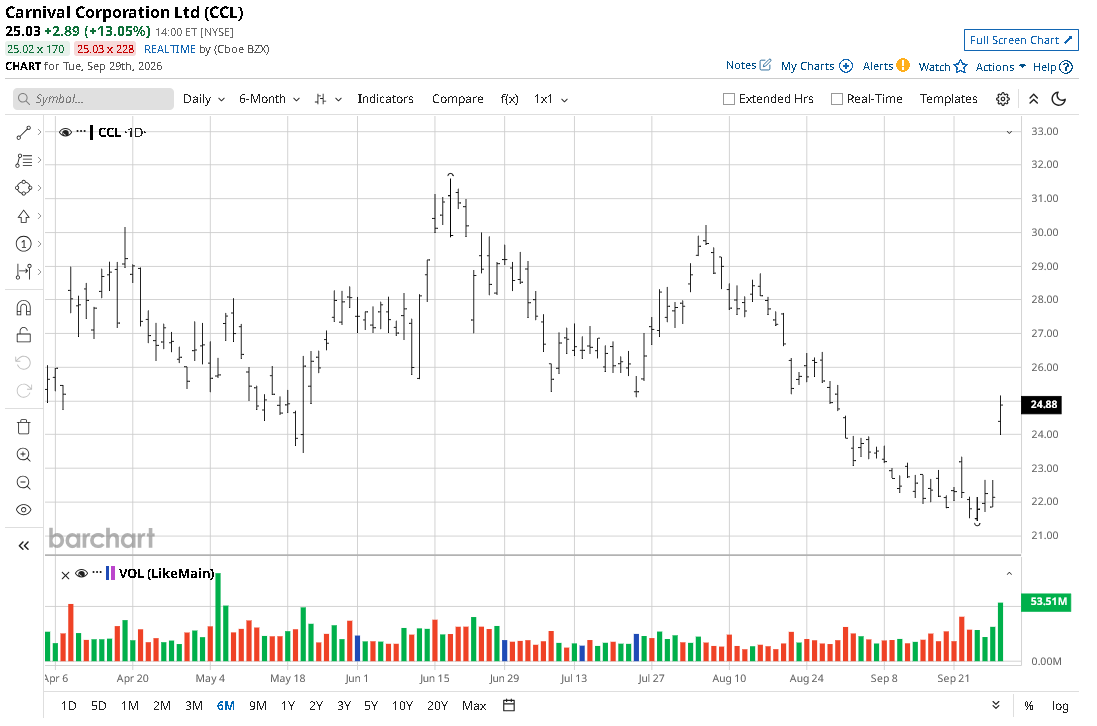
Carnival Stock Rallies on Raised Guidance
In its earnings release, Carnival also lifted its outlook for the full year, citing record net yields and strong bookings. Management now sees earnings per share (EPS) at $2.24 despite headwinds from higher fuel prices.
Crucially, booking volumes for upcoming sailings continue to outpace capacity growth at higher pricing, pointing to solid consumer spending that remains insulated from wider economic pressures
With Carnival accelerating balance sheet deleveraging and maintaining higher forward occupancy, CCL shares’ year-to-date decline looks like an attractive entry point for growth-oriented investors.
Carnival currently pays a healthy dividend yield of 2.41% as well, which makes it even more compelling as a long-term holding in late 2026.
Technicals Warrant Buying CCL Shares
Even from a technical perspective, Carnival stock appears just as attractive. On Tuesday, it ripped through its 20-day moving average (MA), indicating the upward momentum could sustain in the near term.
The company’s relative strength index (RSI) also currently sits in the early 60s, signaling there is significant further room to run before CCL climbs into the overbought territory.
At the time of writing, Carnival is trading at a forward price-to-earnings (P/E) multiple of roughly 10x, which makes it notably cheaper to own than rivals Royal Caribbean (RCL) and Norwegian Cruise (NCLH).
Carnival Remains Buy-Rated Among Wall Street Firms
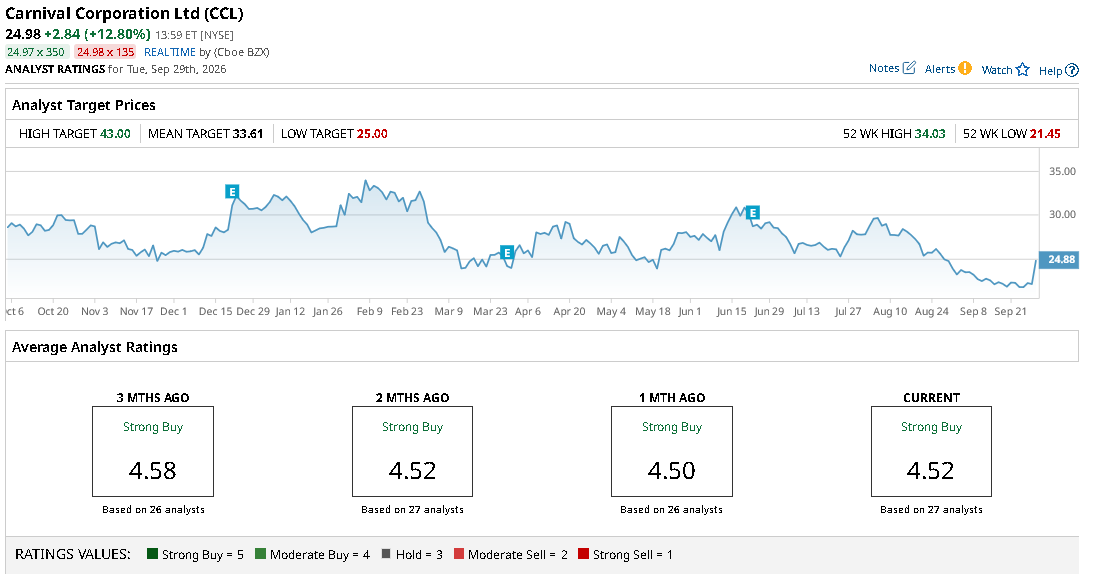
Despite the post-earnings surge, Wall Street firms remain convinced that CCL stock is undervalued at current levels and is poised for further gains through the remainder of this year.
According to Barchart, the consensus rating on Carnival sits at “Strong Buy,” with the mean price target of nearly $34 indicating potential for another 35% rally from here.
On the date of publication, Wajeeh Khan did not have (either directly or indirectly) positions in any of the securities mentioned in this article. All information and data in this article is solely for informational purposes. For more information please view the Barchart Disclosure Policy here.