


Washington just rewrote the fuel economy rulebook, and that shift could reshape which auto dealers thrive as gasoline models keep their grip on American driveways. This reset in incentives around EVs and traditional vehicles may create a window in which some retailers enjoy better pricing power, smoother regulatory math, and potentially steadier demand. In this article, three U.S. auto dealer stocks tied to this news event step into the spotlight.
The stocks highlighted below are just a sample, and the full screen surfaced 7 more U.S. auto retailers with equally compelling gasoline-focused narratives that are not covered in this article. To identify your own highest-conviction ideas, head straight into the U.S. Auto Dealers Leveraged to Traditional Gasoline Vehicle Sales screener.
Valvoline (VVV)
Valvoline leans directly into the screener theme by running a dense network of quick service bays that live off internal combustion engine upkeep. Every oil change and basic checkup ties the business to how long gasoline vehicles keep dominating American roads.
Valvoline focuses on quick oil changes and preventive maintenance for gasoline vehicles through its owned and franchised service centers, generating about US$2.0b from Retail Services and carrying a market value of roughly US$3.6b.
"Expansion of premium services (full synthetic oil changes, NOCR, fleet management, and digital/loyalty programs) is improving the service and product mix, resulting in higher average ticket sizes and gross margins."
The question is what happens if one unseen pressure on those service bay economics shifts faster than customers are willing to pay up for convenience.
If that pressure point on service bay economics matters to you, read the full narrative for Valvoline to see how Valvoline could still turn premium tickets into leverage.

AutoZone (AZO)
AutoZone is effectively the parts counter for America’s gasoline fleet, supplying what internal combustion vehicles need to stay on the road as fuel economy rules ease and EV momentum cools. This pulls the retailer into the center of the screener’s theme.
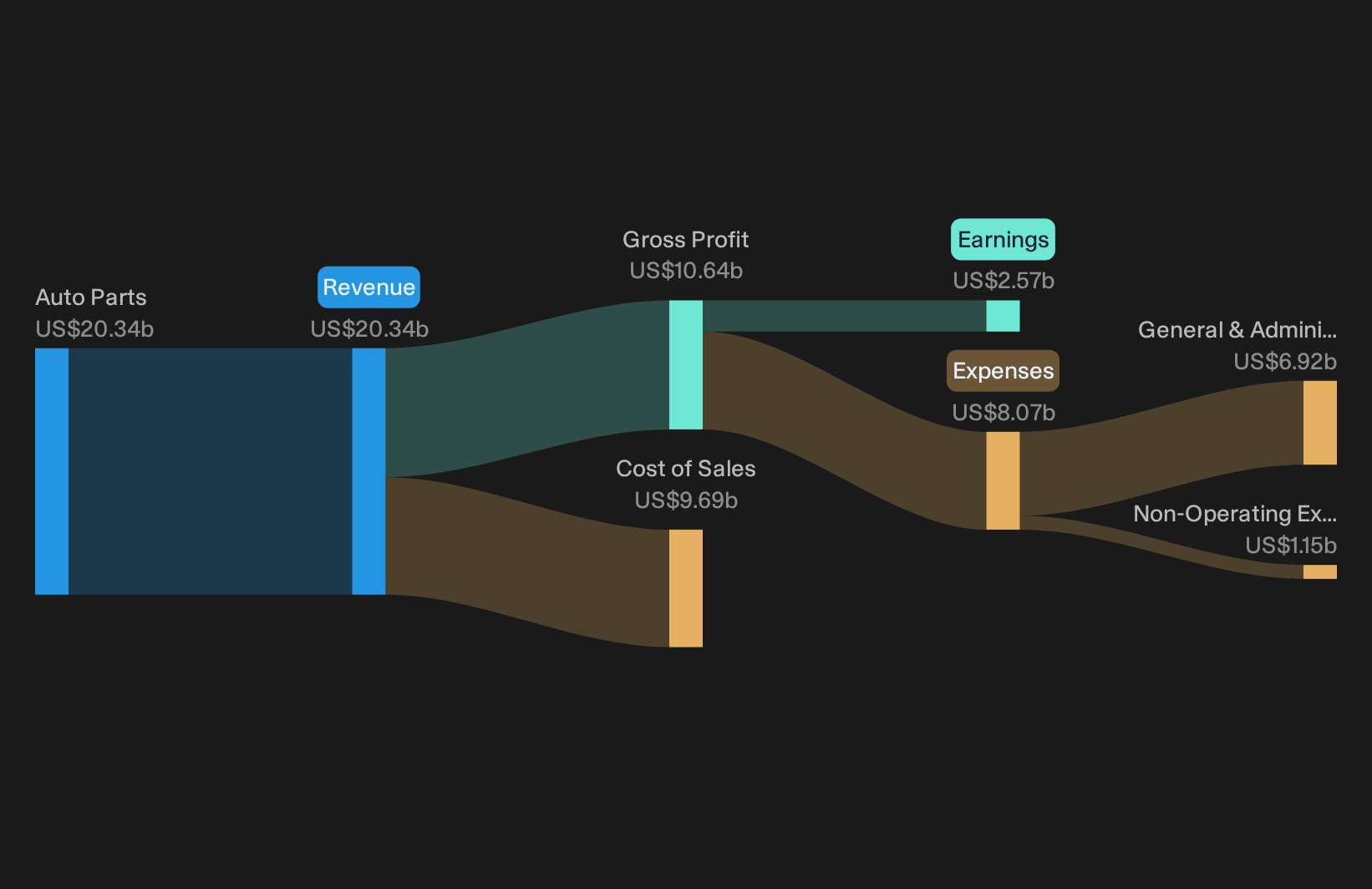
AutoZone runs a large aftermarket business focused on replacement parts and accessories for internal combustion vehicles, generating about US$20.3b from Auto Parts and carrying a market value near US$47.1b.
"A store now assumes $1.7 million in first-year sales, ramping to $2.7 million by year six, against an average investment of $2.9 million. Management describes this as a path that produces roughly 15% ROIC by year four and above 20% by year six."
The key question from here is whether one unresolved cost and demand equation around that growth plan ends up stretching those returns.
If that return equation has you thinking about what might be masking the true opportunity, read the full narrative for AutoZone to learn more about how AutoZone’s growth push could still accelerate.
O'Reilly Automotive (ORLY)
O'Reilly Automotive is a pure play on the gasoline car park, with aftermarket parts and services that live or die by how long internal combustion vehicles stay on the road. Its ability to keep those shelves stocked is what really ties it to this screener theme.
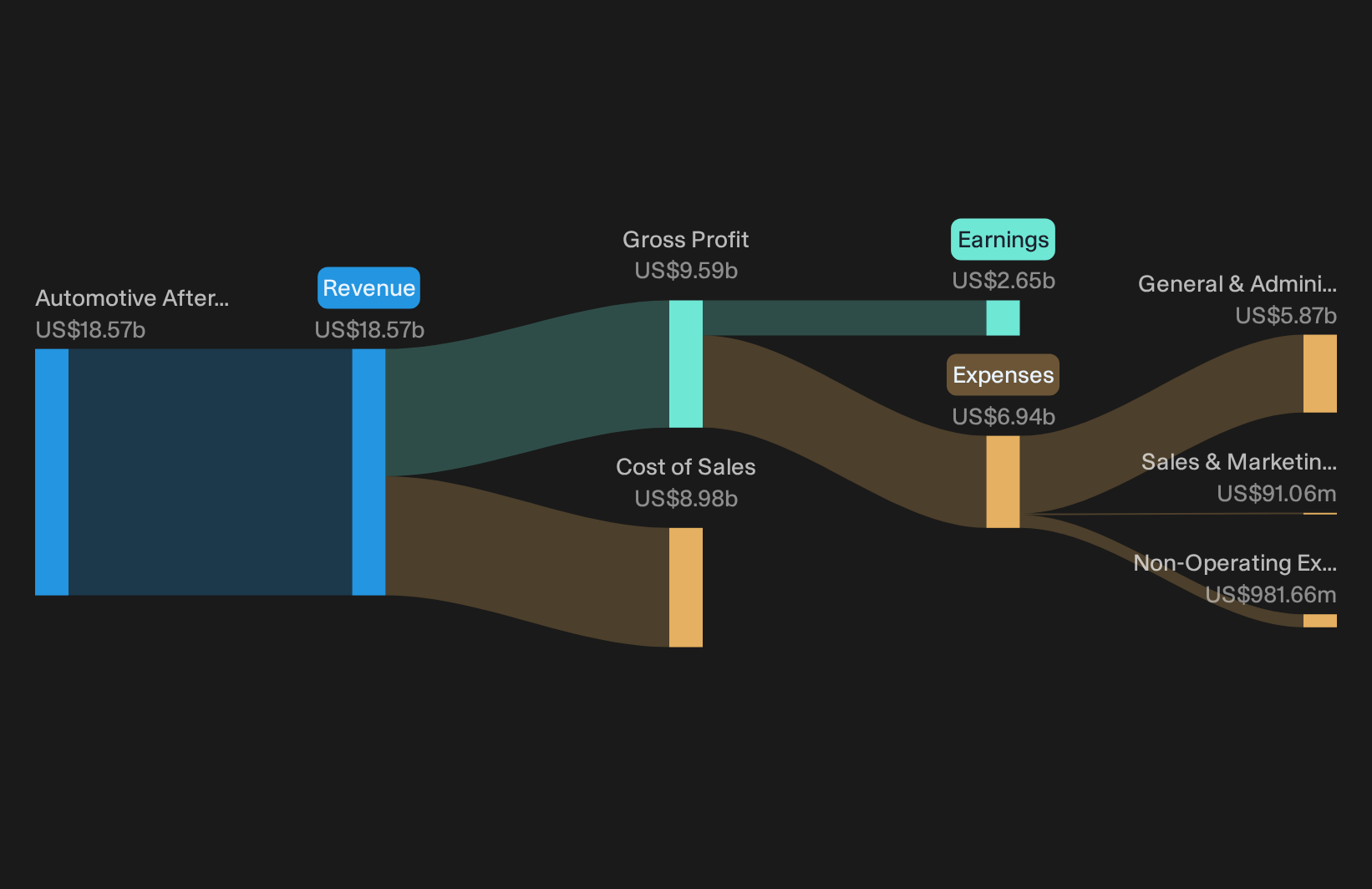
O'Reilly Automotive generates about US$18.6b from Automotive Aftermarket Parts in the United States and carries a market value of roughly US$70.0b, giving investors exposure to a large, ICE-focused maintenance and repair specialist.
"O'Reilly Automotive continues to lean on its inventory and distribution capabilities, with inventory per store at about US$892,000 and a target of around 5% inventory growth per store by year end, which is intended to support product availability and comparable store revenue."
What really matters now is how one quiet shift in its growth and capital playbook shapes the balance between pricing power and profitability.
That quiet shift is exactly what the full narrative for O'Reilly Automotive unpacks, separating routine inventory expansion from the broader narrative of where O'Reilly Automotive’s profitability could be accelerating.
Seeking Alternatives Before The Crowd?
Fresh breakout stories do not stay quiet for long. Momentum builds, prices move, and latecomers get caught chasing. Scan these curated ideas while it matters and consider them in a timely way.
- Consider early momentum in higher-yield opportunities by reviewing a curated mix of high payout candidates through the 6 dividend fortresses while current yields remain available.
- Review potential durable performers with stronger balance sheets by scanning the hand picked list of solid balance sheet and fundamentals (25 results) before any perceived resilience is widely reflected in market views.
- Track under the radar potential by reviewing a focused basket of 17 high quality undiscovered gems while these stories may still be less widely followed by investors.
This article by Simply Wall St is general in nature. We provide commentary based on historical data and analyst forecasts only using an unbiased methodology and our articles are not intended to be financial advice. It does not constitute a recommendation to buy or sell any stock, and does not take account of your objectives, or your financial situation. We aim to bring you long-term focused analysis driven by fundamental data. Note that our analysis may not factor in the latest price-sensitive company announcements or qualitative material. Simply Wall St has no position in any stocks mentioned.
Have feedback on this article? Concerned about the content? Get in touch with us directly. Alternatively, email editorial-team@simplywallst.com