


Trade disputes are no longer background noise. With fresh US tariffs rippling through supply chains and G20 talks in Milwaukee signalling more friction than progress, money is already shifting toward banks and fintechs that keep cross border payments, FX flows and trade finance moving. This article explains how that backdrop could matter for your portfolio and profiles 3 emerging market trade and FX bank stocks that are exposed to this story.
The stocks in the list below are just a starting sample, and the full screen surfaced 17 more emerging market trade and FX banks with equally compelling stories that are not covered here. To identify and analyze the highest conviction ways to play this theme directly, go straight to the Emerging-Market Trade & FX Banks screener.
Banco Santander (Brasil) (BOVESPA:SANB11)
Banco Santander (Brasil) is a universal bank in a key trade hub, providing day to day retail services while also handling corporate, trade finance and FX flows that tie directly into the Emerging-Market Trade & FX Banks theme.
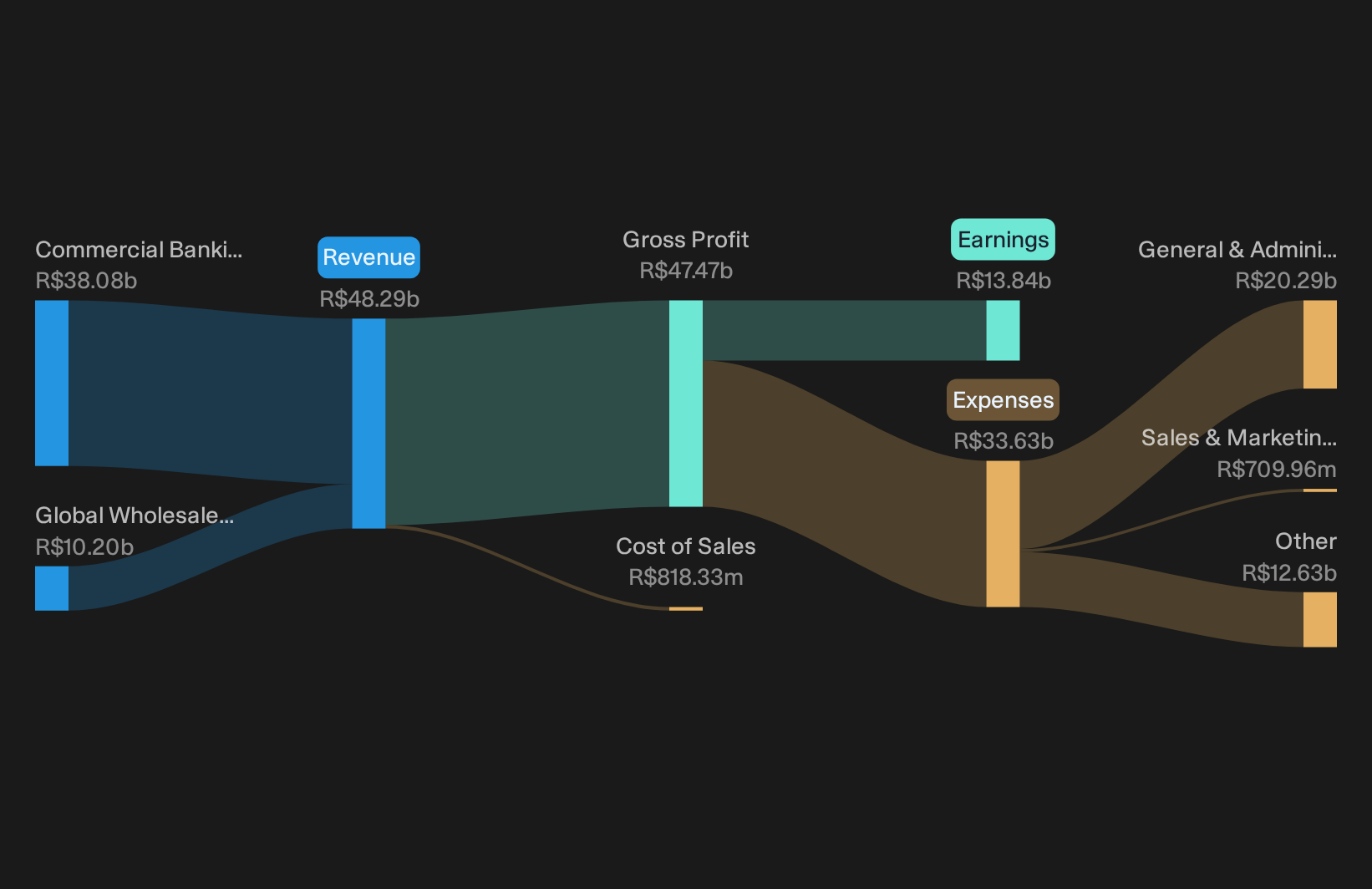
Santander Brasil runs two main segments, with about R$38.1b in revenue from Commercial Banking and R$10.2b from Global Wholesale Banking, and has a market value near R$110.7b.
The bank’s role in cross border finance increasingly runs through its digital front door, where one product in particular is starting to pull more of that activity onto a single platform.
"Rapid scaling of the new One App as a multibank, open finance hub is deepening primacy, boosting daily engagement and cross selling. This may support faster client NII and fee revenue growth than loan volumes over the medium term."
What really matters now is how a single unresolved pressure on credit quality and capital costs interacts with that fee heavy growth story.
If that pressure point on credit quality is what you care about most, start with the full narrative for Banco Santander (Brasil) to see how it could reshape the risk reward profile.
Banco Santander (BME:SAN)
Banco Santander is a global retail and commercial bank that links Europe and the Americas, with trade finance, FX and cross border payments integrated into its everyday lending, deposits, wealth and payments businesses that support customers moving goods, services and money across regions.
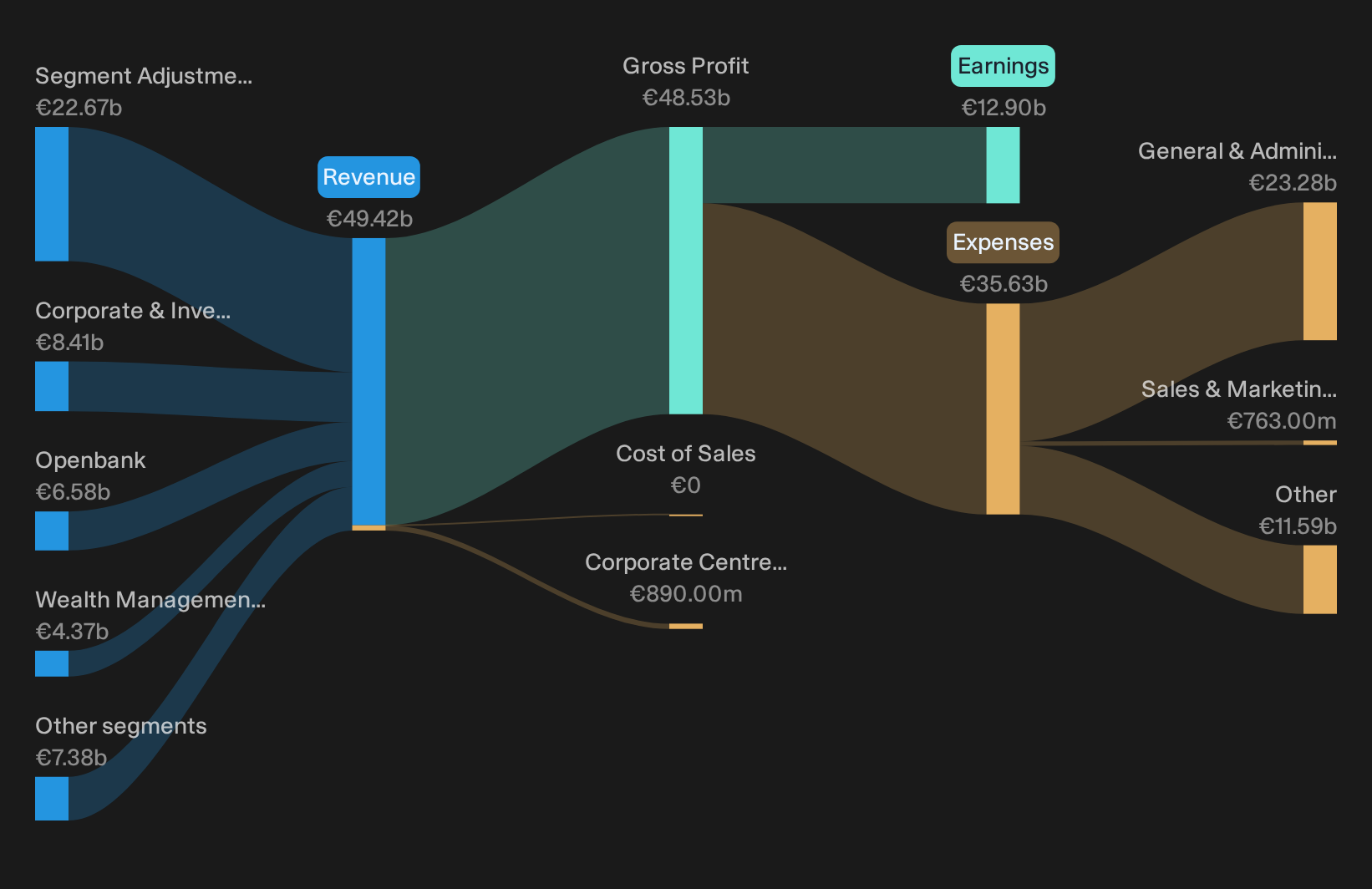
Openbank contributes about €6.6b of revenue, Corporate & Investment Banking adds roughly €8.4b, Payment Solutions generates about €4.1b and Wealth Management & Insurance brings in around €4.4b, supporting a banking group with a market value near €180.6b.
For this theme, Banco Santander provides exposure to a globally diversified model that may benefit from any shift toward regional trade hubs and non US payment corridors, with operations already geared to handling trade flows, FX and cross border money movement at scale.
"Rapid scaling of ONE Transformation, Gravity and other global platforms is structurally lowering the cost base while improving customer experience. This should support sustained positive operating leverage and expanding net margins."
An important consideration is what could happen if an unseen pressure on credit quality and capital costs coincides with leaner, more fee driven economics across key trade regions.
That collision of cleaner economics with hidden credit costs is exactly where the story gets interesting, and the full narrative for Banco Santander shows how Banco Santander could still accelerate.
Worldline (ENXTPA:WLN)
Worldline is a European payments specialist embedded in cross border commerce, handling card and account based transactions for merchants and banks that could see more traffic as trade routes tilt toward regional partners.
Worldline generates about €3.2b from Merchant Services and €0.8b from Financial Services, running payment rails across sectors from retail to energy and travel, and currently has a market value near €618 million.
For this screener, Worldline matters because it runs the plumbing that settles cross border and omnichannel payments as G20 trade links tilt away from US centric flows, giving the business direct exposure to how those money routes get rewired.
"The progressive consolidation of Worldline’s acquiring volumes onto a single pan European platform, already handling around 60 percent of its EUR 500 billion processed, is expected to enhance operating leverage and pricing power, which could support higher EBITDA margins and earnings if volumes recover."
What really moves the dial now is how one unresolved pressure on European payment volumes interacts with that push toward a leaner, more unified platform model.
That unresolved pressure is exactly why the full narrative for Worldline examines how Worldline’s platform shift could potentially influence the transition from today’s volume risk to a future earnings engine.

Seeking Alternatives Before The Crowd?
Fresh ideas move first. Breakout themes, new momentum and quietly dropping valuations can move once everyone notices. Screen these under the radar for now stocks while it matters and consider acting before they become widely followed.
- Look for companies where strong balance sheets support the story, then narrow your watchlist using the list of solid balance sheet and fundamentals (205 results).
- Explore early opportunities in smaller AI players by scanning the 37 profitable AI stocks that aren't just burning cash.
- Identify potential long run compounders that may still appear overlooked and underpriced by working through the curated 620 high quality undiscovered gems.
This article by Simply Wall St is general in nature. We provide commentary based on historical data and analyst forecasts only using an unbiased methodology and our articles are not intended to be financial advice. It does not constitute a recommendation to buy or sell any stock, and does not take account of your objectives, or your financial situation. We aim to bring you long-term focused analysis driven by fundamental data. Note that our analysis may not factor in the latest price-sensitive company announcements or qualitative material. Simply Wall St has no position in any stocks mentioned.
Have feedback on this article? Concerned about the content? Get in touch with us directly. Alternatively, email editorial-team@simplywallst.com