


Washington wants more robots made in America, but the parts to build them are still hard to get at home. In July, the Federal Communications Commission put certain foreign-made advanced robots on its Covered List. That makes it tougher for new models to get approval unless they win an exemption.
Faraday Future Intelligent Electric’s (FFAI) Global Executive Chairman Jerry Wang says rushing to cut Chinese hardware out of the supply chain could leave U.S. companies short of key parts.
The warning comes as Faraday Future shifts harder into robotics after years focused on electric vehicles. Wang says the company has spent about $10 million on robotics this year and already delivered more than 500 units. That’s a small outlay next to the roughly $4 billion he says Faraday put into its car business over the past decade.
FFAI itself remains a high-octane micro-cap. It closed at $1.41 on Sept. 28, down 99.08% year-to-date and 99.32% over the past 52 weeks.
Does Wang’s warning point to a real roadblock for U.S. robotics growth, or a bigger issue for Faraday’s own plans? Let’s take a closer look.
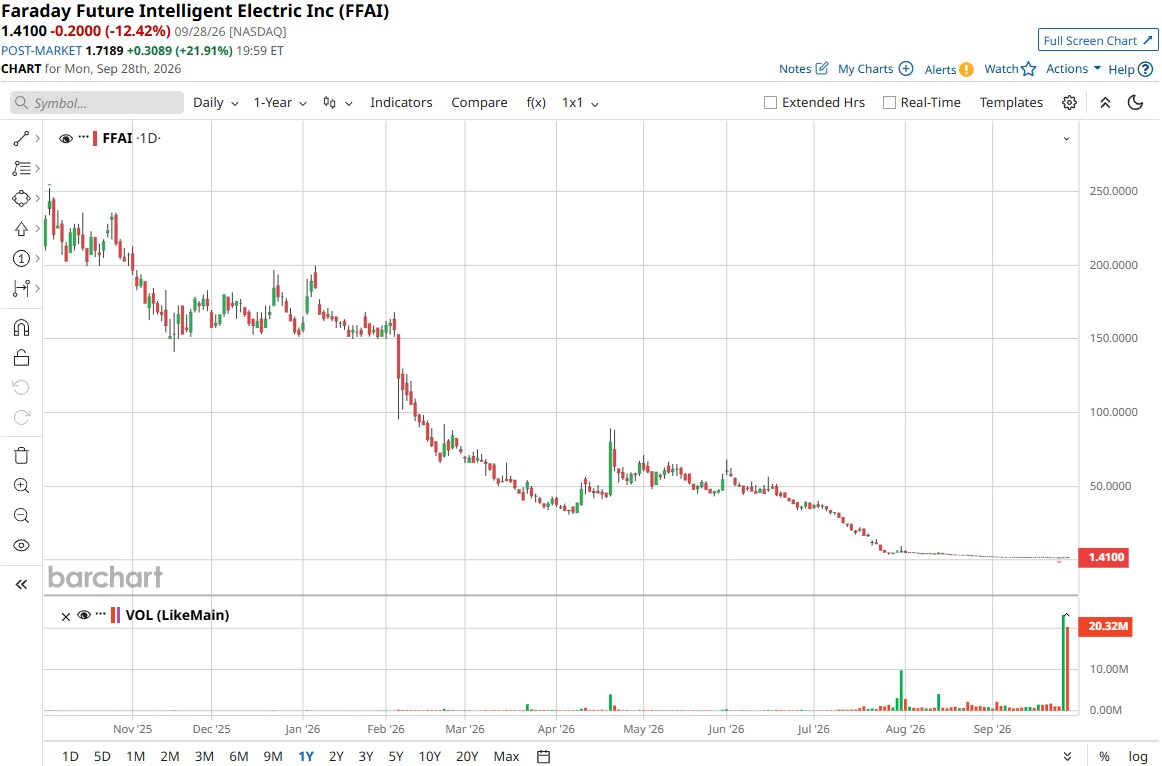
Why a Rapid China Ban Could Backfire
Faraday Future builds electric vehicles and sells AI-powered robots. Based in El Segundo, California, the company is trying to make robotics a larger part of its business while managing obligations from its automotive push.
Wang's warning is about the speed of a supply-chain shift, not an argument against making robots in America. Wang says Faraday can source only about 40% of the components it needs domestically, and fewer than half of those options are competitively priced.
That makes higher costs and production delays a practical risk. If access to Chinese hardware narrows before alternatives are ready, U.S. companies could face higher costs or production delays.
The timing matters because Faraday is trying to expand, not merely protect an existing product line. It reported 552 cumulative robot sales and shipments by the end of August, then unveiled nine new robot configurations at its Sept. 19 launch event.
Faraday also aims to bring a U.S. robotics factory online by year-end, with its “Built in USA” strategy, and produce its first new device there in February 2027. Then, on Sept. 28, Faraday announced a proposed combination of its robotics business with AIxC at an estimated $200 million valuation.
Those milestones give investors a way to judge Wang’s argument against results. Faraday’s factory timeline and robot deliveries will show whether it can rely less on Chinese hardware without driving up costs. Until then, the warning is best viewed as a risk to its growth plans, not proof that those plans will succeed.
FFAI’s Financial Reality
Faraday released its second-quarter results on August 13. Its $836,000 in revenue rose more than 1,400% from $54,000 a year earlier, bringing first-half revenue to $1.35 million. This growth came from a small base and remains modest beside the cost of running the business.
Its revenue cost fell 57% to $11.54 million from $26.91 million a year earlier. The gap between that expense and quarterly sales shows how far Faraday remains from covering its costs. That pressure persisted despite a narrower net loss of $38.96 million, down 69% from $124.7 million. FFAI attributed the improvement partly to cost controls and healthier product contribution margins.
The balance sheet offers a similarly mixed picture. Its stockholders’ equity was positive at $1.41 million on June 30, but that was below Nasdaq’s $2.5 million minimum. The company also reported that liabilities had fallen by more than $100 million year over year, excluding restricted financing cash and its matching obligation.
More recently, Faraday amended a convertible note agreement to return $5 million in restricted cash and reduce the corresponding debt. The remaining balance of about $5.88 million must be repaid in cash within six months.
What Analysts See Ahead
Faraday is due to report earnings on Nov. 20, with the consensus estimate calling for a September-quarter loss of $17.11 per share versus $183.58 a year earlier. The narrower loss would represent a 90.68% improvement, though the company would remain deeply unprofitable.
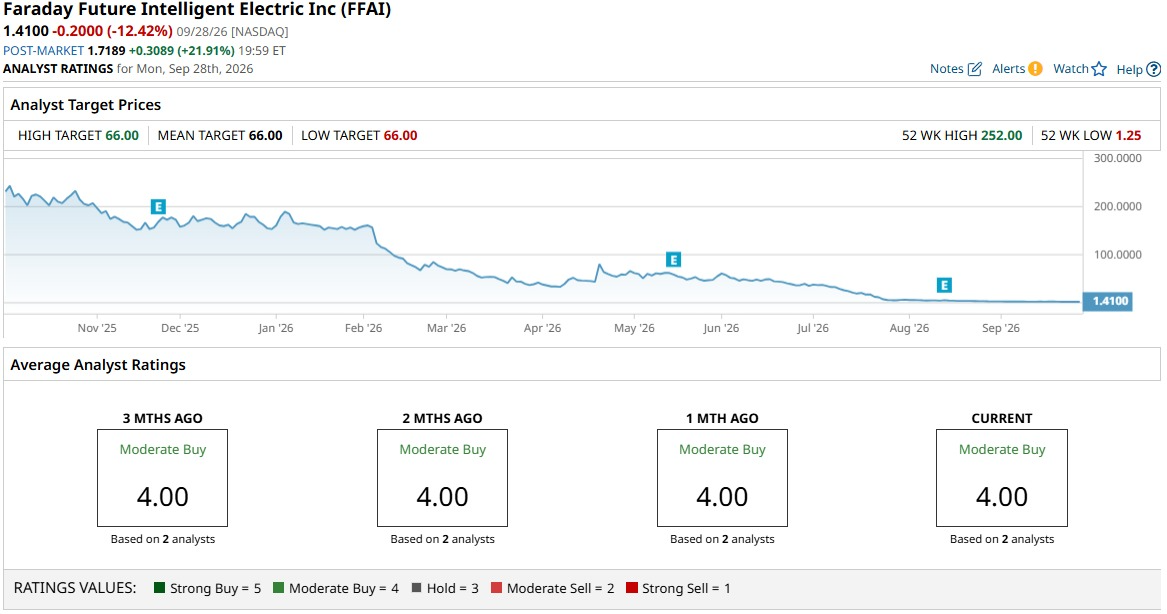
There is optimism in the research, though the forecasts differ. On August 19, analyst Theodore R. O’Neill reiterated Litchfield Hills Research’s “Buy” rating and $66 12-month target, based on discounted future earnings.
Citing progress in Faraday’s robotics rollout, the firm raised its 2026 revenue estimate to about $5.8 million from $4.5 million. The firm views U.S. robotics compliance as a potential opportunity for Faraday’s domestic manufacturing plans.
Emerging Growth Research has a separate “Buy-Emerging” rating and a $30 12-month target. It adjusted the target for Faraday’s 1-for-150 reverse stock split and revised projected share count.
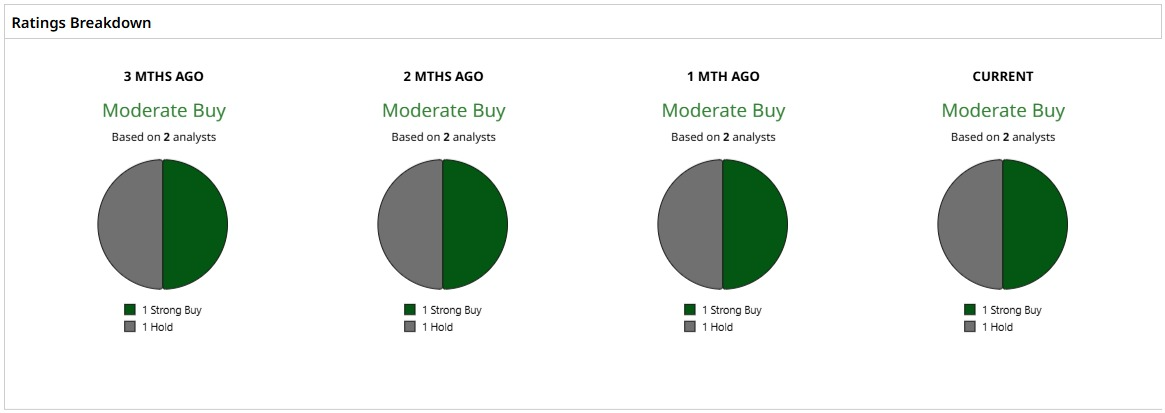
The wider outlook is upbeat, but only two analysts cover the stock, reaching a consensus “Moderate Buy” rating. Their average price target stands at $66, implying roughly 4,581% upside. It’s a huge gap, and Faraday will need to deliver on its robotics plans to give investors reason to believe it can close.
Conclusion
Wang’s warning deserves attention. Cutting off Chinese hardware before domestic suppliers are ready could slow Faraday’s robotics plans and raise costs. But the warning alone does not make FFAI a buy. Robot deliveries are growing, while losses remain large, and U.S. production is unproven. FFAI’s shares look more likely to remain under pressure than rise steadily until Faraday shows it can expand sales without straining its finances. Investors should take the supply chain risk seriously, but wait for stronger results before betting on a turnaround.
On the date of publication, Ebube Jones did not have (either directly or indirectly) positions in any of the securities mentioned in this article. All information and data in this article is solely for informational purposes. For more information please view the Barchart Disclosure Policy here.