


Michael Burry has increased his Palantir Technologies (PLTR) short “in some size,” extending a position he has held since late 2025, despite periods when the stock has moved sharply against him. His focus is on how the company’s growth is accounted for, rather than whether the growth itself is genuine. However, Palantir’s recent results give the bulls solid data to challenge that view, making the short thesis one of the more closely contested debates around the stock.
Burry Expands His Bearish AI and Semiconductor Bets
In a Sept. 22 Substack post, Michael Burry revealed that he had increased his short positions in Nebius Group (NBIS), Micron Technology (MU), Palantir, and the iShares Semiconductor ETF (SOXX), reflecting his doubts over the durability of the AI and semiconductor boom. Not all of those shorts may age well, though. I recently made the case that Nebius' latest price hike suggests Burry could be betting against the strongest neocloud stock. At the same time, he added to five long positions: QXO (QXO), Sprouts Farmers Market (SFM), MercadoLibre (MELI), Build-A-Bear Workshop (BBW), and Birkenstock Holding (BIRK). Burry described them as full positions after their steep corrections had brought their prices to attractive levels. He connected his bearish thesis to Acer CEO Jason Chen’s pushback against fears of a prolonged memory shortage. Michael Burry also argued that the Nasdaq 100 ($IUXX) was historically overvalued and “top-heavy” while trading near record highs.
Burry’s Bear Case: It’s About Accounting, Not Growth
Burry’s criticism centers partly on Palantir’s stock-based compensation and financial reporting. He argued that the company issued $5 billion worth of employee shares over the past year, about six times its reported stock-compensation expense, the largest gap among the 66 companies he reviewed. Burry also cited deferred revenue equal to 32% of quarterly revenue, which he considers closer to Accenture (ACN) than typical SaaS peers. Receivables are another concern, with one customer accounting for 27% of the total despite contributing less than 10% of revenue. Palantir paid no federal cash taxes in 2025 despite generating $1.6 billion in pre-tax income, after using $9 billion in net operating losses. Burry believes the company’s $400 billion-plus valuation could eventually fall below $100 billion.
The Bull Case Burry Isn't Fully Addressing
In the second quarter, Palantir’s revenue grew 93% to $1.94 billion, prompting the company to raise its full-year guidance to $8.15 billion. Contribution margin climbed 10 percentage points to 74%, and operating cash flow totaled nearly $2.1 billion in the first half of 2026. Existing customers accounted for 82% of commercial growth, challenging the “consulting engagement” characterization. Earlier this year, Palantir’s stock also gained 35% in a single month while Burry maintained his position.
Burry isn’t questioning Palantir’s growth itself. His concern is how much that growth ultimately costs shareholders. However, bulls argue that strong cash flow and customer retention cannot be explained away by accounting alone. Both sides are looking at the same numbers but drawing sharply different conclusions. I've leaned toward the bull side myself. As I covered earlier, I argued Palantir's 'too expensive' excuse no longer held up once the stock hit its 52-week lows.
About Palantir Stock
Palantir Technologies is a software company that develops and deploys data integration and analytics platforms for government agencies, defense organizations, and enterprise clients. Its notable products include Palantir Gotham, Foundry, and Apollo. Palantir also partners with companies such as Ondas (ONDS) to develop AI-powered surveillance and intelligence solutions. The company is headquartered in Aventura, Florida, and was founded in 2003.
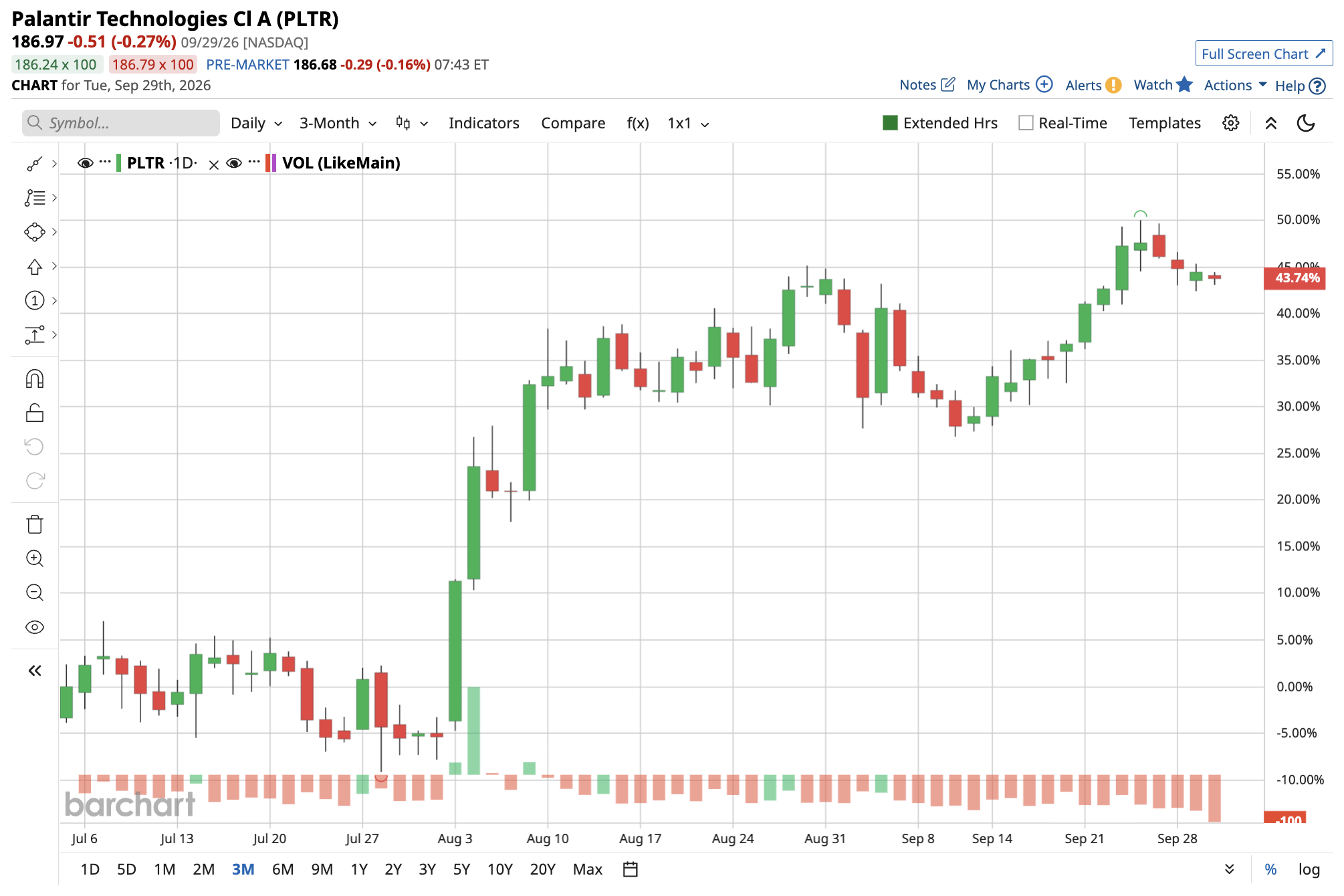
Over the last 12 months, the stock has been trading sideways. The stock climbed to around $160 in June, then slid to a 52-week low of $106. However, sentiment shifted dramatically after Palantir reported strong quarterly results. The company delivered 93% YoY revenue growth and raised its full-year revenue outlook. The results reinforced investor confidence that demand for Palantir’s AI software remains exceptionally strong, sending the stock up 29.5% to $162.66 on August 4.
What Do Analysts Expect for PLTR Stock?
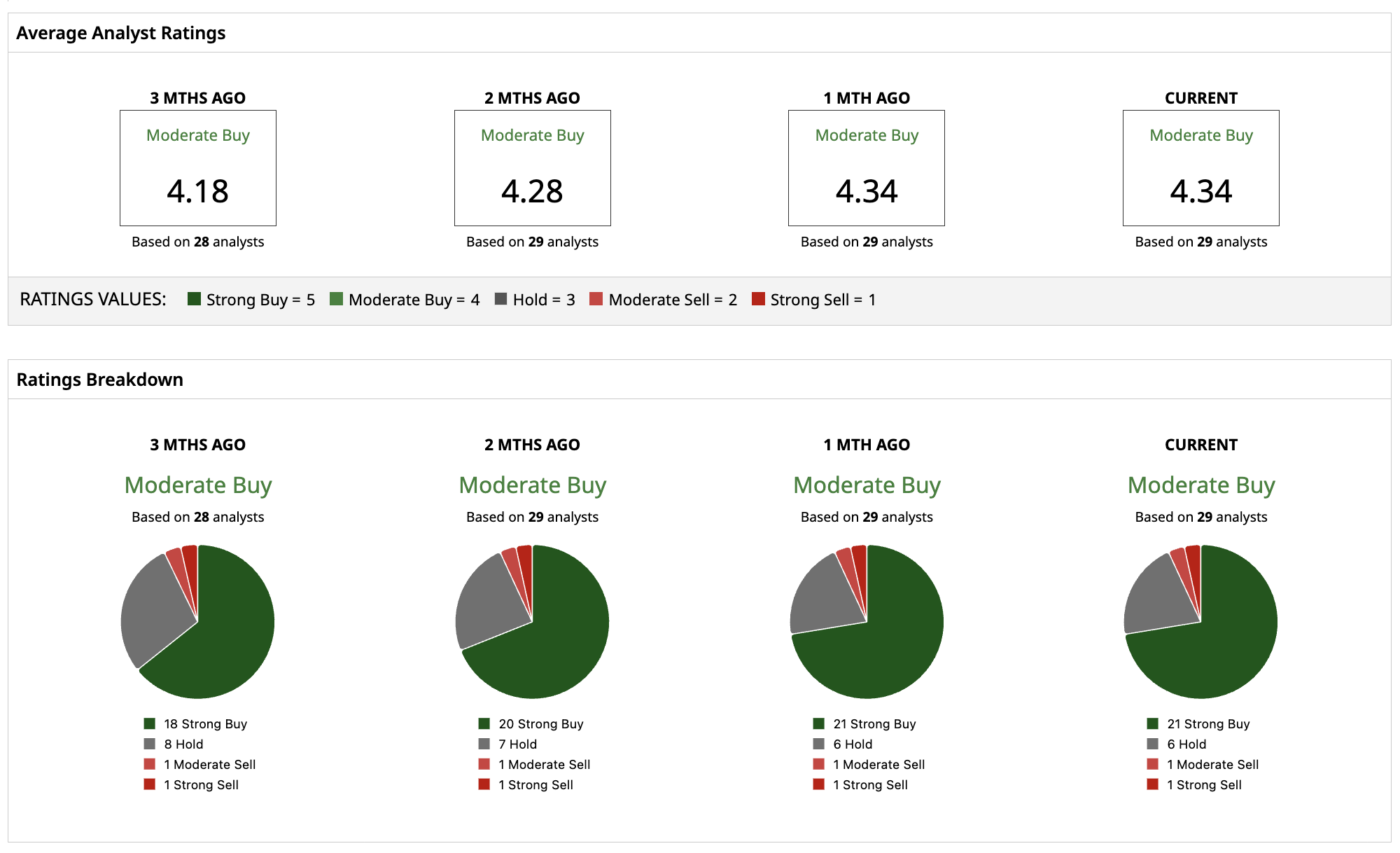
Recently, Wall Street has remained positive on PLTR stock. Rosenblatt Securities analyst John McPeake reiterated a Buy rating and set a price target of $225. Similarly, Oppenheimer analyst Martin Yang maintained a Buy rating with a price target of $200. Based on 29 Wall Street analysts, PLTR holds a consensus “Moderate Buy” rating. The mean price target of $201 sits just above the current share price. The high price target of $255 reflects 36% upside from current levels.
On the date of publication, Jabran Kundi did not have (either directly or indirectly) positions in any of the securities mentioned in this article. All information and data in this article is solely for informational purposes. For more information please view the Barchart Disclosure Policy here.