


- Commonwealth Fusion Systems recently announced a large supply agreement with Fujikura to purchase more than 10,000 km of high-temperature superconducting tape for ARC fusion power plants, with Fujikura investing to expand manufacturing capacity to deliver this volume.
- The deal is described as the largest of its kind for high-temperature superconducting tape, giving Fujikura a long-duration industrial demand anchor as fusion developers work to build a commercial supply chain.
- The next area of focus will be how this long-term high-temperature superconducting tape commitment might influence Fujikura's broader investment narrative.
Scan how fusion-linked demand for Fujikura fits into the wider energy transition story by comparing it with our hand-picked 39 power grid technology and infrastructure stocks.
What Is Fujikura's Investment Narrative?
To own Fujikura, you need to buy into a story about execution in complex, capital hungry hardware markets. Telecoms, automotive and power systems are still the operational backbone, with recent revenue and net income growth backing up that core. The fusion tape contract plugs directly into that reality. It signals real world demand for Fujikura’s high temperature superconducting technology, but also commits the business to capacity expansion that needs to be delivered on time, at controlled cost and with acceptable yields.
In the short term, the agreement looks material for orders and factory loading, yet it does not erase the main sensitivities. The stock already trades on a P/E of 43.1x, above both the estimated fair multiple and Electrical peer averages, and the share price has been volatile even as earnings and returns on equity have been strong. When you layer in a ¥60b bond shelf on top of existing borrowing, you get a cleaner view of the big bet management is making on growth execution.
Even so, there is a less comfortable angle here that only really comes into focus when you look closely at ...
There's only one way to know the right time to buy, sell or hold Fujikura. Head to Simply Wall St's company report for the latest analysis of Fujikura's Fair Value.
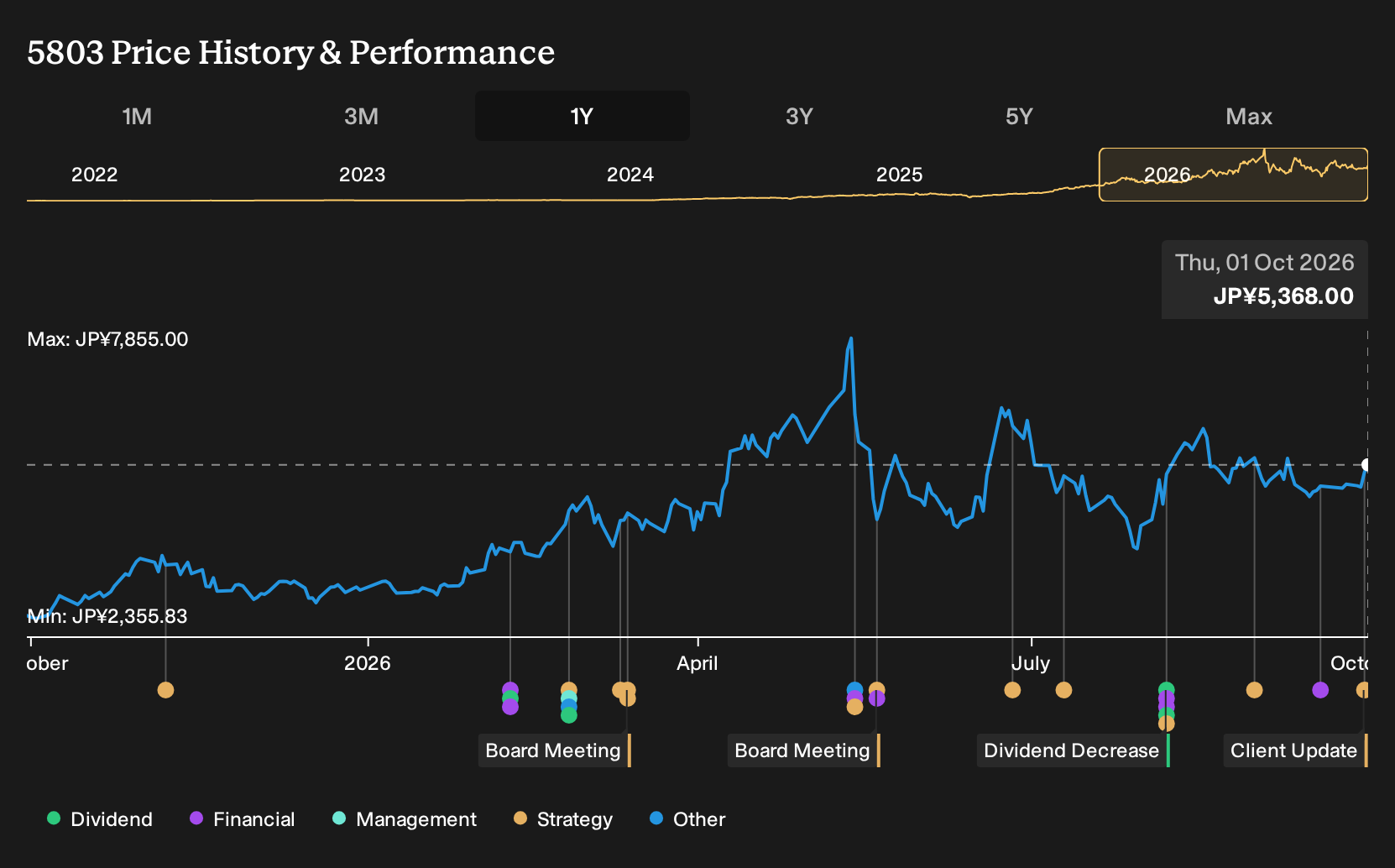
Exploring Other Perspectives
The two fair value estimates from the Simply Wall St Community stretch from about ¥3,481 to ¥7,352 per share, so retail opinions on Fujikura already span more than a 2x gap. Those views were set before the fusion supply deal and ¥60b bond shelf, so use them as context and explore several alternative viewpoints.
Explore another Fujikura fair value estimate, including one that suggests as much as 35% downside from the current price.
The Verdict Is Yours
Don't just follow the ticker. Dig into the data and build a conviction that's truly your own.
- A great starting point for your Fujikura research is our analysis highlighting 2 key rewards and 1 important warning sign that could impact your investment decision.
- See our latest analysis for Fujikura. The report includes a comprehensive fundamental analysis summarized in a single visual, the Snowflake, making it easy to evaluate Fujikura's overall financial health at a glance.
Looking For More Investment Ideas Beyond Fujikura?
If the Fujikura story has you thinking about how to position your portfolio for different types of opportunities, it can help to scan a wider set of companies that meet clear, rules-based filters rather than chasing headlines one by one.
- For investors who want income with resilience, start by reviewing stocks that screen as income-focused fortresses through the 19 dividend fortresses.
- If capital preservation and steadier balance sheets sit higher on your priority list, filter for companies that pass the 21 resilient stocks with low risk scores.
- When you want potential mispricing supported by fundamentals instead of buzz, cast a net over businesses highlighted in the 76 high quality undiscovered gems.
This article by Simply Wall St is general in nature. We provide commentary based on historical data and analyst forecasts only using an unbiased methodology and our articles are not intended to be financial advice. It does not constitute a recommendation to buy or sell any stock, and does not take account of your objectives, or your financial situation. We aim to bring you long-term focused analysis driven by fundamental data. Note that our analysis may not factor in the latest price-sensitive company announcements or qualitative material. Simply Wall St has no position in any stocks mentioned.
Have feedback on this article? Concerned about the content? Get in touch with us directly. Alternatively, email editorial-team@simplywallst.com