


Philippine inflation looks set to bounce back toward 6.7% in September, and that potential reset in price pressures puts the big listed banks under a sharper spotlight. Higher policy rates can reshape which lenders gain or lag, so sitting on the sidelines risks missing important shifts in the financial sector. This article walks through three large Philippine bank stocks exposed to this inflation story and how the coming BSP decisions could matter for each one.
The banks highlighted below are only a sample. The full screen on Philippine large-cap lenders surfaced 11 more companies with equally compelling stories that are not covered in this article.
To identify and analyze those additional high-conviction ideas, head straight to the Philippine Large-Cap Banks screener.
Metropolitan Bank & Trust (PSE:MBT)
Overview: Metropolitan Bank & Trust is a large Philippine commercial and investment bank focused on loans, deposits, and treasury services.
Operations: MBT generates most of its ₱147.6b revenue from branch banking at ₱80.1b, treasury at ₱29.8b, and consumer banking at ₱19.4b.
Market Cap: ₱274.8b
Metropolitan Bank & Trust gives you exposure to a leading Philippine lender with a broad deposit base that fits the screener’s focus on large, dividend paying banks. Its sizeable branch banking and treasury operations influence how the group may be affected by changes in interest rates, particularly through funding costs and net interest margins.
Those earnings engines only matter if you can see the full picture behind them, so spend two minutes with the analysis report for Metropolitan Bank & Trust to understand what net interest margin shifts might really mean.

Bank of the Philippine Islands (PSE:BPI)
Overview: Bank of the Philippine Islands is a major Philippine lender providing retail, SME, corporate and investment banking services across the country.
Operations: The bank generates its ₱182.9b revenue entirely from customers in the Philippines, reflecting its focus on the domestic market.
Market Cap: ₱497.9b
Bank of the Philippine Islands sits right in the middle of the Philippine Large-Cap Banks theme, offering pure exposure to a big domestic lender that leans on low cost deposits, broad lending franchises, and steady fee income as policy rates stay elevated.
"Rapid expansion in BPI's Agency Banking channel and focus on digital onboarding is enabling the bank to reach previously underserved, unbanked, and rural populations, aligning with consumer behavior shifts and economic formalization. This is likely to drive sustained long-term growth in deposit base, low-cost funding, and non-interest income."
The real swing factor is how one subtle shift in customer behavior could reshape profitability even more than the policy-rate story itself.
That quiet shift in behavior is exactly where the story gets interesting, and the full narrative for Bank of the Philippine Islands shows how BPI’s deposit engine could be accelerating far beyond headline rate moves.

BDO Unibank (PSE:BDO)
Overview: BDO Unibank is the Philippines' largest universal bank, linking retail and corporate clients to core lending, deposits, and fee services.
Operations: BDO Unibank generates about ₱297.4b from Commercial Banking, supported by insurance at ₱33.8b and private banking at ₱3.4b, with smaller contributions from other segments.
Market Cap: ₱590.1b
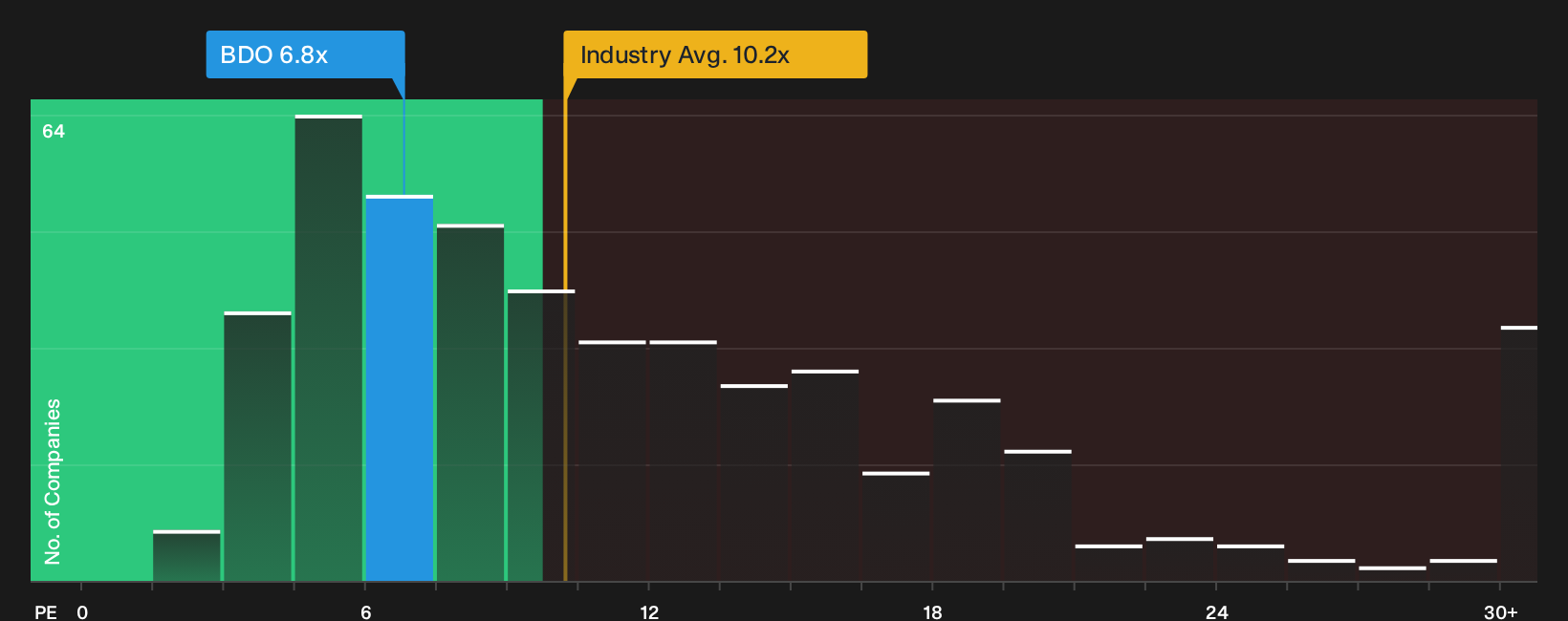
BDO Unibank gives you exposure to the largest Philippine universal lender in this screen. It combines a broad commercial franchise, diversified income, and a 3.98% dividend yield with a P/E of 6.8x that is below peers. However, the 2.4% bad loan ratio means the payoff from higher BSP rates depends on how one unseen pressure in its loan book plays out.
That hidden pressure point makes it even more important to read the analysis report for BDO Unibank and see whether BDO Unibank’s low P/E is masking something or offering a break.
Seeking Alternatives Beyond Philippine Banks?
New ideas move first, and the market usually catches up later. Track fresh breakouts and momentum plays before they stop flying under the radar. For now, act while these opportunities remain less noticed.
- Target resilient cash generators by scanning a curated list of solid balance sheet and fundamentals (207 results) that filters for durable finances, while much of the market is focused on headlines.
- Spot early waves in automation by reviewing the hand picked 89 robotics and automation stocks before capital rotates there in size and reduces potential upside.
- Monitor capital flows into digital assets by checking the focused 17 cryptocurrency and blockchain stocks while valuations continue moving in and out of favor each week.
This article by Simply Wall St is general in nature. We provide commentary based on historical data and analyst forecasts only using an unbiased methodology and our articles are not intended to be financial advice. It does not constitute a recommendation to buy or sell any stock, and does not take account of your objectives, or your financial situation. We aim to bring you long-term focused analysis driven by fundamental data. Note that our analysis may not factor in the latest price-sensitive company announcements or qualitative material. Simply Wall St has no position in any stocks mentioned.
Have feedback on this article? Concerned about the content? Get in touch with us directly. Alternatively, email editorial-team@simplywallst.com