


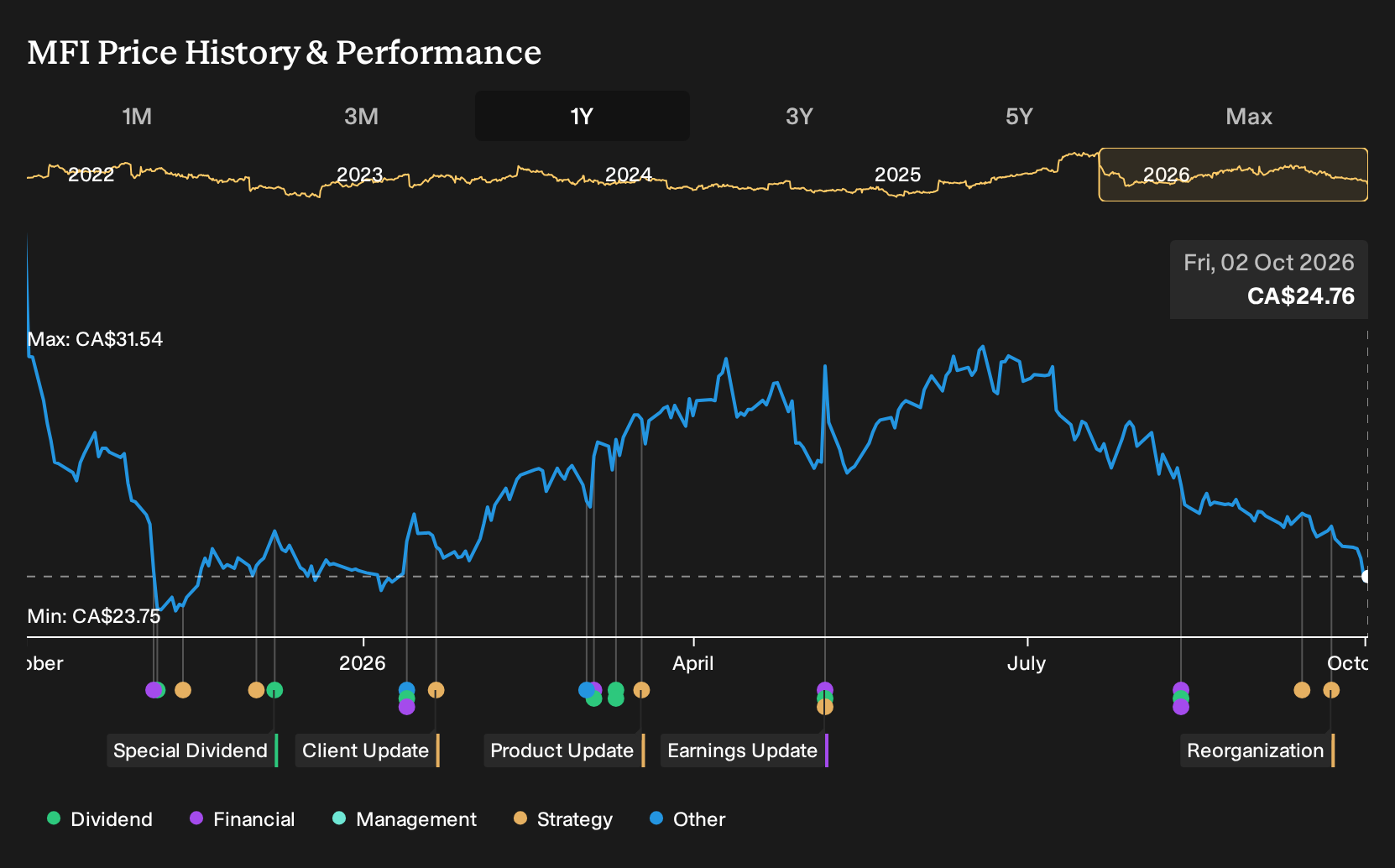
- Maple Leaf Foods announced a plan in September 2026 to consolidate its U.S. plant protein production into a single Centre of Excellence in Indianapolis, with output at Seattle and Turners Falls to be wound down in phases through an expected completion in the fourth quarter of 2027.
- This move concentrates Maple Leaf Foods' U.S. plant protein operations into one high scale hub. It could reshape fixed costs, operational complexity and how effectively the business supports its plant protein brands over time.
- We will explore how Maple Leaf Foods' investment narrative is affected by concentrating U.S. plant protein production into a single Indianapolis facility.
Scan other protein producers taking similar cost-focused steps and compare Maple Leaf Foods with a curated list of solid balance sheet and fundamentals (7 results) for potential alternatives in your watchlist.
Maple Leaf Foods Investment Narrative Recap
To own Maple Leaf Foods, you need to believe management can turn a broad protein platform into steadier earnings, not just one off boosts and timing quirks. The U.S. plant protein consolidation feeds directly into that story. It tightens the cost base and simplifies operations, which supports the near term margin improvement catalyst if execution in Indianapolis is smooth.
The flip side is concentration risk. A single U.S. hub raises exposure to any disruption at that facility and puts more pressure on demand for plant based products. The biggest near term risk remains margin volatility from input costs, consumer pricing pushback and higher SG&A if product launches do not translate into volume and pricing power.
The Indianapolis move sits inside the broader Fuel for Growth program, which already focuses on manufacturing automation and network efficiency. That context matters. Investors tracking Maple Leaf Foods are really watching whether these footprint changes across bacon, poultry and now plant protein keep lifting adjusted profitability rather than just shuffling costs around the network.
There is also the pending Canada Packers spin off in the background. That separation could change how this new Centre of Excellence is reported and capitalized, affecting how you judge execution on the plant protein side. Until there is more detail on segment targets and capital allocation post spin, the consolidation is best viewed as operational groundwork for whatever structure comes next.
What The Maple Leaf Foods Consensus Is Baking In
Maple Leaf Foods' analyst narrative points to CA$5.6b in revenue and CA$467.3m in earnings by 2028. That path assumes revenue growth of 4.2% per year and an earnings increase of about CA$372.7m from CA$94.6m today.
Uncover why Maple Leaf Foods' fair value indicates a 45% potential upside to its current price that could narrow quickly.
Exploring Other Perspectives
Two fair value estimates from the Simply Wall St Community span a wide band, from about CA$35.90 to roughly CA$83.26, which shows how far opinions on Maple Leaf Foods can stretch. Those views predate the Indianapolis consolidation news, so weigh them against fresh risks around execution, the Canada Packers spin off and global protein demand.
Explore another Maple Leaf Foods fair value estimate, including one that suggests it could be worth just CA$35.90!
Decide For Yourself
Don't just follow the ticker. Dig into the data and build a conviction that's truly your own.
- A great starting point for your Maple Leaf Foods research is our analysis highlighting 4 key rewards and 3 important warning signs that could impact your investment decision.
- See our latest analysis for Maple Leaf Foods. The report includes a comprehensive fundamental analysis summarized in a single visual, the Snowflake, making it easy to evaluate Maple Leaf Foods' overall financial health at a glance.
Looking For More Ideas Beyond Maple Leaf Foods?
If the Maple Leaf Foods story has sharpened your thinking on risk, cash flow and balance sheet strength, it can be useful to line it up against a wider set of candidates using the Simply Wall St Screener.
- For investors who care most about financial resilience, compare Maple Leaf Foods against a broader 8 resilient stocks with low risk scores that aims to keep drawdowns in check.
- If value is your starting point, scan a 6 high quality undervalued stocks that blend quality fundamentals with what may be conservative pricing.
- For those hunting for ideas that are not widely followed, broaden your watchlist through a 9 high quality undiscovered gems with strong underlying numbers.
This article by Simply Wall St is general in nature. We provide commentary based on historical data and analyst forecasts only using an unbiased methodology and our articles are not intended to be financial advice. It does not constitute a recommendation to buy or sell any stock, and does not take account of your objectives, or your financial situation. We aim to bring you long-term focused analysis driven by fundamental data. Note that our analysis may not factor in the latest price-sensitive company announcements or qualitative material. Simply Wall St has no position in any stocks mentioned.
Have feedback on this article? Concerned about the content? Get in touch with us directly. Alternatively, email editorial-team@simplywallst.com