


The Zhitong Finance App notes that a key survey showed that British builders were less optimistic about the future in September and postponed decisions on major projects one after another, even though the industry's sluggish trend showed signs of easing.
The S&P Global Purchasing Managers' Index (PMI) rose to an eight-month high of 46.1, up from 44.3 in August. This figure is better than economists' expectations of 44.9, but the industry is still below 50, the watershed between output growth and contraction.
Although the housing construction sub-index has improved, it is still in a deep contraction range, and continues the sluggish trend that has dashed the Labor government's hopes of leading the real estate construction boom.
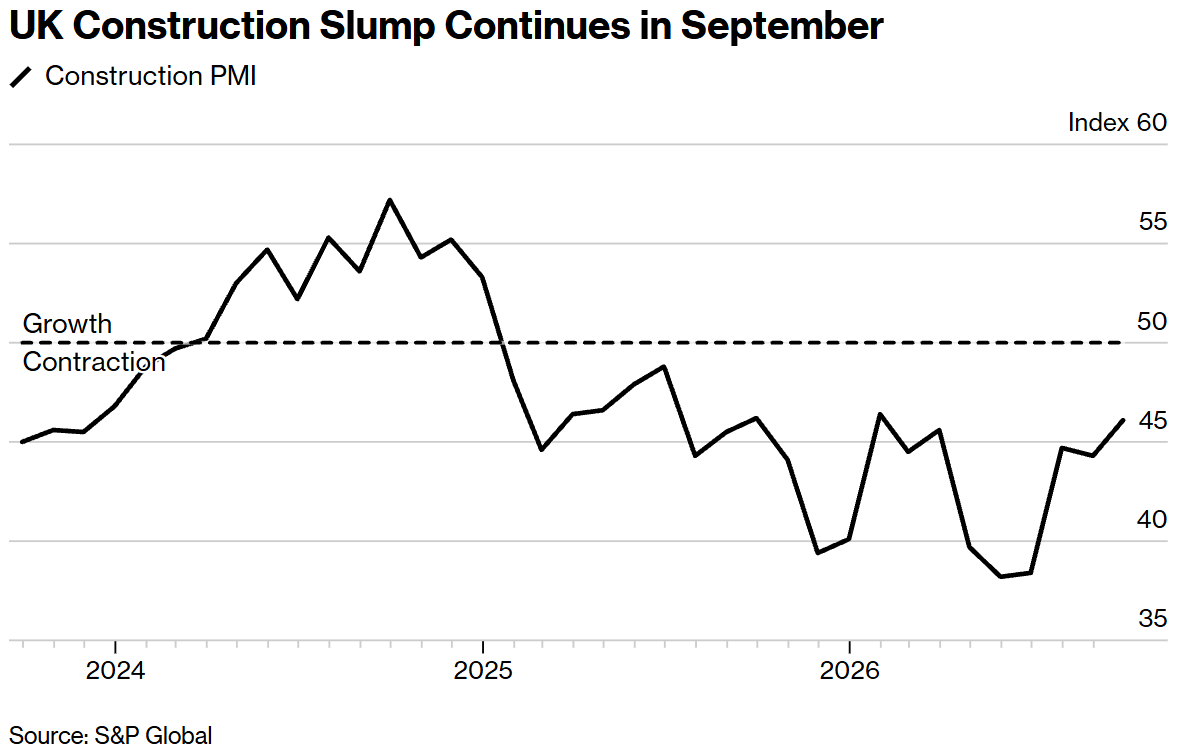
The slump in the UK construction sector continued in September
Higher interest rates, inflation, and weak orders weighed on the industry's growth expectations, and companies delayed decisions due to the uncertainty brought about by the Middle East conflict. The Future Activity Index fell to its lowest level since May.
Tim Moore, financial intelligence and economics director of S&P Global Markets, said, “The total number of new orders added in September was relatively weak, construction companies reported lengthening sales conversion cycles, and customers delayed making major project decisions.” “This is due to weak demand and geopolitical tensions, while some companies also point out that sharp increases in investment costs are putting pressure on them.”
When the war between the US and Iran broke out and inflationary pressure surged again, the construction industry was already in a protracted slump. It has been the weakest link in the UK private sector covered by the PMI survey, and service and manufacturing growth has so far withstood the impact of the conflict.
On the eve of the war, the cost of builders increased at the slowest rate in seven months. However, Moore warned that the trend of easing price pressure “appears unlikely to continue given recent increases in fuel prices and transportation costs.”