


Fed rate hikes, stubborn inflation forces and talk of closer Fed–Treasury coordination have pushed the U.S. Treasury market back into the spotlight, along with the intermediaries that keep it trading smoothly. When policy, bond yields and liquidity collide, some stocks tied to this system can quietly gain leverage over market sentiment. This article breaks down 3 such U.S. Treasury market intermediaries that appear especially exposed to today’s cross-currents.
The stocks covered below are just a starting sample of U.S. Treasury market intermediaries, and the full screen surfaced 12 more U.S. listed banks and broker dealers with equally compelling narratives tied to primary dealer style activity that are not covered here. To identify and analyze the highest conviction Treasury market plays in one place, head straight into the U.S. Treasury Market Intermediaries and Primary Dealers screener.
Federated Hermes (FHI)
Overview: Federated Hermes is an asset manager that runs large money market and fixed income funds heavily invested in U.S. Treasuries and related securities.
Operations: Federated Hermes generates about US$1.9b from its Investment Management Business, with roughly US$1.7b earned in the United States and US$248 million abroad.
Market Cap: US$4.0b
Federated Hermes sits at the Treasury theme’s intersection of money market funds and fixed income strategies, where higher policy rates and an active government bond market can influence product demand and fee potential. For investors who want exposure to that flow-driven opportunity rather than the balance sheet risk of a bank, outcomes depend on how a relatively quiet shift in short term cash preference develops.
As that quiet shift plays out, see the 3 key rewards and 1 important warning sign so you can explore what might amplify or cap the Treasury linked upside.

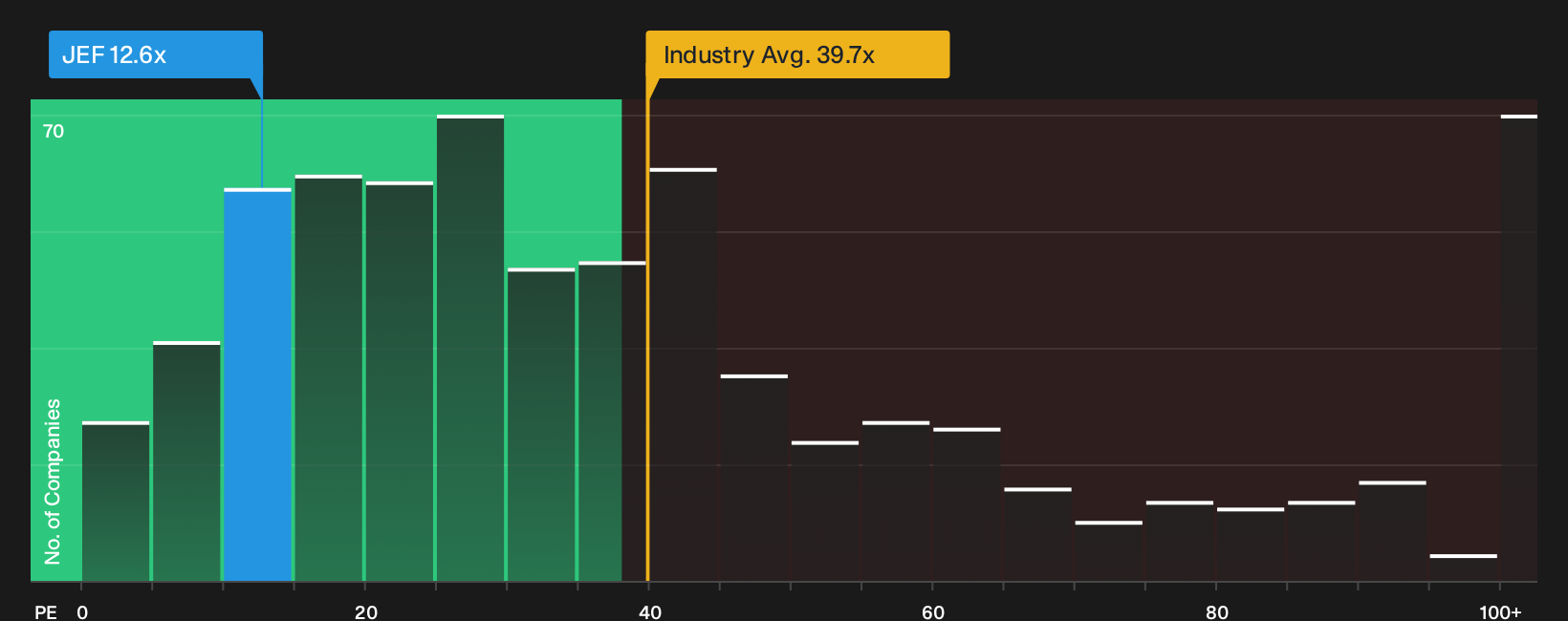
Jefferies Financial Group (JEF)
Overview: Jefferies Financial Group is a global investment banking and capital markets firm focused on advisory, underwriting, trading and securities financing tied to corporate and government debt, including U.S. Treasuries.
Operations: Jefferies Financial Group generates about US$7.8b from Investment Banking and Capital Markets, US$681 million from Asset Management, and US$18 million from reconciliation activities.
Market Cap: US$10.6b
Jefferies Financial Group gives you direct exposure to underwriting and trading in U.S. government and other fixed income securities at a time when Treasury issuance, rate volatility and policy coordination keep debt markets active. However, its reliance on wholesale funding leaves earnings highly sensitive to shifts in its borrowing costs when previously unseen pressures emerge.
That funding sensitivity is exactly why it helps to see the full analysis report for Jefferies Financial Group before liquidity swings start masking where Jefferies Financial Group’s real earnings power sits.
Bank of New York Mellon (BNY)
Overview: Bank of New York Mellon is a global custody and securities services group that helps institutions move, safeguard and service government bonds, Treasuries and other financial assets.
Operations: Bank of New York Mellon generates about US$10.5b from Securities Services, US$7.4b from Market and Wealth Services, US$3.4b from Investment and Wealth Management, and US$61 million from Other activities.
Market Cap: US$98.7b
Bank of New York Mellon matters for this Treasury focused screen because it runs much of the market plumbing that moves, settles and safeguards U.S. government bonds, so its earnings power is closely wired into how active that system stays.
"Accelerated investment in digital platforms, including the AI supported platform operating model funded by roughly US$4b of annual engineering spend and hundreds of AI use cases, is now showing up in 600 basis points of positive operating leverage in the first half of 2026. This can continue to influence net margins and earnings as capacity creation allows more revenue on a relatively fixed employee base."
The real swing factor is how that same infrastructure behaves if one unseen pressure on Treasury related fee volumes or pricing suddenly shifts direction.
When that switch finally flips, read the full narrative for Bank of New York Mellon to see how Bank of New York Mellon’s plumbing could turn accelerating volumes into clearer earnings power.

Curious About Fresh Alternatives?
Some of the most interesting stories often move first. Spot breakout momentum, find what is flying under the radar for now, and act before pricing gets caught up. Get in early.
- Spot high cash generators that the crowd has not fully priced by scanning the 27 high quality undervalued stocks while those opportunities are still dropping below most radars.
- Track income workhorses built for staying power by reviewing the 7 dividend fortresses before yield hunters flood in and compress the payout edge.
- Ride structural demand for secure storage of value by checking the 36 elite gold producer stocks while these producers still trade like yesterday’s story, not tomorrow’s breakout.
This article by Simply Wall St is general in nature. We provide commentary based on historical data and analyst forecasts only using an unbiased methodology and our articles are not intended to be financial advice. It does not constitute a recommendation to buy or sell any stock, and does not take account of your objectives, or your financial situation. We aim to bring you long-term focused analysis driven by fundamental data. Note that our analysis may not factor in the latest price-sensitive company announcements or qualitative material. Simply Wall St has no position in any stocks mentioned.
Have feedback on this article? Concerned about the content? Get in touch with us directly. Alternatively, email editorial-team@simplywallst.com