


Shandong Linuo Pharmaceutical Packaging Co., Ltd. (abbreviation: Linuo Pharmaceutical Package, 301188.SZ), a leading enterprise of heat-resistant glass for daily use in China, officially launched the A+H layout. The Zhitong Finance App learned that according to the Hong Kong Stock Exchange disclosure on September 28, Linuo Pharmaceutical submitted a listing application to the main board of the Hong Kong Stock Exchange, and China Merchants Securities International and Ligao Enterprise Finance Co., Ltd. were co-sponsors.
Linuo Pharmaceuticals plans to use the H share listing to raise capital mainly for industrialization of glass substrates for semiconductor packaging; industrialization of ready-to-use sterile direct contact packaging materials (RTU) and pre-filled syringe systems (PFS); enhancing research and development capabilities for existing and new products and materials; working capital and general corporate use.
China's 9th largest pharmaceutical glass packaging supplier
According to the prospectus, Linuo Pharmaceutical was founded in 2002 and listed on the Shenzhen Stock Exchange GEM in 2021. The company is a well-known supplier of borosilicate special glass in China. Borosilicate special glass has excellent chemical stability, low thermal expansion coefficient and good thermal shock resistance. Based on the above properties, borosilicate special glass is widely used in pharmaceutical packaging, semiconductor packaging, laboratory instruments, heat-resistant containers, etc.
Linuo Pharmaceutical Package focuses on the development, manufacture and sale of borosilicate pharmaceutical glass packaging and heat-resistant glass for daily use. The products are used in the pharmaceutical, biotechnology, food and beverage and household industries. With research and development capabilities in kiln design and glass melting technology, the company developed the first hexagonal stepped all-electric glass melting kiln in China.
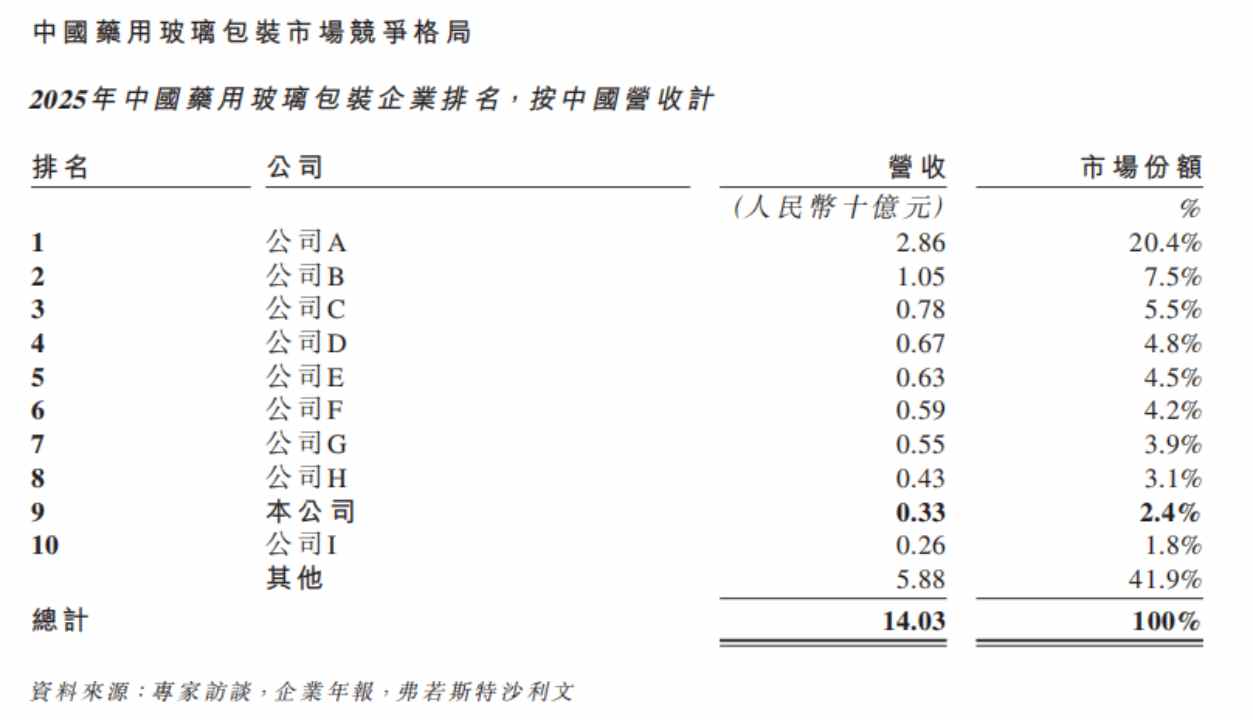
According to Frost & Sullivan data, in terms of sales revenue in 2025, Linuo Pharmaceutical Packs ranked 9th among Chinese pharmaceutical glass packaging suppliers, with a market share of 2.4%. In the domestic heat-resistant glass market, the company ranked first in China and second in the world, with market shares of 9.5% and 5.1% respectively.
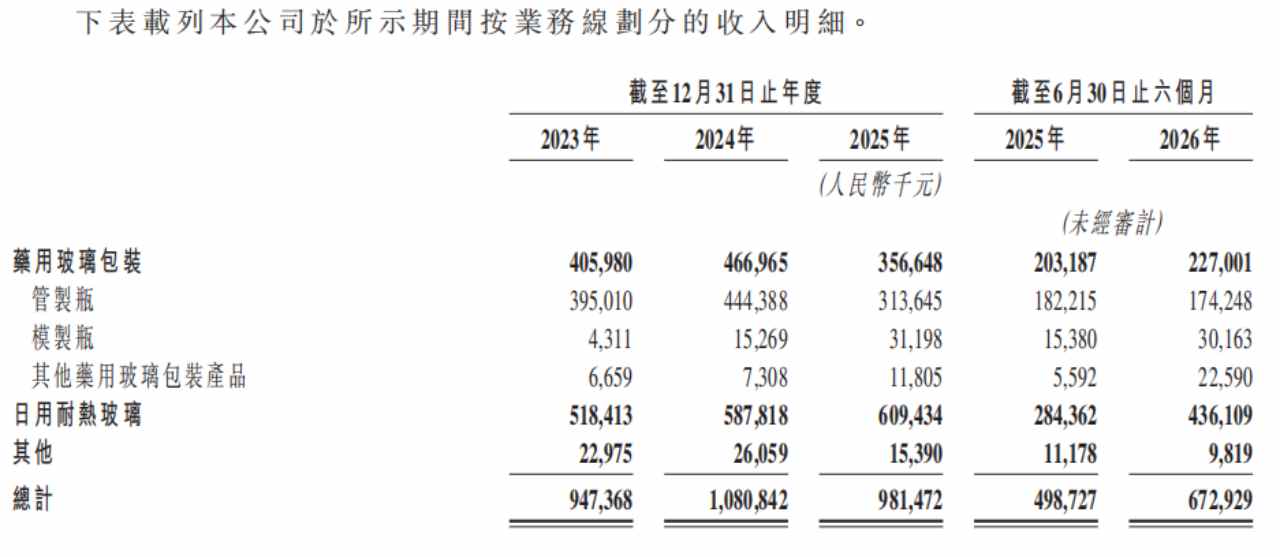
In terms of product structure, Linuo Pharmaceutical's product portfolio includes pharmaceutical glass packaging, covering control bottles, molded bottles and other such as RTU, PFS and borosilicate glass tubes; heat-resistant glass for daily use, including heat-resistant glass tableware, glass turntables, and other heat-resistant glass products; other products mainly include the sale of surplus raw materials, molds and waste. Among them, medicinal glass packaging accounted for 33.7% of revenue in the first half of 2026, and heat-resistant glass for daily use accounted for 64.8%.
The company has a diverse customer base covering domestic and foreign markets, and its products are sold to customers in about 60 countries and regions in America, Asia and Europe. The company's well-known customers for pharmaceutical glass packaging and daily-use heat-resistant glass include: Beite Pharmaceutical, China Resources Shuanghe Pharmaceutical, Lexus, Midea and Galanz, etc. In the first half of 2026, the company's revenue from the top 5 customers was approximately 160 million yuan (RMB, same below), accounting for 23.7% of revenue.
Linuo Pharmaceutical stated in its prospectus that during the track record period, the company launched a glass packaging product for sterile drug administration. In recent years, the company has also made strategic investments in the development of glass substrates for semiconductor packaging. In June 2026, the pilot kiln at the company's New Glass Materials Innovation Incubation Center was ignited, and initial trial production of glass substrates for semiconductor packaging began. On September 21, 2026, the company began providing glass substrate samples to semiconductor packaging industry participants for testing.
Gross margin has been rising steadily, and net profit margins are under pressure
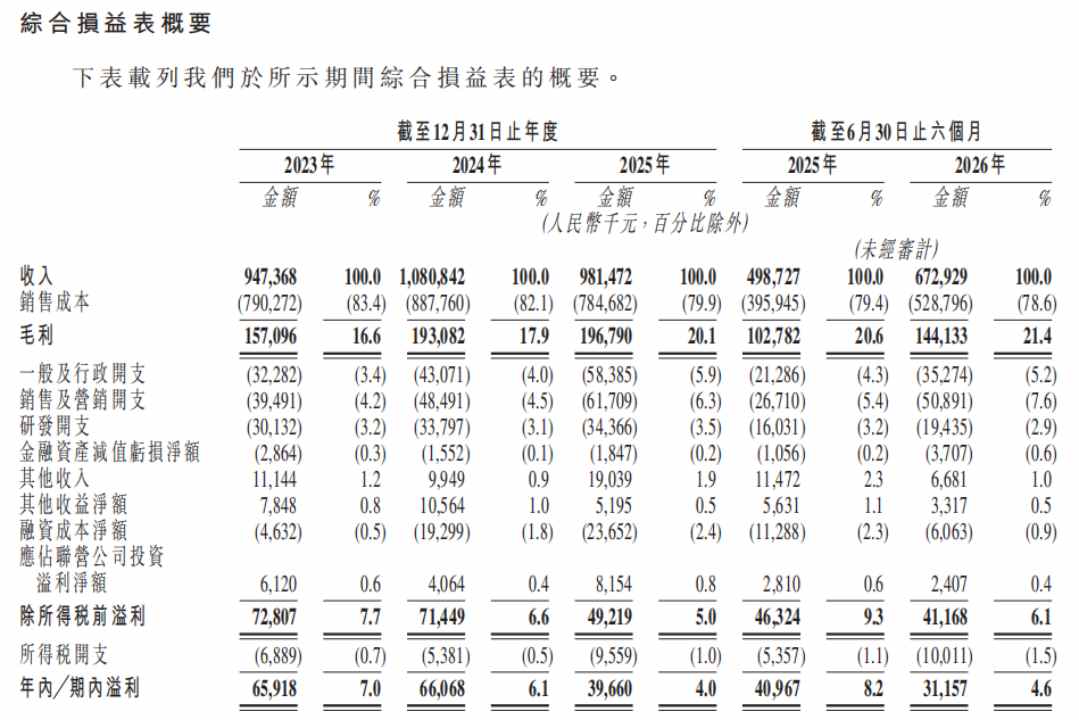
In terms of performance, Linuo Pharmaceutical's revenue scale remained stable. In the six months ending June 30 in 2023, 2024, 2025, and 2026, the company achieved revenue of about 947 million yuan (RMB, same below), 1,081 million yuan, 981 million yuan, and 673 million yuan respectively; gross margin increased from 16.6% to 21.4% over the same period. The company's net profit margin fell from 7% in 2023 to 4% in 2025; the net profit margin for the first half of 2026 was 4.6%, down 3.6 percentage points from the previous year.
The Zhitong Finance App notes that the scale of Linuo's medicine package business has remained stable, mainly due to the stable overall demand in the pharmaceutical glass packaging market and the daily heat-resistant glass market.
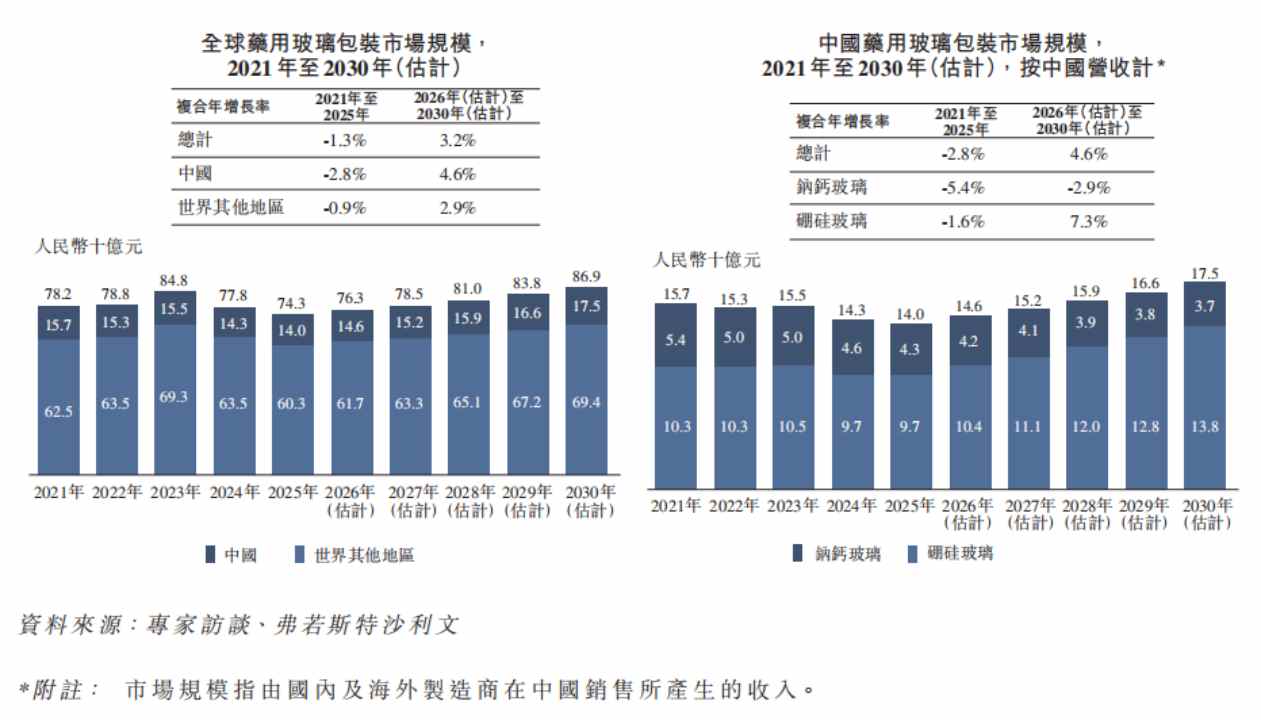
According to Frost & Sullivan data, the global pharmaceutical glass packaging market fell from 78.2 billion yuan in 2021 to 74.3 billion yuan in 2025, with a compound annual growth rate of -1.3%. During this period, global public health emergencies led to a phased increase in demand for vaccine and related injection packaging. The market size of pharmaceutical glass packaging reached 84.8 billion yuan in 2023; since then, as related demand returned to normal and pharmaceutical companies digested inventories, the market size declined somewhat. The global market is expected to grow to $86.9 billion by 2030, with a CAGR of 3.2% during the forecast period.
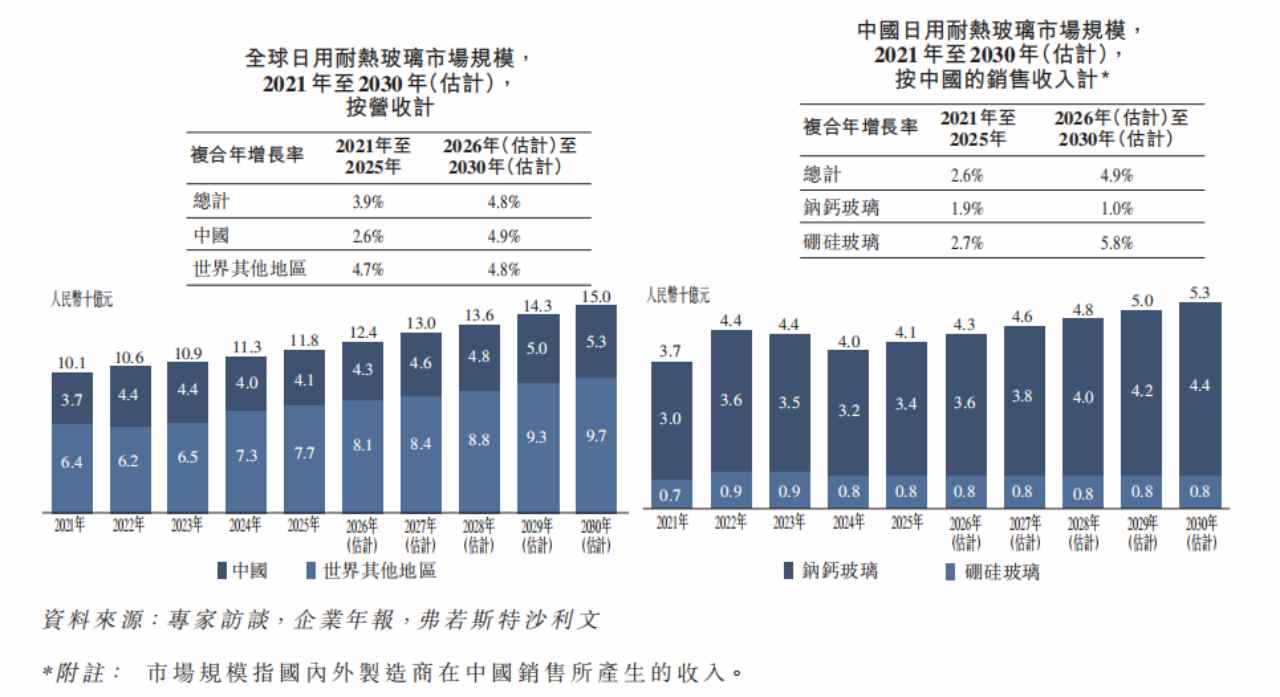
The global household heat-resistant glass market grew from 10.1 billion yuan in 2021 to 11.8 billion yuan in 2025, with a compound annual growth rate of 3.9%. During this period, glass products gradually replaced some plastic and metal kitchen products due to their characteristics such as being less likely to absorb odors, easy to clean, and reusable. The global market size is expected to grow further to $15 billion by 2030, with a CAGR of 4.8% during the forecast period. In the future, product updates and quality upgrades in the European and American markets, as well as the increase in the penetration rate of heat-resistant kitchen products in emerging markets such as Asia and Latin America, will jointly drive global market growth.
Since 2023, the net profit margin of Linuo Pharmaceutical Packs has declined, on the one hand, due to fluctuations in the gross margin of the pharmaceutical glass packaging business. The gross margin of this business fell from 21.5% in 2024 to 17.6% in 2025, mainly due to weakening downstream demand due to ongoing medical insurance fee control measures, and a decline in drug prices after the implementation of centralized procurement policies, putting pressure on product prices to drop. Furthermore, the rapid increase in the company's sales and marketing expenses is also putting pressure on profit margins. In the first half of 2026, the company's sales and marketing expenses reached 508.91 thousand yuan, an increase of 90.5% over the previous year. Linuo Pharmaceuticals stated in its prospectus that advertising and marketing expenses and sales and service fees increased dramatically in the first half of 2026, mainly due to increased platform promotion expenses and service fees related to the growth of the company's e-commerce business.
The semiconductor packaging glass substrate business is expected to develop a new growth curve
Against the backdrop of profit pressure, Linuo Pharmaceutical is also seeking new growth points from the outside world, and glass substrates for semiconductor packaging are viewed as a potential development direction.
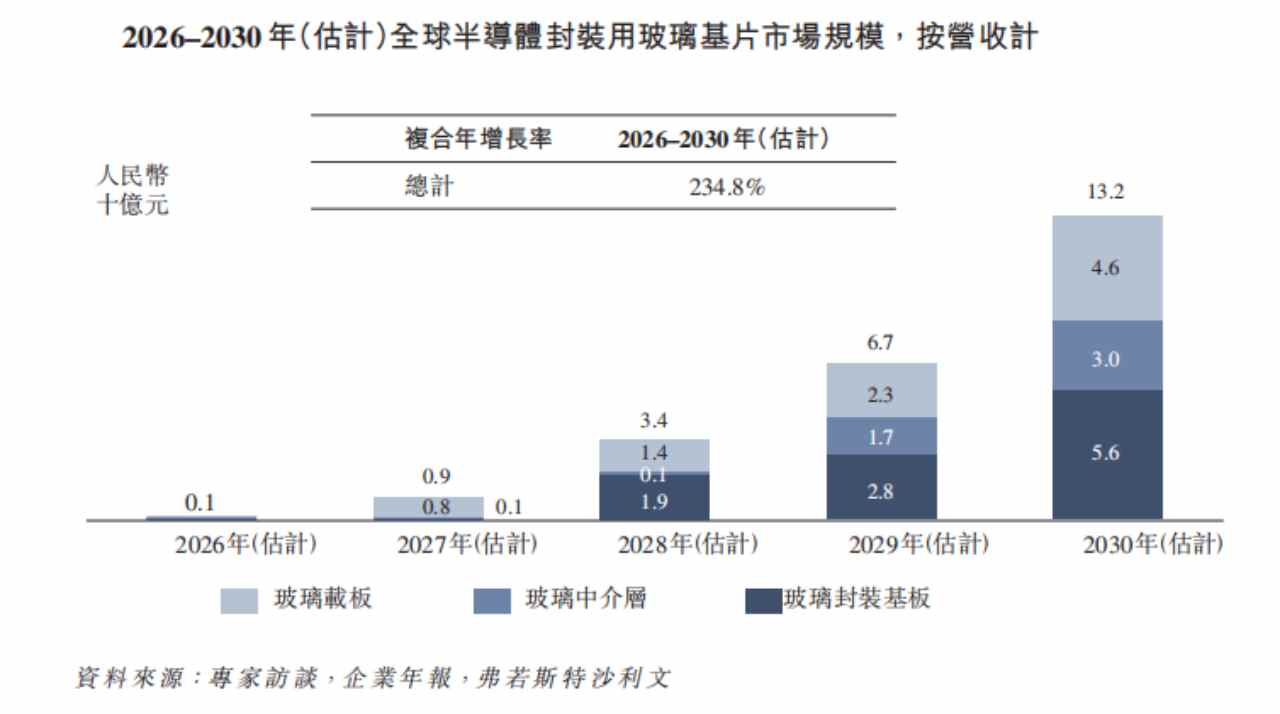
According to Frost & Sullivan data, the global market size of glass substrates for semiconductor packaging is expected to increase from 100 million yuan in 2026 to 13.2 billion yuan in 2030, with a compound annual growth rate of 234.8%. This rapid growth stems from a lower market base, and the industry is expected to shift from product verification and small-batch production to commercial applications. By 2030, the market size of glass substrates used in glass core packaging substrates, carrier boards and intermediate layer applications is expected to reach 5.6 billion yuan, 4.6 billion yuan and 3 billion yuan respectively.
According to the prospectus, Linuo Pharmaceutical is planning to build a glass substrate production line with an estimated annual production capacity of 4.8 million glass substrates, which is suitable for subsequent TGV processing and semiconductor packaging. The project is expected to be built at the Jinan plant. The development of a glass substrate production line is expected to enable large-scale production and commercialization of glass substrates for semiconductor packaging, enabling the company to grasp the growing demand for advanced packaging materials driven by the rapid development of the semiconductor packaging industry and consolidate the company's position in this emerging market.
It is worth noting that Linuo Pharmaceutical Package mentioned in the prospectus that the new materials and applications are different from the company's existing product line in terms of technology, production process, customer requirements and market dynamics, and the company's experience and capabilities in these fields are still relatively limited. In particular, glass substrates for semiconductor packaging must meet strict requirements in terms of thermal expansion control, flatness, dielectric properties, defect control, and application testing. As semiconductor packaging technology evolves, its technical specifications and intended uses may change rapidly. The company may not be able to continuously achieve the required performance or quality on a commercial scale, or quickly adjust products to meet relevant changes, nor can the company guarantee that such products will be developed or fully completed as planned or verified by customers.
Overall, Linuo Pharmaceutical has built a stable basic market based on the technical foundation of borosilicate specialty glass and pharmaceutical glass. In the future, the company is expected to use this H-share capital raising to promote business expansion on the new materials circuit and create a new growth curve. However, whether long-term growth can be successfully realized still depends on the R&D results of semiconductor glass substrates, customer verification progress, production capacity implementation, and changes in the competitive landscape of the industry.