


Energy markets feel fragile again. The IMF is warning about a fresh energy shock just as demand for electricity hungry technologies, including AI, keeps building. That squeeze puts long term storage and efficient power use firmly in the spotlight. Battery technology companies sit right in that cross current. This article breaks down three stocks from our power storage screener that may help you think about positioning your portfolio for that shift.
The companies covered below are just a sample, and the full screen surfaced 58 more battery technology stocks with equally compelling narratives that are not covered in this article. To identify your own high-conviction ideas across EV battery makers, solid-state developers and grid storage providers, head straight into the Battery Technology screener
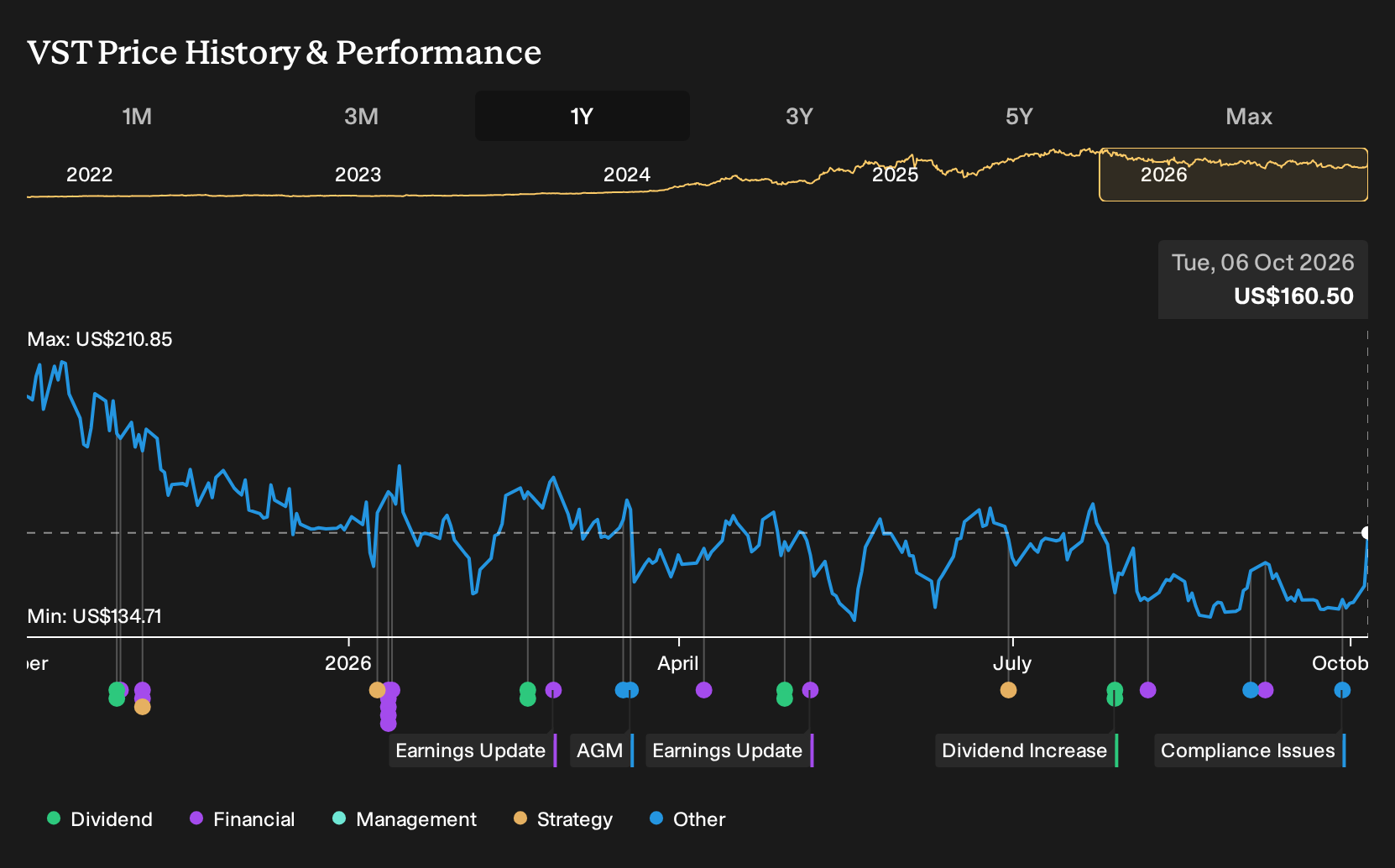
Vistra (VST)
Overview: Vistra is a US power producer and retailer that couples a large generation fleet with grid-scale battery storage to support electricity demand.
Operations: Vistra generates about US$19.2b in revenue, mostly from US$14.9b Retail and US$7.8b Texas segments, entirely within the United States.
Market Cap: US$48.6b
Vistra matters in this battery technology screener because its grid-scale storage projects plug directly into real-world power demand from energy hungry data centres.
"In January 2026, Vistra signed 20-year power purchase agreements to supply Meta with more than 2,600 megawatts of nuclear electricity across three PJM plants. This is described as the largest nuclear uprate ever backed by a single corporate customer."
What really shapes Vistra’s long term storage opportunity is how one quiet pricing and contract assumption ultimately flows through future cash generation.
That quiet assumption is exactly what the full narrative unpacks, so read the full narrative for Vistra to see how contracts, capital plans and risk controls could be decoupling here.
United States Antimony (UAMY)
Overview: United States Antimony produces antimony metal used in certain lead acid and emerging battery chemistries, alongside zeolite and precious metals operations.
Operations: United States Antimony generates about US$32 million from Antimony and US$4 million from Zeolite, mainly in the United States with smaller Canadian sales.
Market Cap: US$591 million
United States Antimony gives you exposure further up the battery chain, where critical metal supply can quietly shape storage and EV economics.
"US Antimony is expanding its domestic processing capacity (for example, a sixfold increase at the Thompson Falls facility is expected by year-end) and increasing ore supply both from its own Montana/Alaska projects and multiple new international sources, which is expected to support higher production volumes and revenue through increased throughput and supply security."
The real swing factor for United States Antimony is how one shift in end market demand feeds through pricing power and future margins.
That pricing swing is exactly what the full narrative for United States Antimony unpacks, showing how accelerating demand, supply constraints and project execution risks could reshape the long term thesis.

NextEra Energy (NEE)
Overview: NextEra Energy is a large US utility that supplies electricity and runs a major renewables plus grid-scale battery storage business through its NEER segment.
Operations: NextEra Energy generates about US$28.7b in revenue, with roughly US$18.7b from Florida Power & Light, US$9.5b from NEER and US$448 million from Corporate and Other.
Market Cap: US$159.1b
NextEra Energy matters in this battery technology screener because its NEER unit builds and operates utility-scale storage that helps turn intermittent wind and solar into more dependable power for large customers and data heavy loads.
"The approximately 35.1 GW renewables and storage backlog at Energy Resources, with a significant portion already contracted through 2029 and supported by secured solar panels, domestic battery supply, wind sites and transformer capacity, provides a long runway of yet to be realized project revenue and associated earnings contributions."
The real test for NextEra Energy is how a single assumption about long-term funding costs ripples through margins on that storage backlog.
That funding wildcard is exactly what the full narrative for NextEra Energy unpacks, showing how financing costs could be masking accelerating storage economics and fresh optionality for NextEra Energy investors.

Curious About What You Might Be Missing?
Fresh ideas move first, then prices follow. Before the next breakout run is caught by the crowd and the best entry points start dropping away, act now.
- Spot resilient income opportunities by scanning the 8 dividend fortresses and see which cash generators could keep paying investors while they are still under the radar for now.
- Hunt for future enablers of AI infrastructure with the curated 91 AI infrastructure stocks and track which platforms are quietly building momentum before capital floods in.
- Target long run demand in critical materials using the 16 top copper producer stocks and review which suppliers may benefit if the next upcycle starts flying.
This article by Simply Wall St is general in nature. We provide commentary based on historical data and analyst forecasts only using an unbiased methodology and our articles are not intended to be financial advice. It does not constitute a recommendation to buy or sell any stock, and does not take account of your objectives, or your financial situation. We aim to bring you long-term focused analysis driven by fundamental data. Note that our analysis may not factor in the latest price-sensitive company announcements or qualitative material. Simply Wall St has no position in any stocks mentioned.
Have feedback on this article? Concerned about the content? Get in touch with us directly. Alternatively, email editorial-team@simplywallst.com