


WeBull (BULL) stock tanked on Wednesday morning following a damaging bipartisan report from the U.S. House Select Committee. In this report, the congressional panel argued that BULL maintains “structural ties” to the Chinese government, exposing American customer data and capital to severe national security risks.
The House Select Committee’s report adds to pressure on WeBull shares, which are now down more than 40% versus their September high.
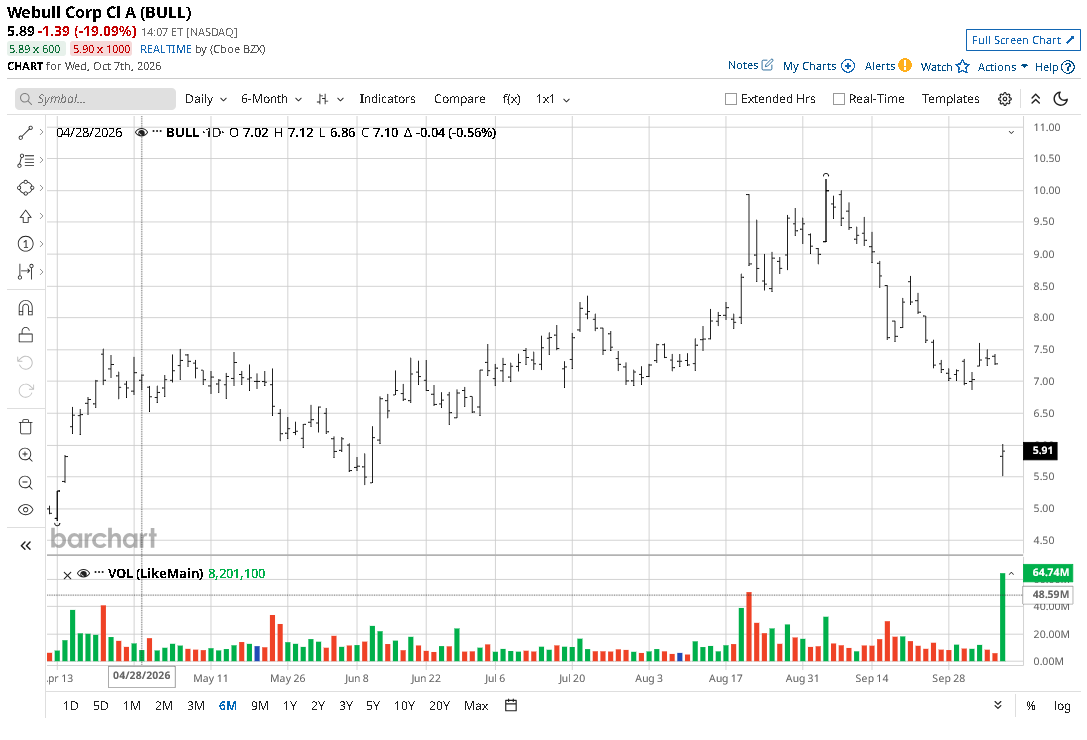
Why WeBull Stock Came Under Pressure Today
The bipartisan report exposed a “profound gap” between WeBull’s public marketing as an American retail brokerage and its internal governance.
Lawmakers emphasized that BULL’s core technology, operational infrastructure, and data systems remain deeply intertwined with entities connected to the Chinese government.
This creates structural risks involving potential regulatory crackdowns or even formal bans similar to those faced by other Chinese-linked platforms.
Although BULL disputed the committee’s findings, calling them “inaccurate and unsupported,” investors still panicked, fearing impending legislative action or severe compliance penalties, which may threaten its U.S. retail user base.
Should You Buy the Dip in BULL Shares?
Despite WeBull’s response, investors are cautioned against buying the dip in this fintech stock.
While the company continues to deliver top-line growth, driving annual revenues past $670 million amid expanding trading features through partnerships with CME and X, congressional probes into Chinese ties often carry massive regulatory overhangs that financial metrics alone can’t offset.
Plus, even after today’s decline, WeBull stock is trading at a forward price-to-earnings (P/E) ratio of about 54x, which doesn’t make it particularly attractively priced in late 2026.
What’s the Consensus Rating on WeBull?
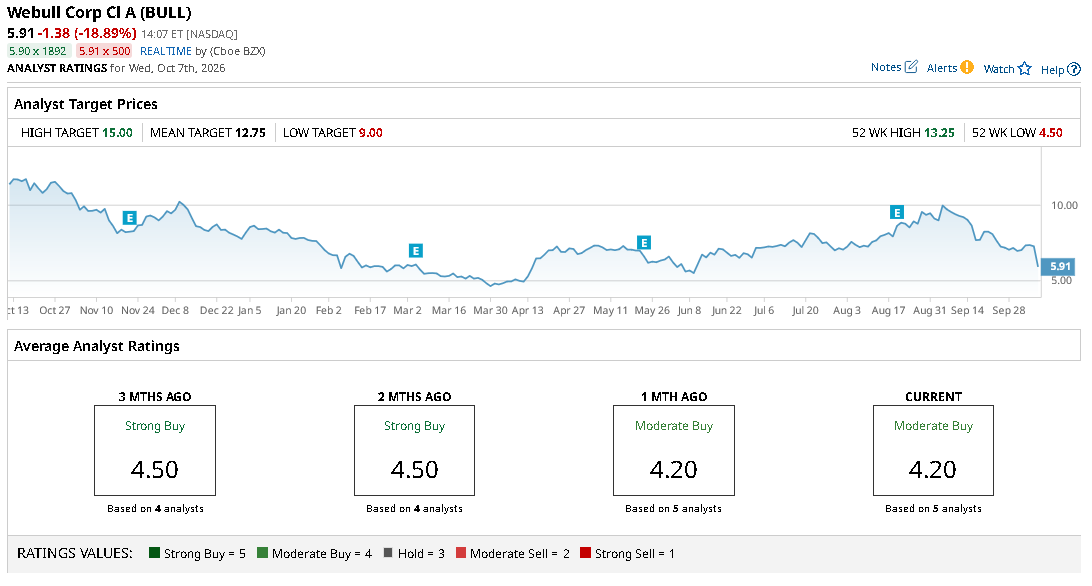
Heading into Oct. 7, Wall Street firms had a consensus “Moderate Buy” rating on BULL shares and a bullish mean price target of a little under $13.
However, it’s reasonable to expect some downward revisions as analysts move to bake in this fresh regulatory risk into their estimates in the weeks ahead.
On the date of publication, Wajeeh Khan did not have (either directly or indirectly) positions in any of the securities mentioned in this article. All information and data in this article is solely for informational purposes. For more information please view the Barchart Disclosure Policy here.