


ASML (ASML) will report earnings on Oct. 14, and with ASML stock trading near its 52-week high, expectations are already elevated. In July, the company guided for third-quarter sales of €11 billion to €12 billion, a big jump from €7.5 billion in the year-ago period. ASML also raised its full-year sales outlook to between €43 billion and €45 billion. Reaching that range would require an even bigger Q4, so investors will want to see signs that the ramp is on track.
What makes ASML unusual right now is that supply is limiting its growth more than demand. Management has said it is close to fully booked on its main extreme ultraviolet (EUV) machines for 2027. The company plans to raise output by about 30% next year, which implies roughly 85 systems. CFO Roger Dassen described that figure as the balance between what customers want and what ASML can build.
The 2028 Decision Could Move ASML Stock
That leaves 2027 looking largely settled. What remains unknown is what will happen in 2028. ASML said it has already received a large number of orders for that year and is looking into raising EUV capacity by another 30%.
I believe ASML stock’s next move will depend on whether management commits to that expansion on the upcoming earnings call. A firm yes would suggest artificial intelligence (AI) chip demand still has years to run, while holding off could mean that ASML simply can't expand that fast, or that customers are growing more cautious. The latter would echo a risk I flagged earlier this year, when calls for an AI slowdown raised a warning sign for ASML.
With ASML stock already near its high, much of the 2027 story looks priced in. That makes 2028 the most likely source of new upside.
About ASML Stock
ASML is the world’s leading manufacturer of photolithography machines, which are critical high-tech systems used by semiconductor companies like Taiwan Semiconductor (TSM), Intel (INTC), and Samsung to print tiny circuit patterns onto silicon wafers to create microchips. The company also provides metrology and inspection tools that help chipmakers measure, inspect, and improve chip quality during production. ASML is one of the most important suppliers to the global semiconductor industry. Founded in 1984, the firm is headquartered in Veldhoven, the Netherlands.
Over the past year, ASML stock has underperformed the broader semiconductor sector. Shares have surged by around 80%, below the iShares Semiconductor ETF's (SOXX) gain of about 107% during the same period. The trend has continued this year as well, with the stock up 69% year-to-date (YTD) versus the exchange-traded fund's gain of 94% YTD. Still, as the company is the sole supplier of EUV lithography systems, investors remain optimistic about its long-term growth outlook.
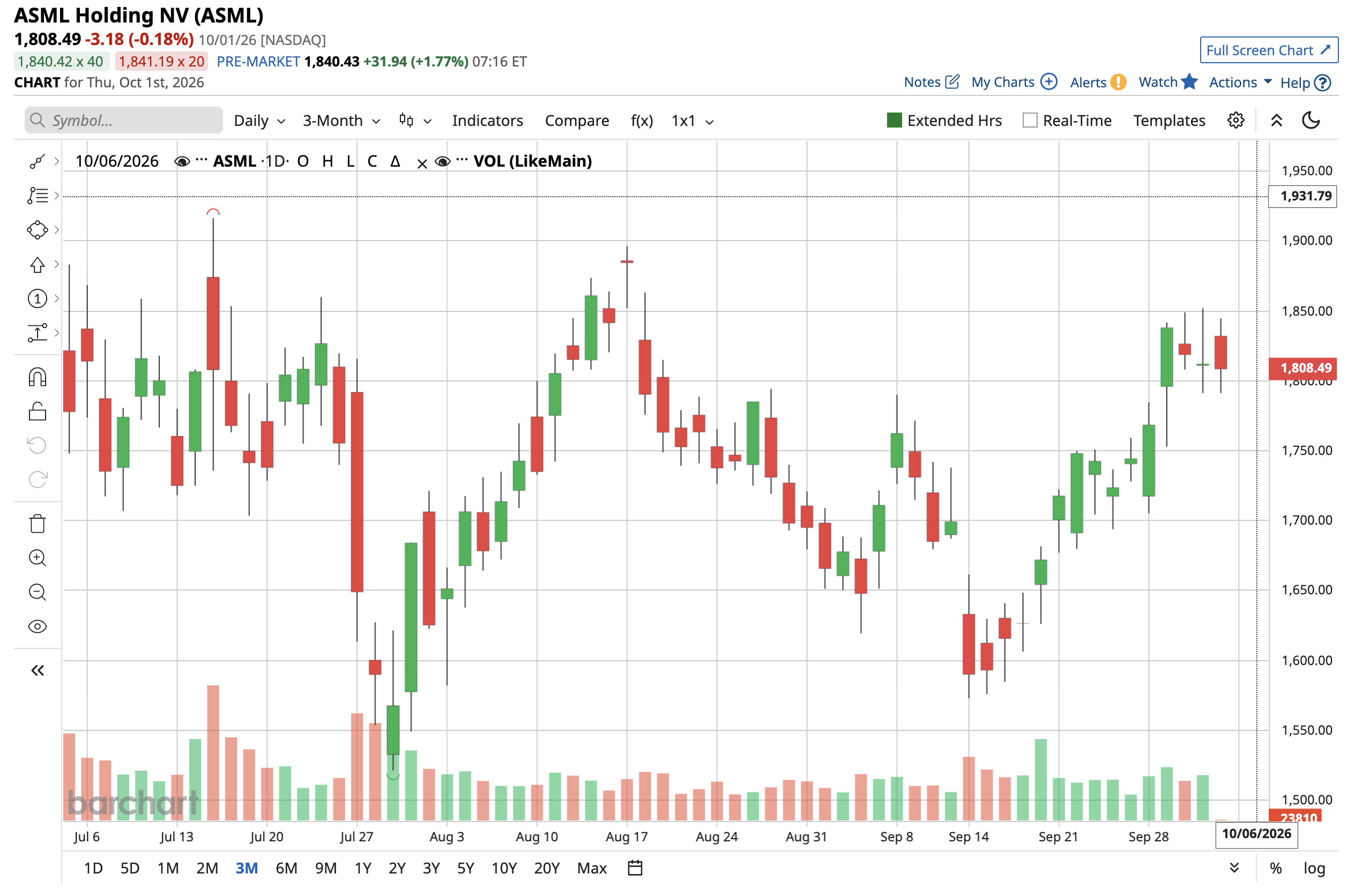
ASML stock trades at a modest premium to its own history. The forward price-to-earnings (P/E) ratio of 42.4 times sits about 14% above its five-year average of about 37 times. That suggests the stock’s rally has mostly kept pace with its earnings growth.
The EPS outlook helps justify the premium. Analysts expect earnings to grow about 57% in fiscal 2026 and 33% in fiscal 2027. That is a solid trajectory for a company worth $721 billion by market capitalization. Strong growth in 2028 will likely depend on ASML adding more capacity, which is why that decision matters so much.
The balance sheet is another strength. ASML holds $8.6 billion in cash against roughly $2.3 billion in debt, leaving it comfortably net cash positive. Overall, I think the premium looks fair if ASML commits to growing beyond 2027.
What Do Analysts Expect for ASML Stock?
Wall Street remains largely bullish on ASML stock. On Sept. 26, Bank of America Securities analyst Didier Scemama reiterated a “Buy” rating on AMSL with a price target of €2,452.
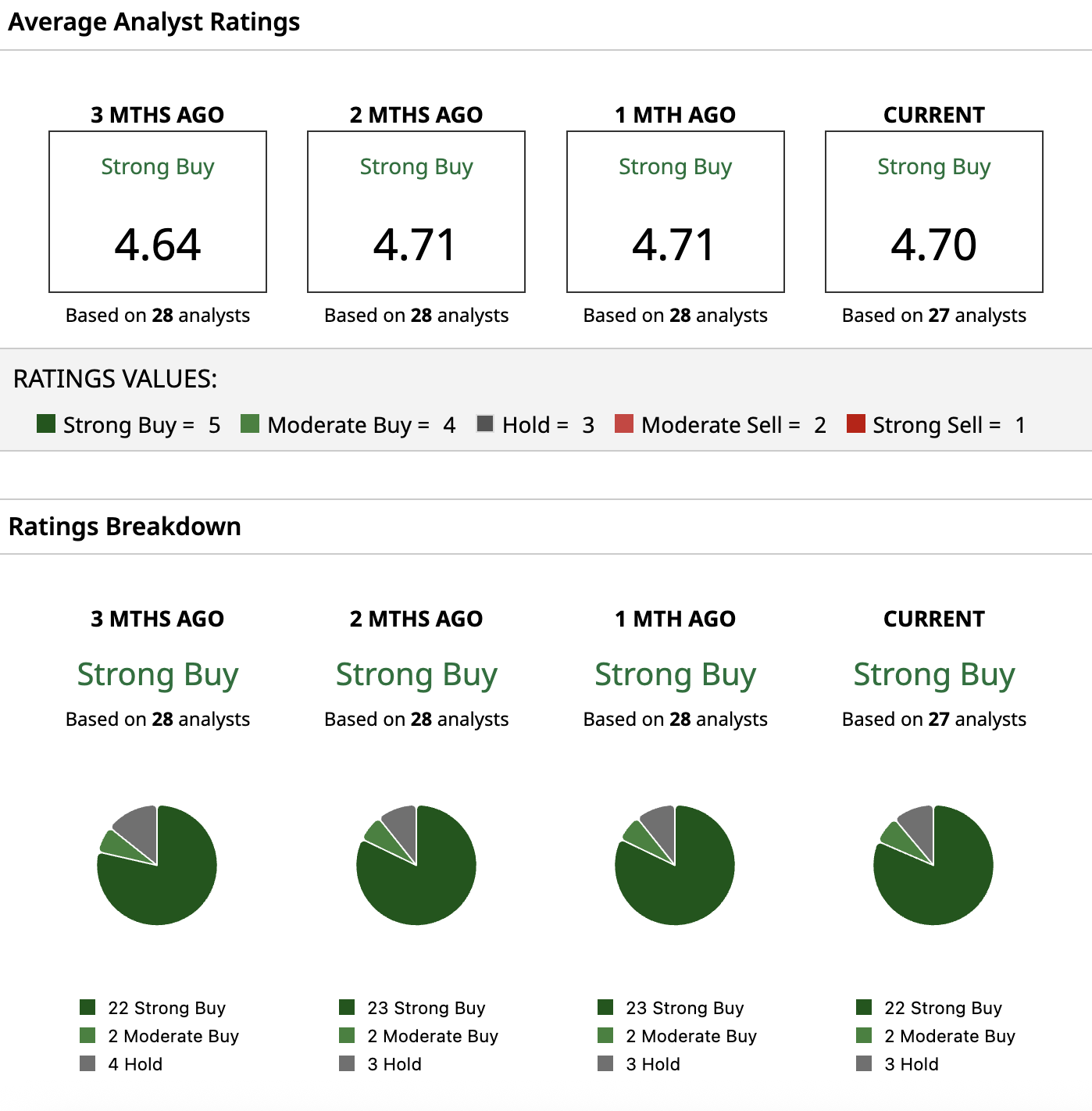
Based on 27 Wall Street analysts with coverage, ASML holds a consensus “Strong Buy” rating overall. The mean price target of $2,359.50 reflects 31% potential upside from current levels, while even the lowest price target of $1,902 suggests a possible gain of 5% from here.
On the date of publication, Jabran Kundi did not have (either directly or indirectly) positions in any of the securities mentioned in this article. All information and data in this article is solely for informational purposes. For more information please view the Barchart Disclosure Policy here.