


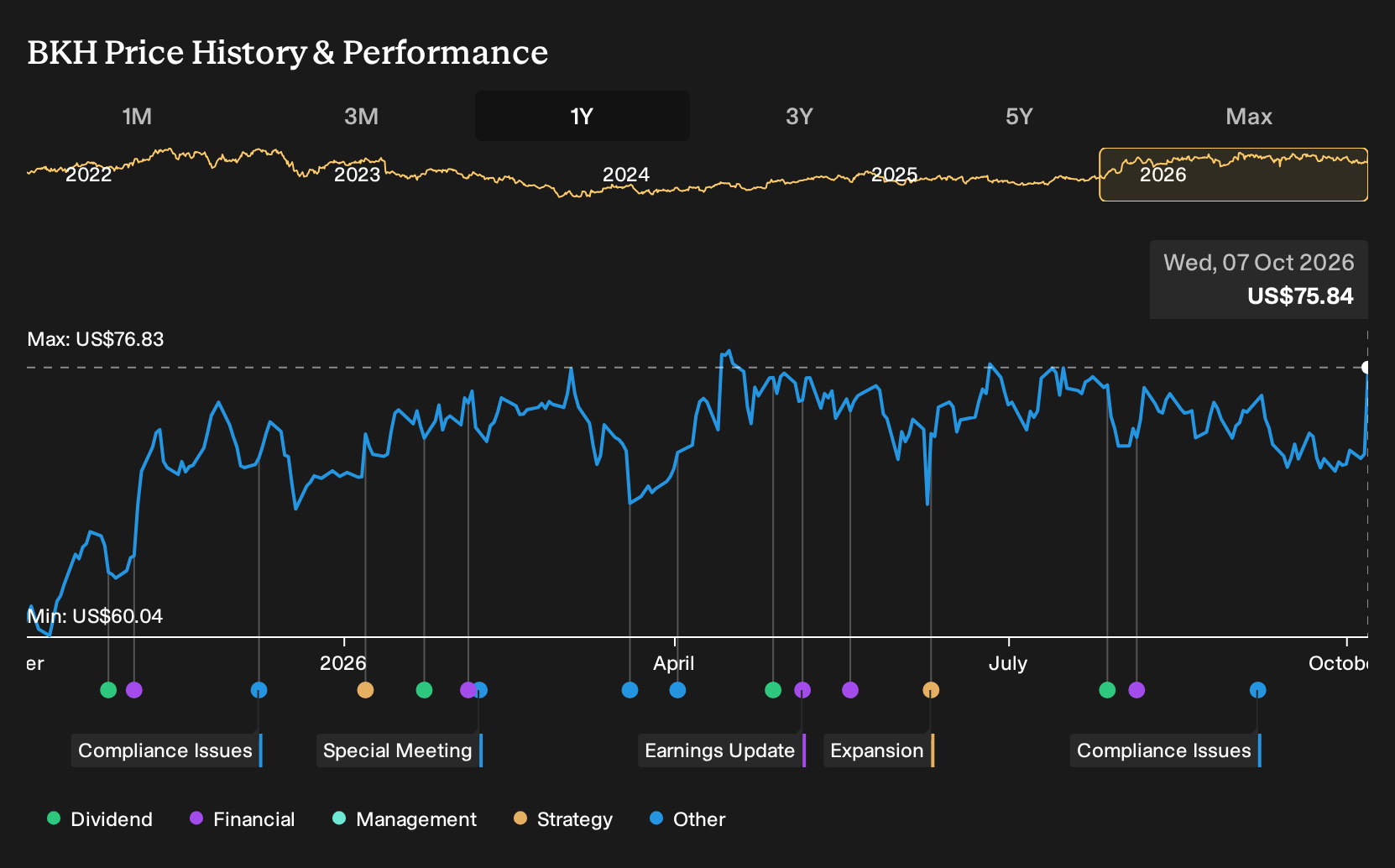
- Black Hills Corp. previously disclosed that it signed definitive agreements to supply Google’s planned Cheyenne, Wyoming data center with long term energy service through 2048, supported by US$1.8b of planned natural gas generation and management of 2.1 gigawatts of third party contracted resources.
- The arrangement ties regulated utility infrastructure directly to hyperscale computing demand, giving Black Hills a single customer project that, based on the company’s projections, is expected to contribute to earnings from 2027 and reach about US$150 million of net income in 2030.
- We will now examine how this long dated Google data center supply deal could reshape Black Hills’ investment narrative and earnings mix.
Scan beyond Black Hills and this Google data center agreement by sizing up other regulated utilities and energy infrastructure players in our curated 43 power grid technology and infrastructure stocks aligned with grid and data center demand.
Black Hills Investment Narrative Recap
To own Black Hills, you need to be comfortable with a regulated utility that is leaning into large load growth from data centers while still living and dying by rate cases. The Google deal lengthens visibility on that data center theme. The near term swing factor still sits with future rate decisions and weather volatility, which can move earnings around guidance.
The biggest risk does not really change. Management still needs constructive approval on projects like Ready Wyoming and new generation while carrying meaningful interest costs and funding a dividend that is not well covered by free cash flow. The Google contract helps frame demand, but it does not remove regulatory or financing pressure.
The most relevant backdrop for this Google agreement is Black Hills' existing 5 year US$4.7b capital plan. That plan already pointed to a steady pipeline of transmission, generation and storage going into rate base. It depends on a regular cadence of 3 to 4 rate reviews each year and filings such as the US$26.7 million Colorado Electric case moving through commissions as intended.
Layering the Cheyenne data center buildout alongside this plan concentrates execution risk around timing, construction costs and regulatory recovery, especially with interest coverage already flagged as a weak spot. For you as a shareholder, the key question is whether management can sequence these projects and funding needs without stretching the balance sheet or diluting returns on equity further.
What The Current Black Hills Forecasts Assume
Black Hills' current analyst narrative points to revenues of US$3.7b and earnings of US$593.3m by 2029. This is underpinned by a projected 17.1% annual revenue growth rate and an earnings move of roughly US$294m from US$299.1m today.
Uncover why Black Hills' fair value indicates a 10% potential upside to its current price before that discount begins to close.
Exploring Other Perspectives
Only two fair value estimates in the Simply Wall St Community currently bracket Black Hills between about US$66.5 and US$83.2 per share. That is a narrow but still meaningful spread. Before the Google data center deal and the pending NorthWestern merger update, these views did not factor in fresh regulatory, funding and load growth risks. Investor opinions can differ widely, so explore several of these alternative viewpoints before framing your own thesis.
Explore another Black Hills fair value estimate, including one that suggests as much as 10% upside from the current price.
Form Your Own Verdict
Don't just follow the ticker. Dig into the data and build a conviction that's truly your own.
- A great starting point for your Black Hills research is our analysis highlighting 3 key rewards and 2 important warning signs that could impact your investment decision.
- See our latest analysis for Black Hills. The report includes a comprehensive fundamental analysis summarized in a single visual, the Snowflake, making it easy to evaluate Black Hills' overall financial health at a glance.
Looking For More Investment Ideas Beyond Black Hills?
If the Black Hills story has you rethinking how regulated utilities tie into data center growth, it can help to line it up against other opportunities using the Simply Wall St Screener.
- If you want potential mispriced quality, start with companies that screen as resilient and attractively valued through the 29 high quality undervalued stocks.
- For income focused investing, size up businesses offering substantial yields and more durable payouts using the 8 dividend fortresses to frame your watchlist.
- If balance sheet strength is your anchor, filter for companies with robust finances and cleaner leverage profiles via the list of solid balance sheet and fundamentals (25 results).
This article by Simply Wall St is general in nature. We provide commentary based on historical data and analyst forecasts only using an unbiased methodology and our articles are not intended to be financial advice. It does not constitute a recommendation to buy or sell any stock, and does not take account of your objectives, or your financial situation. We aim to bring you long-term focused analysis driven by fundamental data. Note that our analysis may not factor in the latest price-sensitive company announcements or qualitative material. Simply Wall St has no position in any stocks mentioned.
Have feedback on this article? Concerned about the content? Get in touch with us directly. Alternatively, email editorial-team@simplywallst.com