


The Zhitong Finance App learned that on October 8, Cui Dongshu, Secretary General of the Passenger Transport Association, released data tracking on export flows of Chinese car companies and overseas independent brands from January to August 2026. Since 2021, with the outbreak of COVID-19 in the world, the resilient advantages of China's automobile industry chain have been fully reflected, and the Chinese automobile export market has shown strong growth in the past two years. Chinese autonomous car companies have strong sales characteristics in some overseas regions. In 2025, China's autonomous car companies sold 3.54 million units locally in some regions that can continue to be counted overseas, up 28% year on year; in August 2026, the sales volume of independent brands in China's overseas market was 442,000 units, up 52% year on year; in January-August, China's own brands sold 3.36 million units, up 59% year on year. The retail performance of China's independent overseas countable market was very good.
China's overall autonomous vehicle sales share in overseas markets from January to August 2026 was 7.8%, an increase of 2.1 percentage points over the previous year. Autonomous vehicle sales vary greatly around the world, with 22% in the southern hemisphere, 12% in Europe, and around 9% in Southeast Asia and the Middle East, but exports to the US, Japan, and South Korea are still very cautious. From January to August 2026, the overseas market sales share of autonomous new energy passenger vehicles was 24.8%, an increase of 9 percentage points over the same period in 2025. Among them, independent brands account for over 79% of new energy in the southern hemisphere, 47% in Southeast Asia and other regions, and 18.4% in Europe.
Low prices are an important foundation, and technological innovation promotes continuous breakthroughs in new energy sources. Due to lessons learned from the experience of Chinese home appliances and other industries going overseas, the strategies for automobiles to go overseas are becoming more and more clear and perfect. From KD assembly to localized production and overseas mergers and acquisitions, the results of automobile companies' overseas strategies are outstanding. At present, China's own brand exports have entered a new stage in the strategy of strengthening bases to build rural encircled cities in guerrilla zones. Overseas, independent brands started with the construction of KD assembly and gradually increased the construction of a localized industrial chain. With automakers as the lead, the results of parts and vehicles going overseas in groups were remarkable. SAIC Motor, Geely, Great Wall, Chery, etc. have achieved great success. Autonomous vehicle exports have basically completely switched from a buyout model to a distribution model. Autonomous vehicle brands such as BYD, Great Wall, and Chery build overseas localized business control centers to comprehensively monitor the system capabilities of local sales and service outlets, and the reputation of independent brands in the local market is getting better and better.
I. Overseas performance of Chinese autonomous car companies
1. Monthly sales trends of Chinese autonomous car companies in some overseas regions
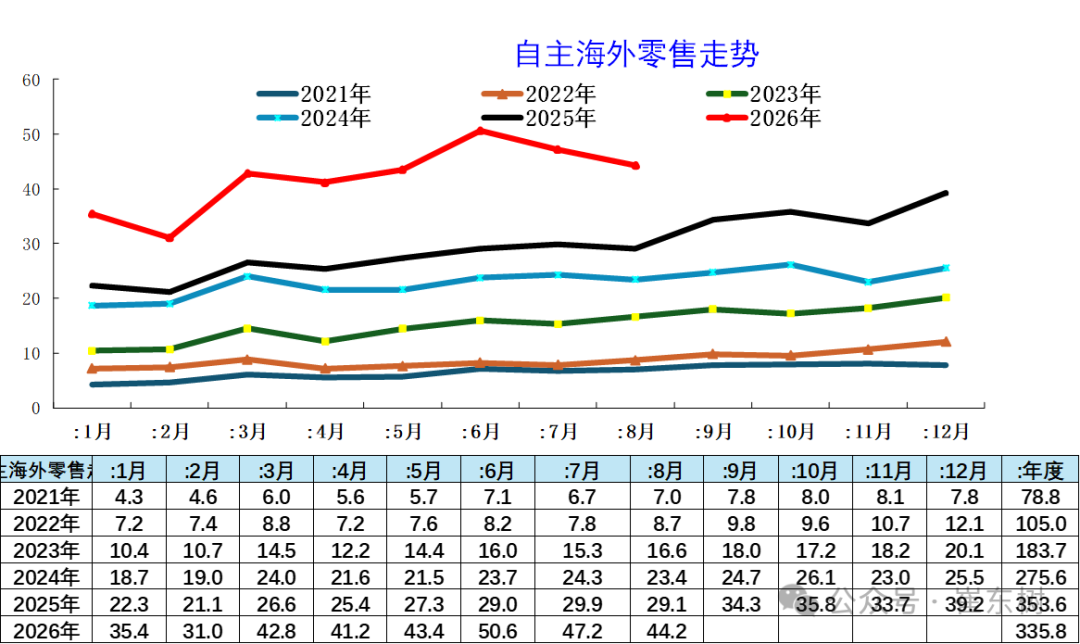
China's automobile exports have continued to strengthen in recent years, showing the characteristic of peaking and falling back during the year as a roller coaster in summer. Judging from the overseas export and retail data of Chinese automobiles, the monthly trend is relatively stable, showing a good growth trend recently. In particular, the rate of increase was fast starting in 2025, driving high year-on-year growth in early 2026. Sales reached a record high in June. Overseas sales in August were 442,000 units, which is still higher than the peak sales volume in January-May.
2. Sales characteristics of Chinese autonomous car companies in some overseas regions
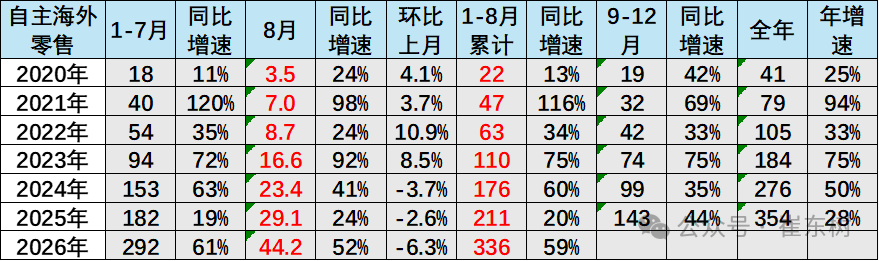
Chinese autonomous car companies have strong sales characteristics in some overseas regions. In 2025, China's autonomous car companies sold 3.54 million units locally in some regions that can continue to be counted overseas, up 28% year on year; in August 2026, the sales volume of independent brands in China's overseas market was 442,000 units, up 52% year on year; in January-August, China's own brands sold 3.36 million units, up 59% year on year. The retail performance of China's independent overseas countable market was very good.
3. Overseas data on Chinese vehicles exported has increased dramatically
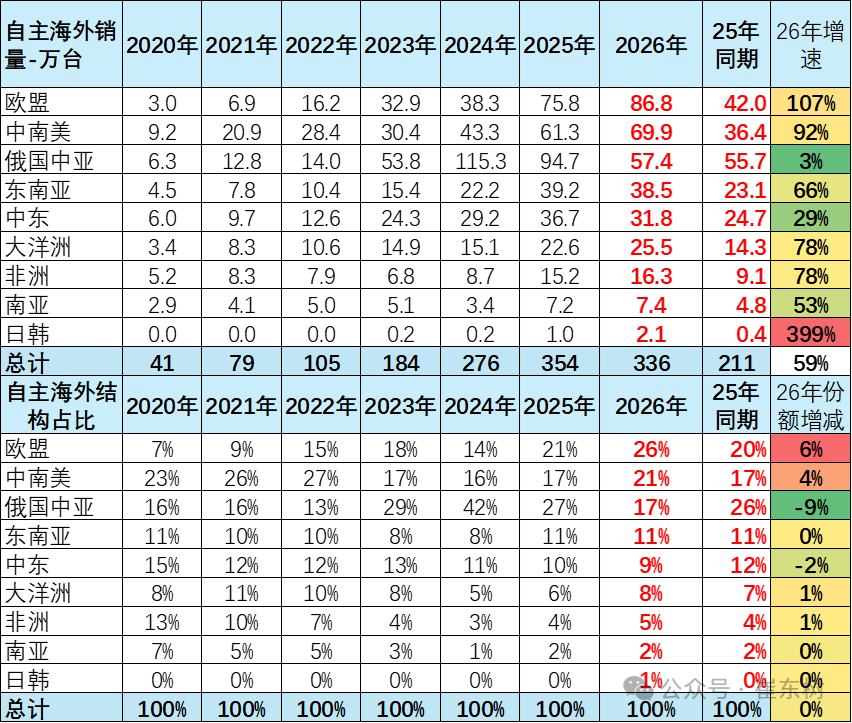
China's automobile exports have performed extremely well; judging from China's customs data, they are growing extremely rapidly. However, judging from overseas local market statistics, China's automobile exports are also showing a stronger and better growth situation. China's overseas markets are fluctuating. In 2026, retail sales in overseas markets are strong in Southeast Asia, Central and South America, and the European Union, while regions such as Russia, Central Asia, the United States, and India have poor export trends.
The main reason for the strong overseas growth rate is that in the past, many of China's automobile exports were in underdeveloped countries such as Africa, or in markets that are difficult to count, so overseas data is not fully reflected, but now China's exports are showing a more prominent performance in some high-end overseas markets, so overall, it can be seen that the growth rate of Chinese automobile exports in overseas data showed a strong growth trend in 2023-2025. In particular, since 2022, China's automobile exports showed a round of explosive growth. The European market showed a strong growth trend for 3 consecutive years and weakened in 2024, so 2025- The market in the EU is strong in 2026.
4. The overseas share of autonomous vehicle companies has increased dramatically
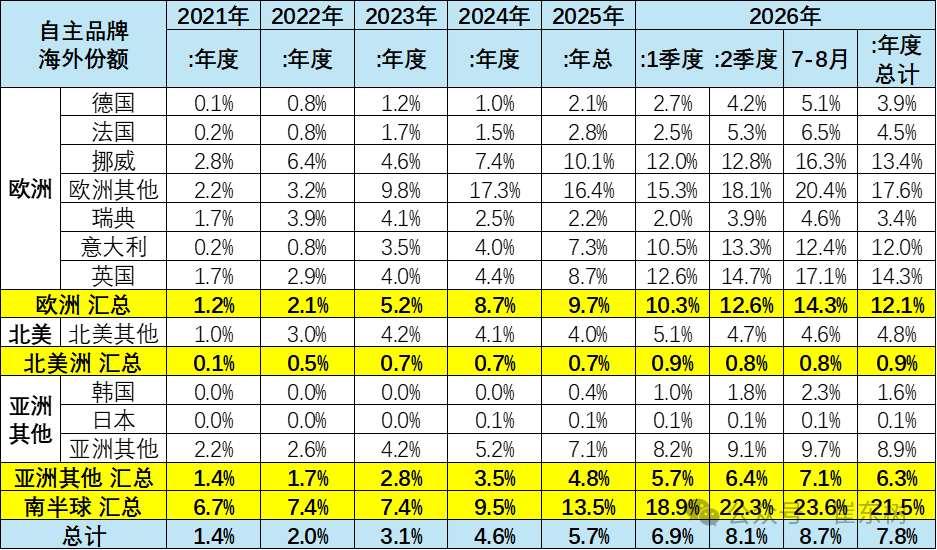
China's overall autonomous vehicle sales share in overseas markets from January to August 2026 was 7.8%, an increase of 2.1 percentage points over the previous year. Autonomous vehicle sales vary greatly around the world, with 22% in the southern hemisphere, 12% in Europe, and around 9% in Southeast Asia and the Middle East, but exports to the US, Japan, and South Korea are still very cautious.
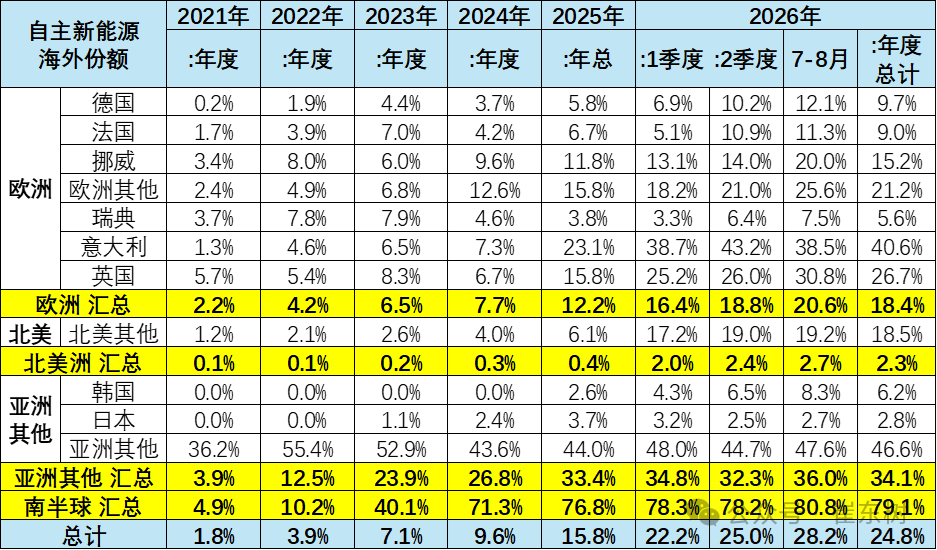
From January to August 2026, the overseas market sales share of autonomous new energy passenger vehicles was 24.8%, an increase of 9 percentage points over the same period in 2025. Among them, independent brands account for over 79% of new energy in the southern hemisphere, 47% in Southeast Asia and other regions, and 18.4% in Europe. Due to the good performance of autonomous new energy exports, and the severe contraction of the US NEV market, the sales share of autonomous NEV passenger vehicles in overseas markets has increased significantly. Currently, the share of new energy in South America is close to 80%, and the share of new energy in Southeast Asia has reached 47%.
5. Overseas data on export vehicles of independent brands has increased dramatically
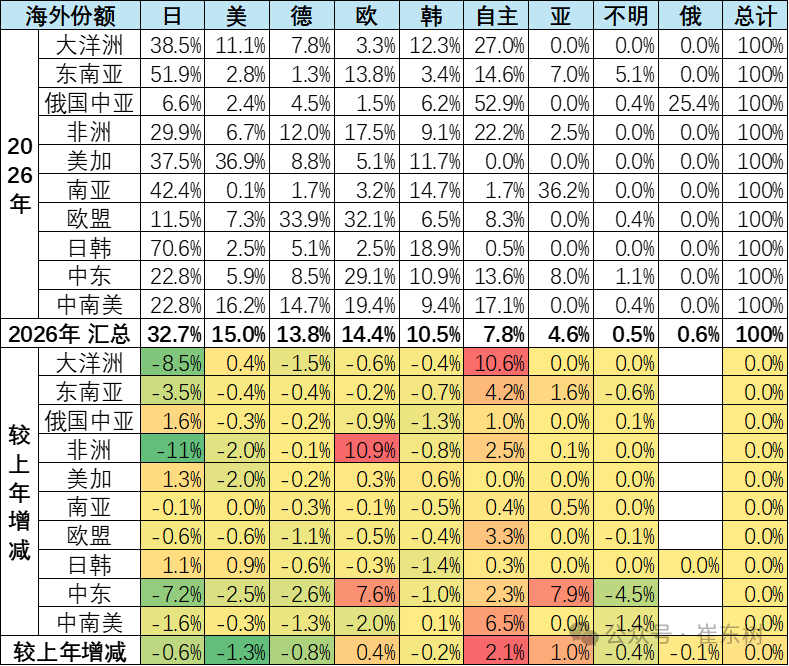
Currently, China's independent overseas sales share from January to August 2026 is mainly Russia, with regions such as Oceania and Africa exceeding 22%, Central and South America, the Middle East, and Southeast Asia sharing around 15%, the European Union 8%, and Japan, South Korea, and the US almost zero. Russia is the first in terms of autonomy; it is weaker than the Japanese system in Oceania, Africa, and Southeast Asia, and is in second place. In the European Union, the Middle East, and Latin America, it is lower than the EU's own car companies and Japanese companies, and is in third place.
Some countries, such as India, also have their own automobile industry, and the multipolar nature of the world's automobiles has not changed.
6. The share of Chinese car companies' overseas exports has increased dramatically
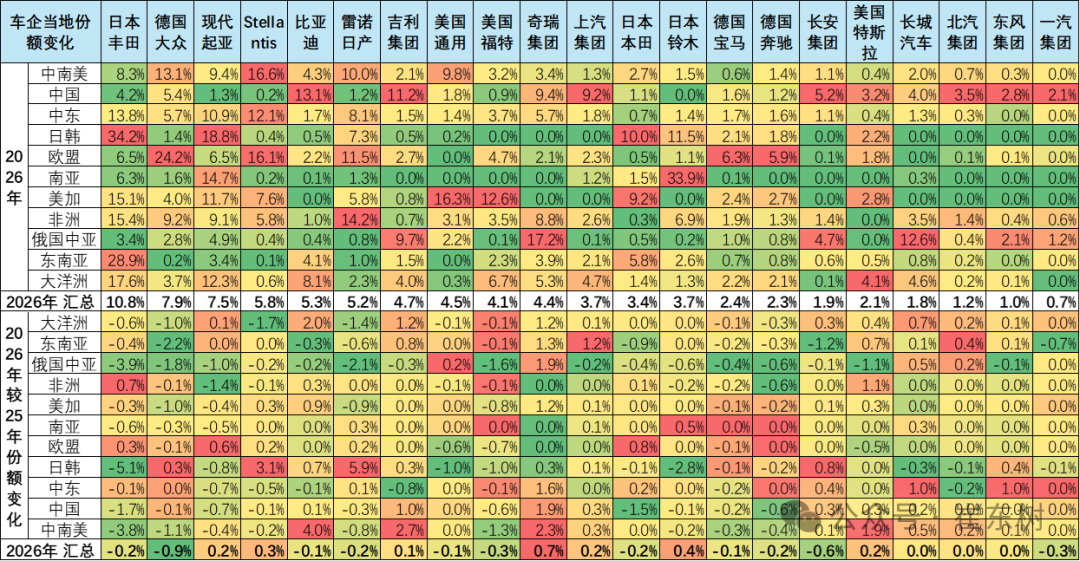
In 2026, the share of Chinese car companies such as BYD in Oceania and South America increased markedly. Japan's Toyota, Honda, Suzuki, etc. are under increasing pressure in Oceania, Africa, and Southeast Asia.
II. Tracking the export flow direction of China's autonomous car companies
1. Export flow data tracking for Chinese car companies - Central and South America
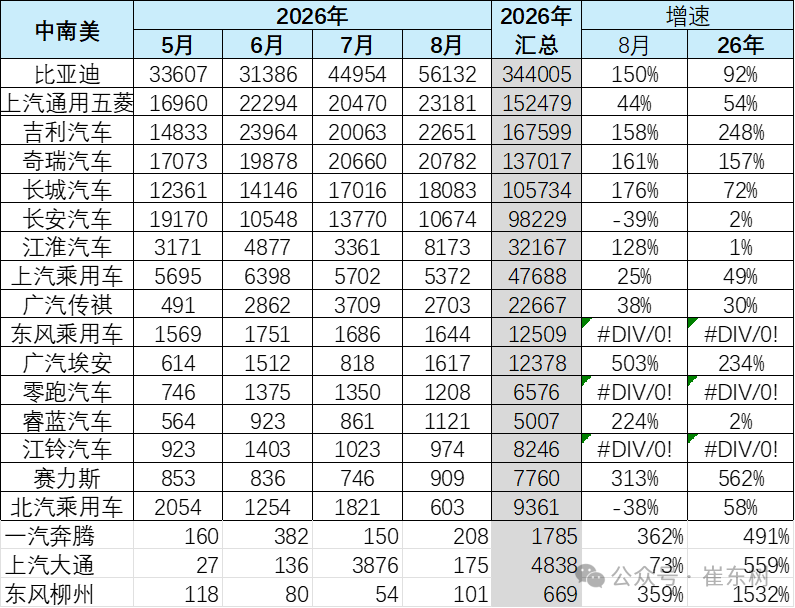
Since 2026, Chinese car companies have shown an accelerated trend of penetration in the Latin American market, with BYD and others showing significant year-on-year growth. The core driving force comes from three aspects: first, leading companies such as BYD have implemented localized production capacity in Brazil and Mexico to effectively avoid tariff barriers; second, the cost performance advantages of new energy models are prominent, and new forces such as AEON and Zero Sport are all growing at a cumulative annual rate of over 200%; third, the recovery of commodities in South America has led to the restoration of residents' purchasing power and the release of demand for automobile consumption. Overall, Chinese brands have moved from “trade exports” to a new stage of “ecological going overseas.”
Judging from the competitive landscape, the Latin American market has obvious characteristics of “one super many strengths”. BYD is far ahead in terms of share, and Geely, Wuling, and Chery form the second tier. Traditional fuel vehicles are facing a strong squeeze from Chinese new energy brands in the South American market. Future adjustments to Brazil's industrial product tax policy will be a key variable affecting the pace of exports.
2. Export flow data tracking for Chinese car companies-EU
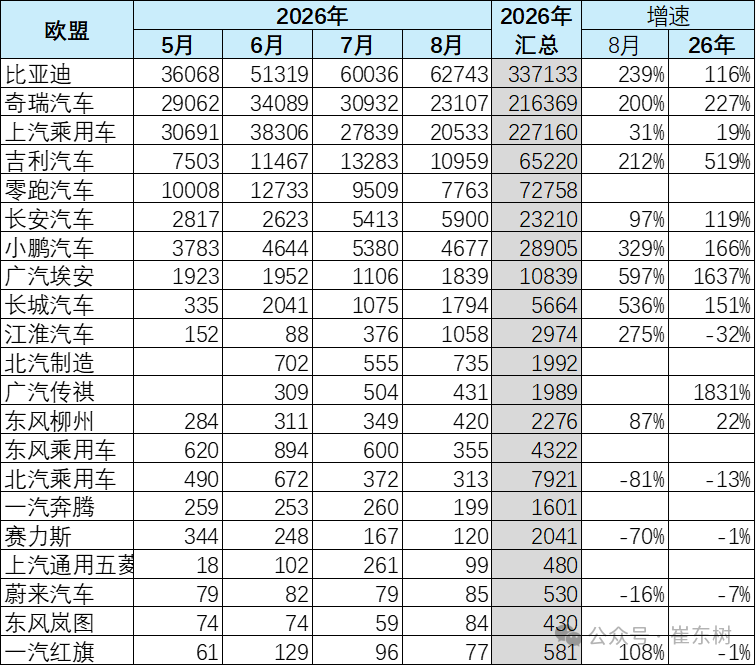
In 2026, joint ventures and foreign brands will account for a huge share of electric vehicle sales in the EU. Tesla and European car companies' electric vehicles will be sold back in large numbers to Europe, effectively promoting the electrification process in Europe. Hybrid and mixed exports of own-brand brands have surged to the EU. BYD, SAIC Motor and others performed well.
3. Export flow data tracking for Chinese car companies-Russia and Central Asia
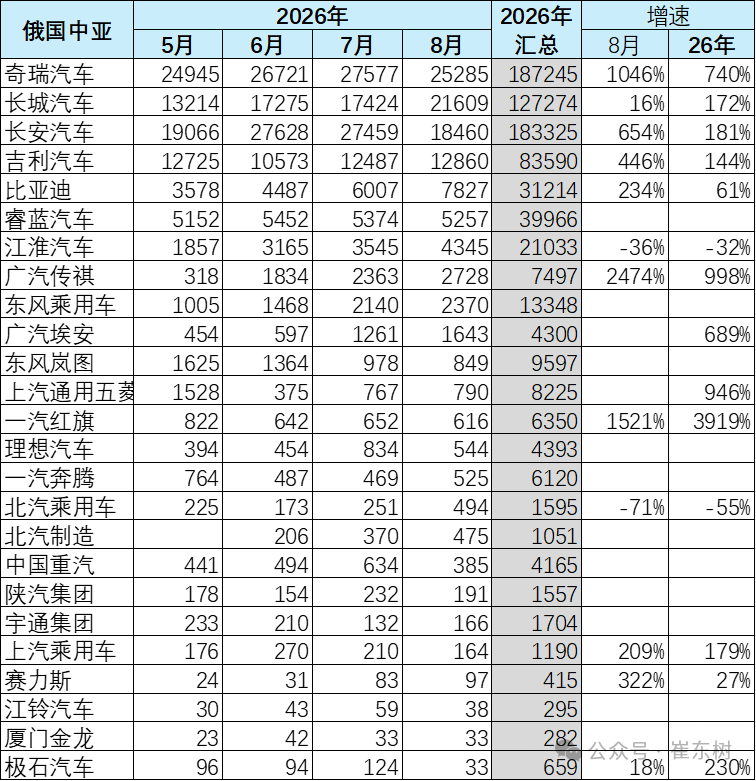
Russia's Central Asia region is a key region for overseas sales of Chinese car companies. Changan Automobile, Great Wall Motor, Chery Automobile, Geely Automobile, and Geely's Ruilan Automobile performed well overseas. Chery and Changan Automobile's sales in Russia have increased significantly.
4. Export flow data tracking for Chinese car companies-Southeast Asia
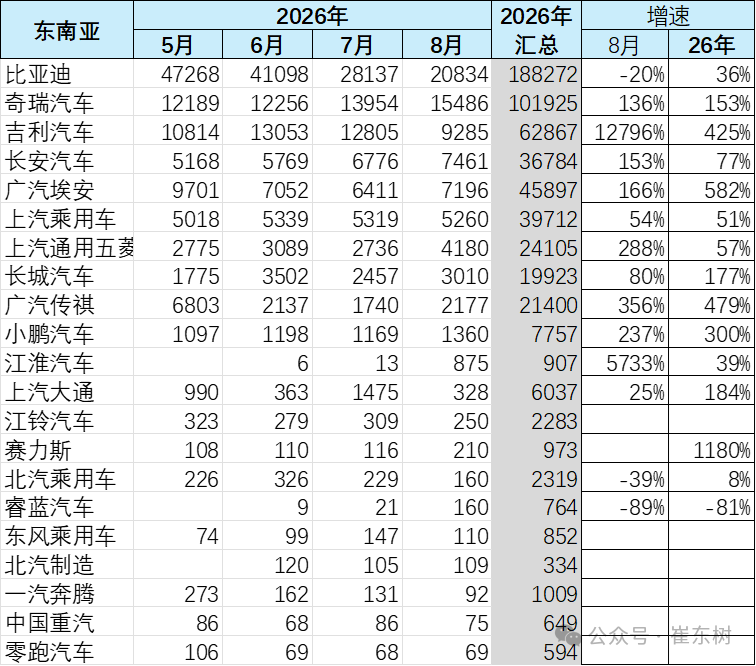
Russia's Central Asia region is a long-term key area for overseas sales for Chinese car companies, and performance has been poor in recent years. BYD, Chery, Changan, Geely, and AEON have performed well overseas. Geely and Changan Automobile's local sales increased significantly in August.
5. Export flow data tracking for Chinese car companies-Middle East
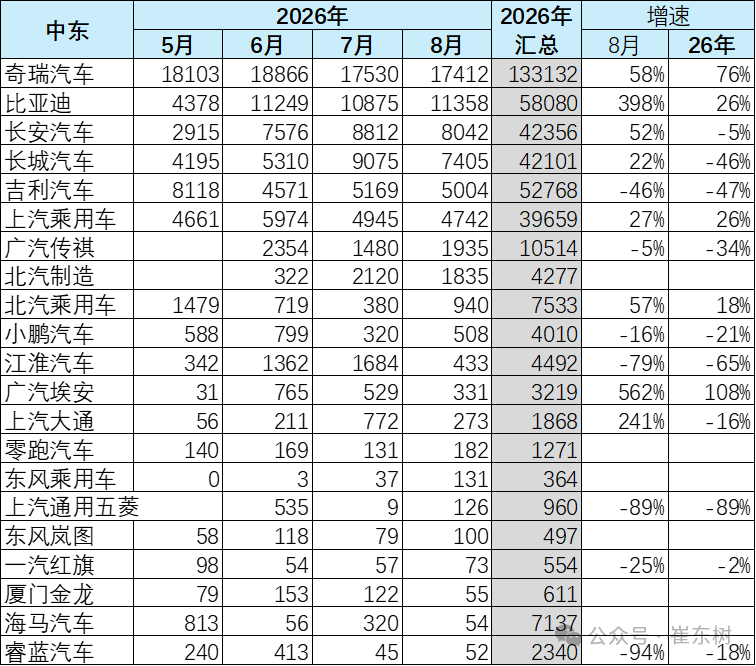
The Middle East is an overseas base for Chinese car companies. Autonomous car companies in Iran and other regions continue to sell very well. Currently, car companies such as Chery and Haima are performing very well in Iranian statistics. Due to the impact of the Iran crisis, sales of some car companies have been sluggish recently, but BYD and others have accelerated their entry into the Middle East market and quickly followed Chery's sales.
6. Export flow data tracking for Chinese car companies-Oceania
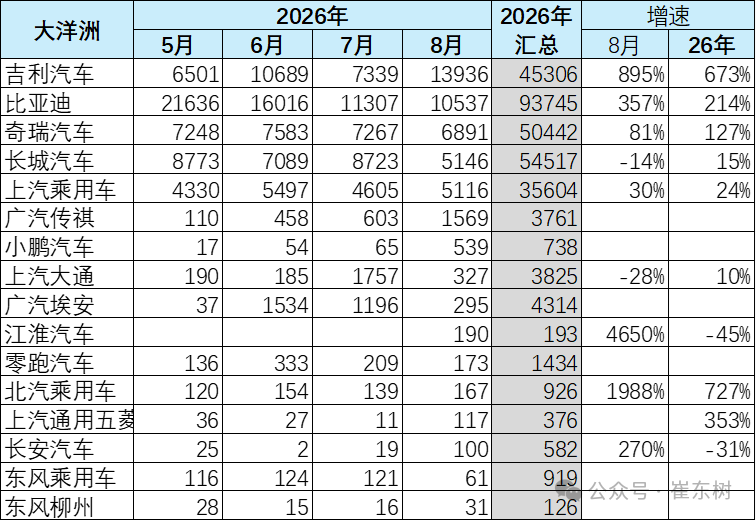
The friendliness of the Oceanian market is obvious. Chinese car companies have performed well in markets such as Australia for a long time. BYD and recently excelled, Chery has been surpassed by the Great Wall, and China's independent overseas market is very dynamic.
7. Export flow data tracking for Chinese car companies-Africa
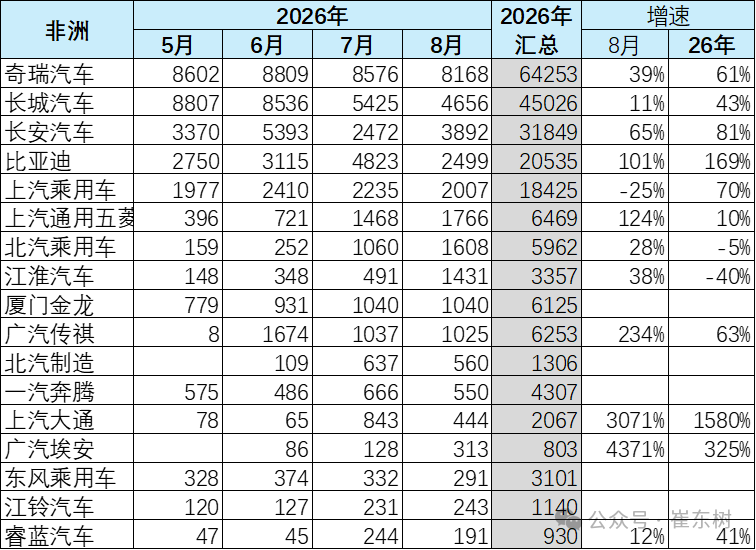
The African market has long been the main sales area for Chinese car companies. Numerous trade and engineering projects and subsidy factors have encouraged Chinese car companies to fully deploy in Africa. Chery and Great Wall have been performing very well recently, and BYD's sales have skyrocketed rapidly.
8. Tracking overseas sales data of Chinese car companies-South Asia
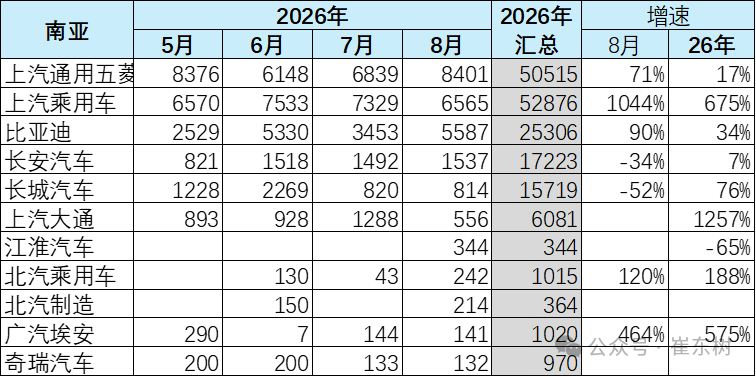
According to local statistics, the sales volume of Chinese car companies exported to South Asia and South Asia is relatively low. The main company is SAIC Motor's layout. SAIC Motor exports more, and SAIC Wuling in particular has a good layout. SAIC Motor's passenger cars and Great Wall have performed well this year. Newly introduced GAC and BAIC also performed well.
3. Overseas sales tracking
1. Independent sales volume in some overseas countries
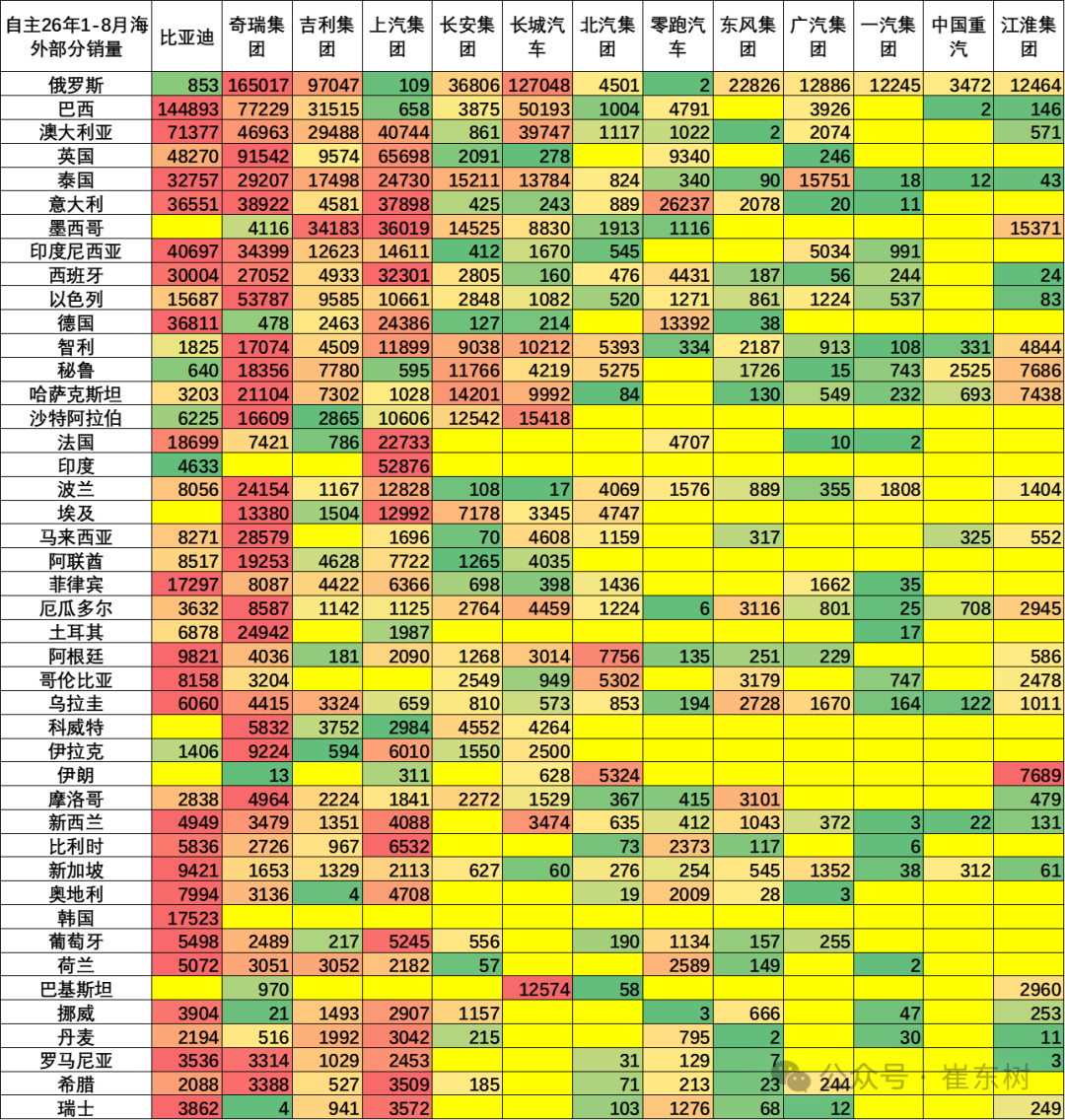
Overseas sales of autonomous car companies are mainly in the global Southern Market and moderately developed countries. These countries lack a comprehensive manufacturing system and have no manufacturing capacity at local cost, so Chinese car companies such as BYD, Geely, and Great Wall have performed well.
2. Overseas sales volume of independent new energy
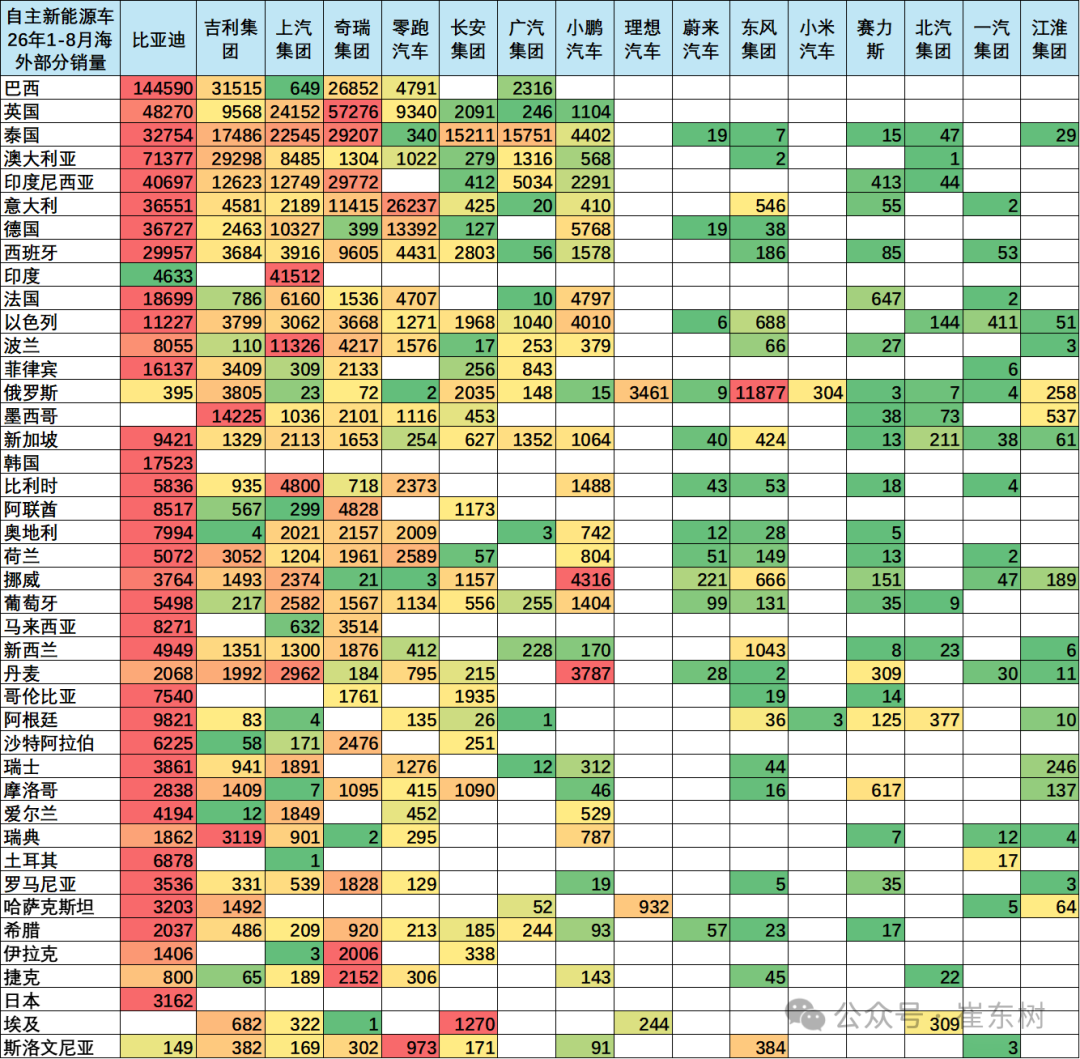
Overseas markets for autonomous new energy sources have exploded, especially the full-scale explosion of pure electric and plug-in hybrid vehicles. Although the EU sanctions Chinese electric vehicles, it has not delayed China's roundabout breakthroughs in other categories. The EU, which has plug-in hybrid models, has performed excellently.