


- Vishay Intertechnology recently released 650 V superjunction MOSFET power modules in SOT-227 packages and new Automotive Grade thick film resistors and sample kits aimed at high power industrial, automotive, and energy applications.
- These launches focus on efficiency, thermal management, and faster design-in. This aligns with Vishay Intertechnology’s effort to fill new capacity with higher value power products.
- We will now look at how this focus on 650 V superjunction MOSFET modules could shape Vishay Intertechnology’s broader investment narrative.
Vishay Intertechnology Investment Narrative Recap
Vishay Intertechnology appeals to shareholders who buy into a simple idea. Heavy capacity spending and a broad catalog of power components eventually need to translate into higher utilization and cleaner margins. The immediate swing factor is how fast demand in areas like industrial power, smart grid, AI infrastructure, and electric vehicles actually shows up in orders.
The short term hinge is still execution on this capacity build while free cash flow remains under pressure. Recent MOSFET modules and resistor launches help keep the product story aligned with electrification and energy projects. The bigger risk remains underused fabs and the added leverage from credit facility drawdowns.
The fresh 650 V superjunction MOSFET SOT 227 modules sit right on that utilization question. These devices target DC/DC and DC/AC conversion in solar, hydrogen, HVDC infrastructure, charging, and medical systems, which ties directly into the industrial and energy projects analysts already flag as key demand pools for Vishay Intertechnology.
Operationally, these modules give engineers a drop in replacement that can cut redesign work and speed time to revenue. If design wins build from this line, it would help fill new Western and wide bandgap capacity and support the mix shift toward higher value power products. If adoption is slow, fixed cost absorption remains the pressure point.
Vishay Intertechnology's current analyst narrative points to revenues of US$5.0b and earnings of US$640.7m by 2029, based on forecast top line growth of 14.6% per year and an earnings increase of roughly US$612m from US$28.4m today.
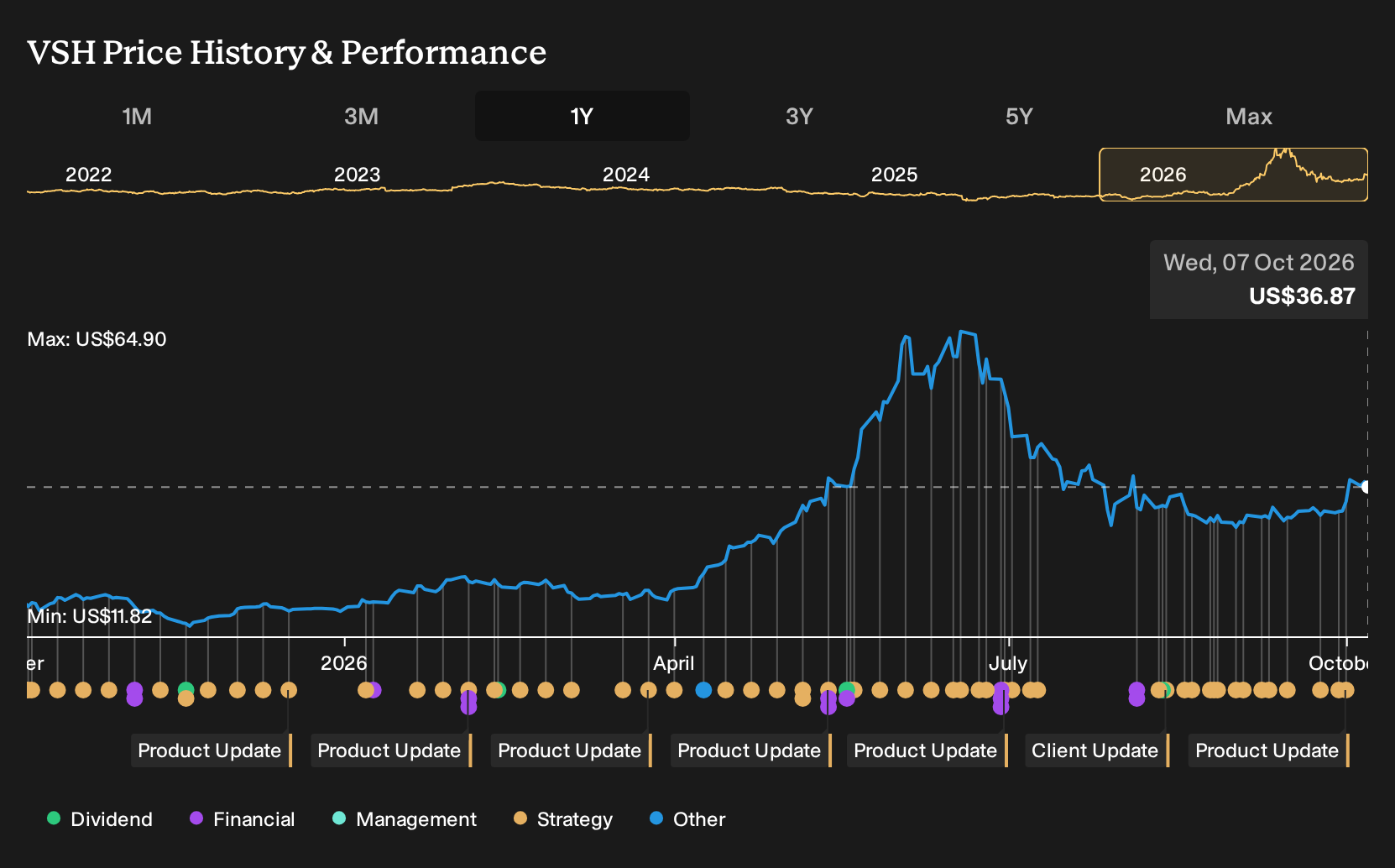
Uncover why Vishay Intertechnology's fair value indicates an 8% potential upside to its current price before a closing valuation gap forces investors to reassess quickly.
Exploring Other Perspectives
Some of the most optimistic analysts already had a different angle on Vishay Intertechnology before these 650 V modules hit the news. They were leaning into AI power and electrification demand, penciling in about US$5.2b of revenue and US$815.9m of earnings by 2029. That is a much punchier story. Use this launch as a prompt to compare those upbeat assumptions with more cautious views and decide which camp feels closer to your own expectations.
Explore another Vishay Intertechnology fair value estimate, including one that suggests as much as 60% upside from the current price!
Reach Your Own Conclusion
Don't just follow the ticker. Dig into the data and build a conviction that's truly your own.
- A great starting point for your Vishay Intertechnology research is our analysis highlighting 3 key rewards and 3 important warning signs that could impact your investment decision.
- See our latest analysis for Vishay Intertechnology. The report includes a comprehensive fundamental analysis summarized in a single visual, the Snowflake, making it easy to evaluate Vishay Intertechnology's overall financial health at a glance.
Looking for more Vishay Intertechnology style ideas?
If the Vishay Intertechnology story has you thinking about where else strong balance sheets, cash generation, and sensible risk profiles might show up, it helps to widen the lens with a few focused stock lists from the Simply Wall St Screener.
- For investors who want quality first and volatility second, use our screener focused on 31 resilient stocks with low risk scores that have historically shown more resilient characteristics.
- If your priority is solid financial footing and less fragile balance sheets, start with the list of solid balance sheet and fundamentals (25 results) to see which companies might better handle tougher conditions.
- Those hunting for strong fundamentals that the market may not be paying close attention to yet can review the 20 high quality undiscovered gems and see which businesses merit a deeper look.
This article by Simply Wall St is general in nature. We provide commentary based on historical data and analyst forecasts only using an unbiased methodology and our articles are not intended to be financial advice. It does not constitute a recommendation to buy or sell any stock, and does not take account of your objectives, or your financial situation. We aim to bring you long-term focused analysis driven by fundamental data. Note that our analysis may not factor in the latest price-sensitive company announcements or qualitative material. Simply Wall St has no position in any stocks mentioned.
Have feedback on this article? Concerned about the content? Get in touch with us directly. Alternatively, email editorial-team@simplywallst.com