


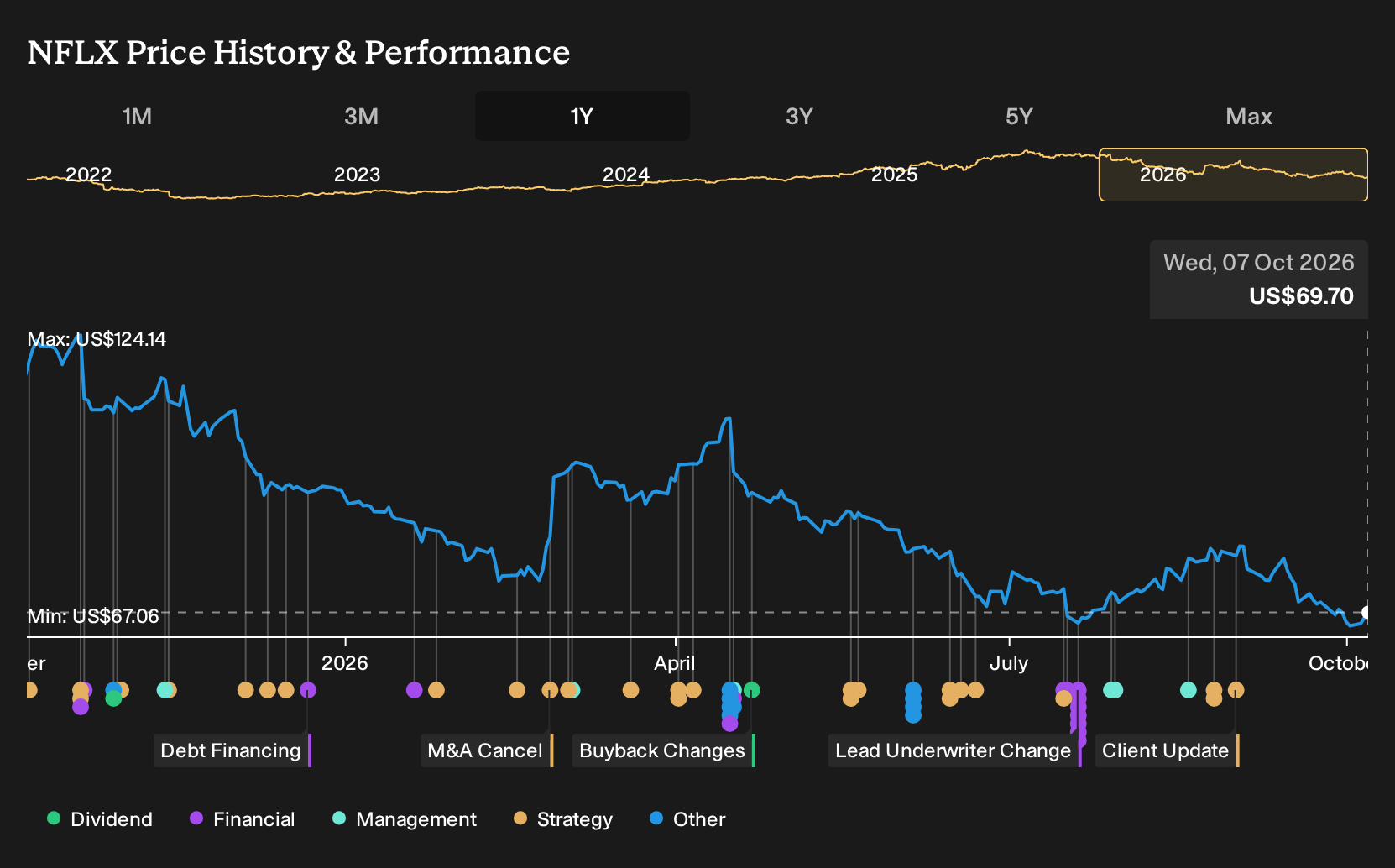
- Netflix faces slowing projected revenue growth for 2026, rising content and live sports costs, and tougher competition from a newly merged Paramount and Warner Bros group, with management also reducing quarterly transparency by no longer reporting subscriber figures.
- U.S. viewers are increasingly dissatisfied with streaming services after repeated price increases, putting Netflix’s pricing power and engagement under closer scrutiny just as content spending grows.
- We will examine how Netflix’s investment narrative holds up as slower 2026 revenue expectations meet rising content spending and fiercer competition.
What Is Netflix's Investment Narrative?
To own Netflix today, you need to believe the business can keep turning its huge global audience into durable cash generation, even as growth slows and the streaming bundle gets more crowded. The core thesis still rests on strong engagement, pricing power across ad supported and premium tiers, and disciplined content spending that converts into free cash flow rather than just headline viewing hours.
Recent news around softer U.S. satisfaction with streaming and Netflix’s push into costly live sports goes straight to those pressure points. Slower 2026 revenue expectations, combined with rising programming outlays and a premium P/E, put more weight on near term execution around pricing, churn and ad monetisation. The decision to stop quarterly subscriber disclosures also raises the bar on trust in reported earnings quality and one off items.
That said, one uncomfortable thread runs through the Netflix story once you line up the slowing top line, richer content bets and increased competitive intensity in streaming.
There's only one way to know the right time to buy, sell or hold Netflix. Head to Simply Wall St's company report for the latest analysis of Netflix's Fair Value.
Exploring Other Perspectives
Some of the most optimistic analysts focus on Netflix’s push into live events as a potential upside surprise, arguing that sports and specials could support the previously projected 12.7% annual revenue growth and earnings of $22.2b by about 2029. You can treat those upbeat forecasts as one possible path, and expect that the latest U.S. streaming backlash may prompt analysts to revisit them.
Explore 42 other Netflix fair value estimates, including one that suggests as much as 114% upside from the current price!
Reach Your Own Conclusion
Disagree with this assessment? Extraordinary investment returns rarely come from following the herd, so go with your instincts.
- A great starting point for your Netflix research is our analysis highlighting 3 key rewards and 2 important warning signs that could impact your investment decision.
- See our latest analysis for Netflix. The report includes a comprehensive fundamental analysis summarized in a single visual, the Snowflake, making it easy to evaluate Netflix's overall financial health at a glance.
Looking for more investment ideas beyond Netflix?
If Netflix has sharpened your thinking about what you want from a long term holding, it can be useful to scan a wider field of companies that fit different risk and income profiles.
- For investors who like the thrill of early stage opportunities but still care about financial strength, consider reviewing 12 elite penny stocks with strong financials that pair smaller market caps with solid underlying numbers.
- If resilience and balance sheet quality matter most to you, filter for businesses on the list of solid balance sheet and fundamentals (25 results) that already combine robust finances with consistent fundamentals.
- Income focused investors who want cash returns on top of potential capital gains may prefer to start with a curated 8 dividend fortresses offering yields of 5% or more.
This article by Simply Wall St is general in nature. We provide commentary based on historical data and analyst forecasts only using an unbiased methodology and our articles are not intended to be financial advice. It does not constitute a recommendation to buy or sell any stock, and does not take account of your objectives, or your financial situation. We aim to bring you long-term focused analysis driven by fundamental data. Note that our analysis may not factor in the latest price-sensitive company announcements or qualitative material. Simply Wall St has no position in any stocks mentioned.
Have feedback on this article? Concerned about the content? Get in touch with us directly. Alternatively, email editorial-team@simplywallst.com