


Since this year, the fluctuation in gold prices has intensified markedly. According to the latest data, in September, London Gold and COMEX Gold closed down at the same time, with monthly declines of more than 6%, both ending the previous two consecutive months of gains. Although the gold price trend is becoming more and more confusing, China's central bank continued to increase its gold holdings in a big way during the same period. According to public information, the Central Bank of China increased its gold holdings by 740,000 ounces in September. This is not only the 23rd month in a row that the central bank has increased its gold holdings, but also the largest monthly increase since restarting gold purchases in November 2024.
Zhitong Finance has noticed that against the backdrop of differences between various types of capital over the future gold market, there is still no shortage of gold concept stocks that are repeatedly active in the secondary market. In the case of Dragon Resources (01712), the stock rose nearly 9% intraday on the 7th of this month, probably stimulated by the favorable news that high-grade samples were discovered by overseas mines. However, if the timeline is extended, Dragon Resources's activity in the secondary market has also increased since the restructuring plan was implemented in early September and re-listed for trading. In an environment where short-term gold price fluctuations have intensified, but the overall situation is still operating at a high level, whether Dragon Resources can gradually release its own resource potential and push the stock price to a new level is probably a topic worth paying attention to in the fourth quarter.
Resource potential release or share price catalyst?
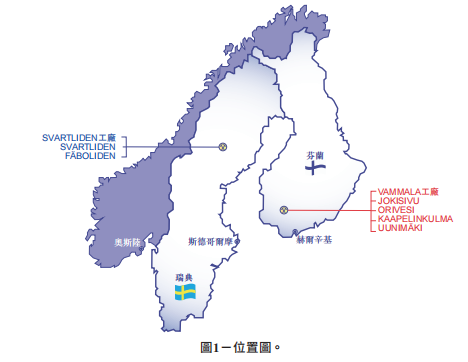
Dragon Resources is a gold producer operating in the Nordic region. Its core assets include the Vammala production center in Finland and the Svartliden production center in Sweden. Among them, the average annual gold output of the Finnish project is about 20,000 to 30,000 ounces. On September 2 of this year, Dragon Resources completed the restructuring. The holding company moved from Australia to Hong Kong and re-listed on the main board of the Stock Exchange through an introduction. The stock code remained unchanged. According to reports, this restructuring itself will not have a significant impact on Dragon Resources' business, and the reorganization is mainly because the company no longer has substantial ties with Australia. The reorganization can better manage regulatory and compliance risks and reduce administrative and additional costs associated with complying with Australian and Hong Kong laws at the same time.
Looking at the market, Dragon Resources's activity in the secondary market has increased since it was re-listed for trading in early September. Looking at the Japanese K line, the company's stock price showed signs of breaking through the early consolidation platform. The moving average system showed a bullish arrangement, indicating that capital is more willing to go long. On October 7, stimulated by the favorable discoveries of high-grade drilling in overseas mines, the stock once surged nearly 9% in the intraday market, becoming one of the most active performing targets in the gold sector.
According to the news, Dragon Resources issued an announcement after the market on October 6, disclosing the latest test results of the Arpola-8 drilling activity at the Jokisivu gold mine in Finland. According to the announcement, high-grade samples were discovered in multiple boreholes. The high-grade samples were concentrated at the level of 320 meters to 340 meters in the flying squirrel area. The extended range of the Arpola target mine was successfully identified, providing strong support for the subsequent increase in resources and the extension of the mine's lifespan.
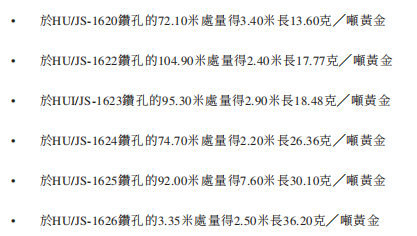
According to reports, the Jokisivu gold mine is located 180 km northwest of Helsinki, the capital of Finland, and about 40 km southwest of Dragon Resources's Vammala plant in southern Finland. Open-pit mining at this mine began in 2009, while underground mining began in 2011. By the end of last year, underground excavation at the Jokisivu gold mine had been extended to a depth of 645 meters, and about 3.7 million tons of gold grade ore had been extracted through open pit mining and underground operations.
The continuation of the upward trend in stock prices under the recuperation of gold prices is yet to be tested
The release of the resource potential of Dragon Resources is certainly a catalyst for short-term stock price strengthening, but if optimistic expectations are to be transformed into support for a continued upward trend in stock prices, this still requires coordination with the overall trend of gold prices. Judging from the performance of gold prices, short-term changes in the Federal Reserve's policy and fluctuations in the US dollar may still cause disturbances, and the sentiment in the gold sector will inevitably repeat. At the same time, the central bank's continued purchase of gold itself has sent a long-term signal that the government is firmly optimistic about gold. Combined with the fact that global safe-haven demand has not subsided, the bottom support at the center of gold prices is still quite solid. For gold producers, this also means that the overall profit environment is still favorable, and the risk of a deep decline is relatively manageable.
Returning to the company's management level, Dragon Resources' performance in the first half of 2026 has fully verified the logic of a sharp rise in volume and price. According to the interim report, the company achieved revenue of about 107 million Australian dollars, an increase of 97.1% year on year; net profit after tax was about 63.81 million Australian dollars, a sharp increase of 402.8% year on year. Gold sales reached 15,628 ounces, up 50.7% year on year; the average price was 4,622 US dollars/ounce, up 48.0% year on year. Driven by a double increase in volume and price, Dragon Resources' gross margin jumped to 73.9% from 48.9% in the same period last year, and profit quality improved markedly.
The pace at which resource potential is realized may be a key variable affecting the subsequent trend of Dragon resources. If the drilling results of the Jokisivu gold mine mentioned above are successfully converted into resources and reserves in the future, it means that the resource potential of Dragon Resources will be further unleashed. At the same time, the company's other projects are progressing in an orderly manner: early drilling in the Uunimäki gold project has discovered high-grade ore segments, which are expected to become a new source of production; plans to resume production at the Svartliden gold mine have also begun, and subsequent grade control drilling and mining research are worth paying attention to.
From a valuation perspective, the current market value of Dragon Resources is relatively small. Under the high level of gold prices and expectations that resource potential is expected to be further released, the company's stock price is highly elastic. However, at the same time, it goes without saying that such small-market capitalization gold mining companies are more sensitive to changes in fundamentals. Once there is a continuous correction in gold prices, the extent of such target share price fluctuations may be even more drastic.
All in all, the investment value of Dragon Resources is that it has both industry beta and its own α: at the macro level, external uncertainty and the central bank's continuous purchase of funds provide some support for keeping gold prices running at a high level; at the corporate level, the release of resource potential brought about by exploration breakthroughs is expected to further strengthen the logic of volume and price increases. However, it will take time to verify whether the resource potential can be realized in terms of production and profit as scheduled. If the price of gold remains high and exploration results are successfully transformed, there is still room to release the flexibility of Dragon Resources's stock price; conversely, we need to be wary of stock price fluctuations caused by declining sentiment.