


Roku (ROKU) is back in focus after analysts raised earnings estimates, with attention turning to how fresh content, aggressive device discounts, and advertising momentum might influence the streaming platform’s long term investment appeal.
Recent moves in Roku’s share price reflect that story. The stock has a 90 day share price return of 9.33% and a year to date share price return of 41.47%. The 1 year total shareholder return of 58.34% suggests momentum has been rebuilding as earnings expectations and platform visibility improve.
Pace your exposure to streaming by comparing Roku with a curated list of platform and media players screened for quality and momentum in our 20 high quality undiscovered gems.Roku’s rebound and upgraded earnings estimates present a straightforward question: Has the market already priced in most of the good news, or is the recent move only part of the story that current valuation suggests?
Most Popular Narrative: 5% Undervalued
Roku last closed at $153.81, while the most followed narrative pegs fair value at about $162.45. The valuation gap is modest and rests heavily on how advertising and content investments play out over time.
The global migration of advertising budgets from linear TV to digital and connected TV, combined with Roku's rollout of new ad products (such as Roku Ads Manager) and deeper third-party DSP integrations, increases its share of high-margin digital advertising, which is reflected in both revenue and platform margins.
See why 82 investors see Roku as 5% undervalued.
Result: Fair Value of $162.45 (UNDERVALUED)
Still, the Roku story can change quickly if competition in smart TV operating systems intensifies or if advertising demand softens and weakens platform economics.
Find out about the key risks to this Roku narrative.
Another View: Roku Through The Earnings Lens
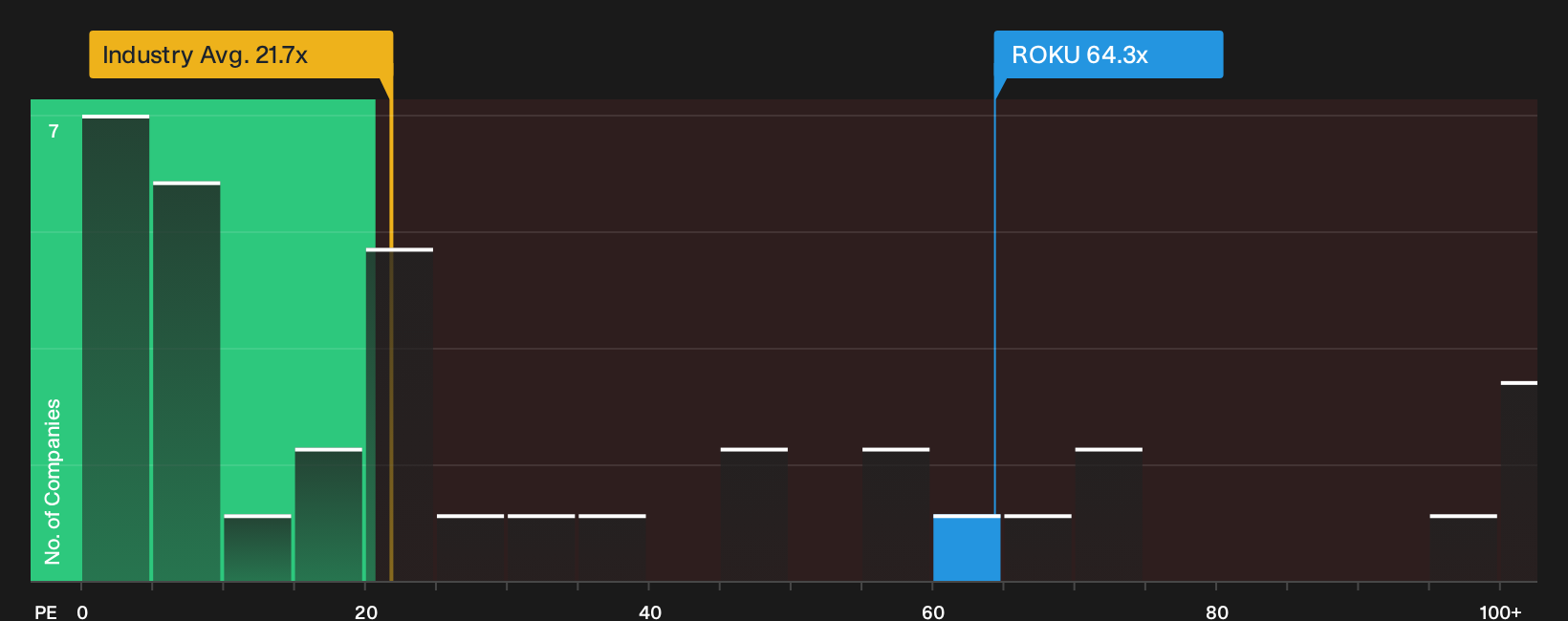
The first valuation leans on future cash flows and suggests Roku trades at a discount to those projections. A plain earnings multiple tells a different story. The stock changes hands at a P/E of 64.3x, while the US Entertainment sector sits at 21.7x and Roku's own fair ratio is 27.1x.
That gap means buyers today are paying a much richer price for each dollar of profit than both peers and the level our fair ratio suggests the market could shift toward. For anyone weighing that premium against the earlier underpriced cash flow view, the question is: which version of Roku's value feels more realistic to you?
See what the numbers say about this price — find out in our valuation breakdown.
Next Steps
Mixed signals on Roku's setup. If you want to move quickly rather than just follow the crowd, consider the balance between its risks and potential upside by checking the 3 key rewards and 1 important warning sign.
Looking for more investment ideas beyond Roku?
Do not stop your research with Roku. A few targeted screeners can surface stocks that better match your risk tolerance, income goals, or hunt for mispriced opportunities.
- Target potential mispricings by reviewing companies flagged as high quality yet overlooked in the 20 high quality undiscovered gems.
- Sharpen your focus on balance sheet strength by scanning the list of solid balance sheet and fundamentals (25 results) for businesses with financial resilience.
- Dial down volatility risk by zeroing in on companies highlighted in the 31 resilient stocks with low risk scores before the crowd catches up.
This article by Simply Wall St is general in nature. We provide commentary based on historical data and analyst forecasts only using an unbiased methodology and our articles are not intended to be financial advice. It does not constitute a recommendation to buy or sell any stock, and does not take account of your objectives, or your financial situation. We aim to bring you long-term focused analysis driven by fundamental data. Note that our analysis may not factor in the latest price-sensitive company announcements or qualitative material. Simply Wall St has no position in any stocks mentioned.
Have feedback on this article? Concerned about the content? Get in touch with us directly. Alternatively, email editorial-team@simplywallst.com