


Carvana’s Orlando expansion and what it could mean for CVNA shares
Carvana (CVNA) just moved to add Inspection and Reconditioning Center capabilities to its ADESA Orlando auction site in Sanford, Florida, tying physical capacity more tightly to its online used car platform.
The roughly 65 acre facility, supported by Carvana’s CARLI software, is set to handle retail reconditioning and fulfillment alongside wholesale auctions, create about 100 local jobs over time, and widen same day delivery access for Central Florida buyers.
For context, Carvana shares trade at US$63.20, with the 1 year total shareholder return down 12.23% but the 3 year total shareholder return very large at roughly 8x. This points to strong longer run momentum despite a 21.05% year to date share price decline.
In the short term, the stock has softened, with the 30 day share price return down 15.42% and the 90 day share price return down 4%. This comes as operational updates like the Orlando IRC integration and anticipation around the 28 October 2026 earnings release shape how investors weigh growth potential against risk.
Compare Carvana’s expansion story with other retailers by scanning hand picked list of solid balance sheet and fundamentals (25 results), which might offer a different balance of execution risk and financial resilience.
Carvana now trades well below the average analyst price target, while its intrinsic value estimate suggests the opposite. Which reference point does a move like the Orlando build out really justify?
Most Popular Narrative: 24% Undervalued
Carvana’s widely followed thesis pegs fair value at about $82.98 per share, well above the latest $63.20 close. That puts a move like the Orlando buildout squarely in focus for anyone weighing that gap.
The buildout of inspection and reconditioning capacity on ADESA sites, including new capabilities at locations in California and Charlotte that add inventory pools and support faster local delivery, can lift throughput and help revenue and unit economics.
See why 56 investors see Carvana as 24% undervalued.
Result: Fair Value of $82.98 (UNDERVALUED)
Still, the Carvana story can be knocked off course if gross profit per unit remains under pressure or if inventory growth continues to lag sales.
Find out about the key risks to this Carvana narrative.
Another View on Carvana’s valuation
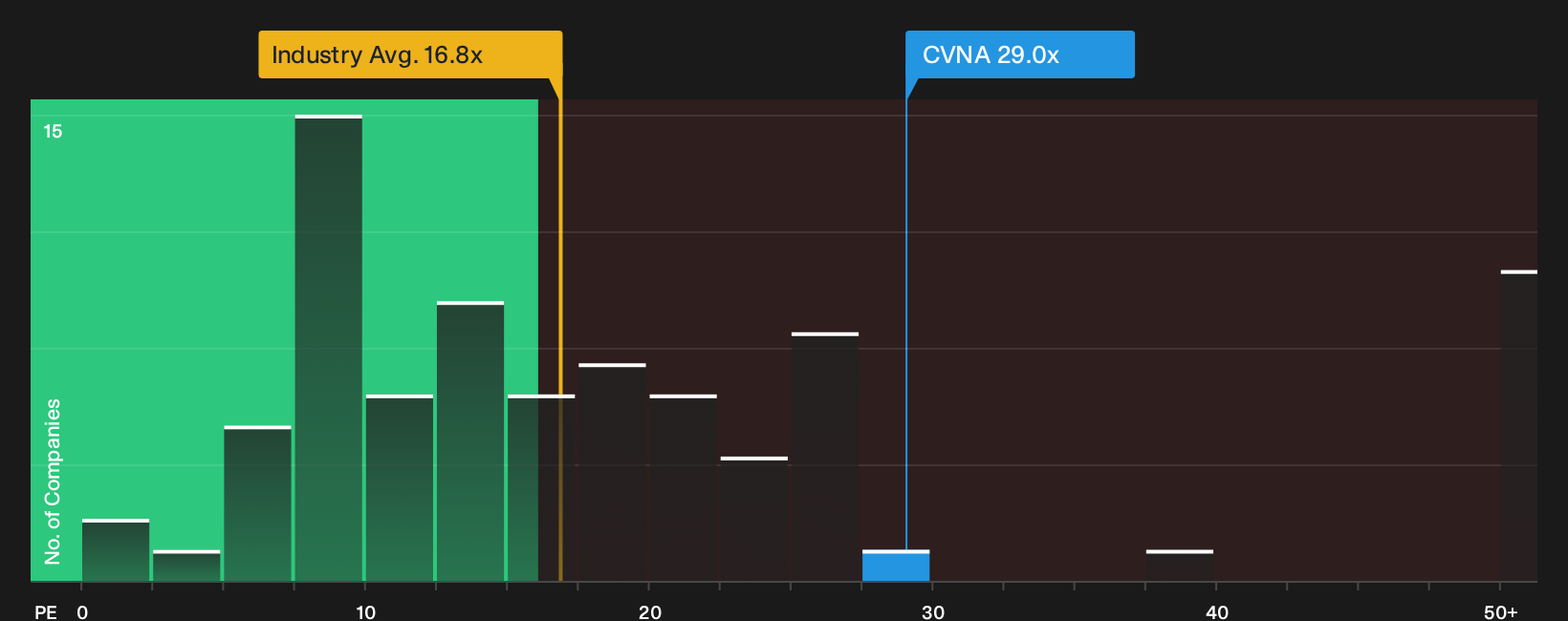
The first story presents Carvana as roughly 24% undervalued at about $82.98 per share. A different lens tells a cooler story. On a P/E of 29x, Carvana trades well above the US Specialty Retail average of 16.8x and above a fair ratio of 24.2x, which leans toward richer pricing. How comfortable are you paying a premium when the earnings multiple already runs this hot?
To see how this pricing gap compares with peers and what the numbers imply for upside or downside risk, take a look at our valuation breakdown, including the See what the numbers say about this price — find out in our valuation breakdown..
Next Steps
Mixed signals or emerging opportunity? If you want to move faster than the consensus and build your own thesis around Carvana’s risks and potential rewards, start by weighing the 2 key rewards and 1 important warning sign.
Looking for more investment ideas beyond Carvana?
Do not stop at Carvana. Put a few more quality candidates on your radar so you are not relying on a single story for future returns.
- Target resilient potential by scanning 31 resilient stocks with low risk scores that may hold up better when sentiment swings.
- Hunt for pricing mismatches by reviewing 27 high quality undervalued stocks that combine solid fundamentals with room for a rerating.
- Spot tomorrow’s possible leaders early by checking 20 high quality undiscovered gems before they attract broader attention.
This article by Simply Wall St is general in nature. We provide commentary based on historical data and analyst forecasts only using an unbiased methodology and our articles are not intended to be financial advice. It does not constitute a recommendation to buy or sell any stock, and does not take account of your objectives, or your financial situation. We aim to bring you long-term focused analysis driven by fundamental data. Note that our analysis may not factor in the latest price-sensitive company announcements or qualitative material. Simply Wall St has no position in any stocks mentioned.
Have feedback on this article? Concerned about the content? Get in touch with us directly. Alternatively, email editorial-team@simplywallst.com