


(NGX26) (NGZ26) (NGF27) (UNG) (KOLD) (BOIL)
“Natural Gas: When Mother Nature Meets Wall Street - The ClimatePredict Advantage”
by Jim Roemer - Meteorologist - Commodity Trading Advisor - Principal, Best Weather Inc. & Climate Predict - Publisher, Weather Wealth Newsletter and Co-Producer of Climatelligence
Scott Mathews - Editor and Co-Producer of Climatelligence
- October 9, 2026
Natural gas may be the only commodity where a few degrees on a thermometer can send billions of dollars scrambling for cover. A sudden Arctic blast can ignite a spectacular rally, while an unexpected warm spell can send bullish traders running for the exits. Throw in hurricanes, LNG exports, record electricity demand, and the AI revolution, and you have one of the world's most fascinating—and volatile—markets.
Why Weather Forecasting Is Worth Millions
For decades, I have advised commodity traders, natural gas producers, and hedge funds about something many Wall Street analysts underestimate: Weather is not just a daily forecast. It is a complex global puzzle. That's why I developed ClimatePredict, a forecasting approach that examines teleconnections—large-scale atmospheric and oceanic patterns that influence weather thousands of miles away.
Think of teleconnections as Mother Nature's interconnected chessboard.
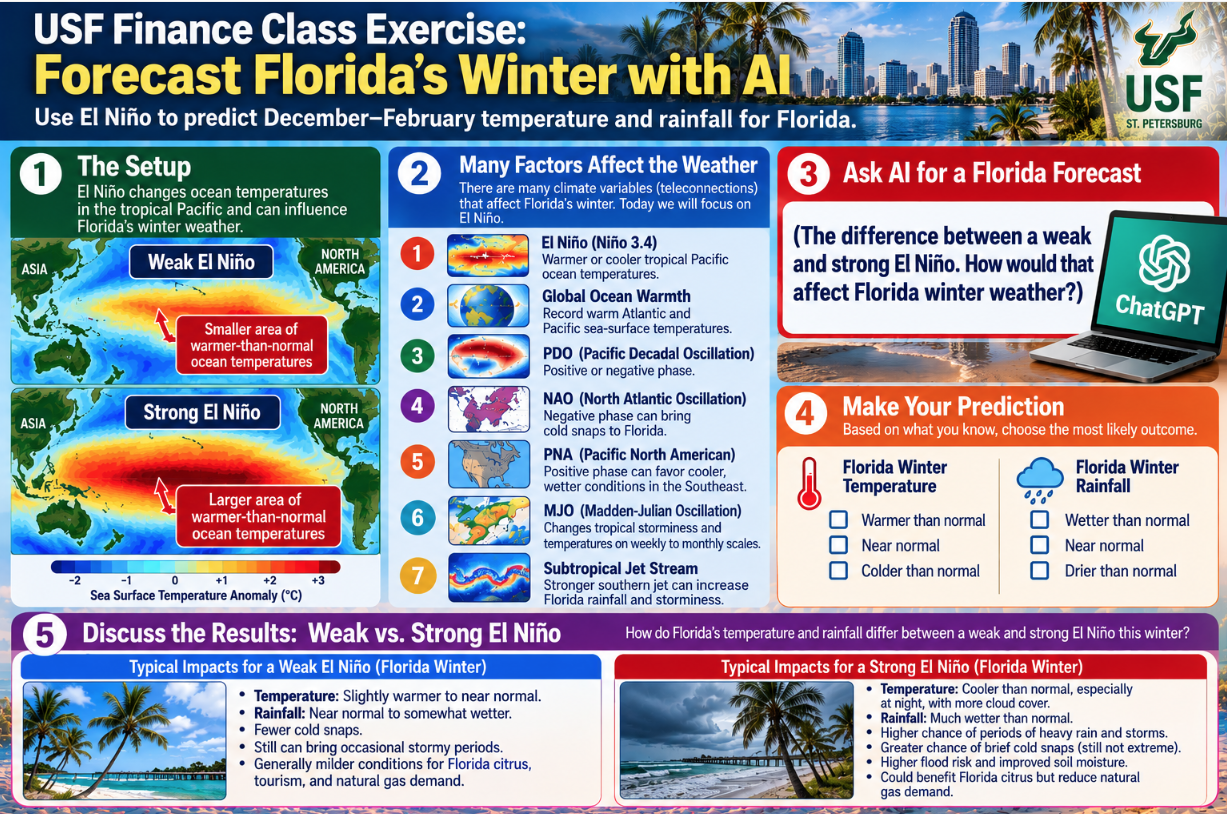
El Niño, La Niña, the Arctic Oscillation (AO), Pacific North American pattern (PNA), Eastern Pacific Oscillation (EPO) and Madden-Julian Oscillation (MJO) can provide valuable clues about future temperature patterns, sometimes weeks or months before conventional forecasts become confident. For example, a negative EPO can open the door for Arctic air to invade the United States, even during an otherwise relatively mild El Niño winter.
The secret is understanding how these climate signals interact—not simply assuming every El Niño means a warm winter.
Our Latest Natural Gas Call: “Don't Chase the Hurricane!”
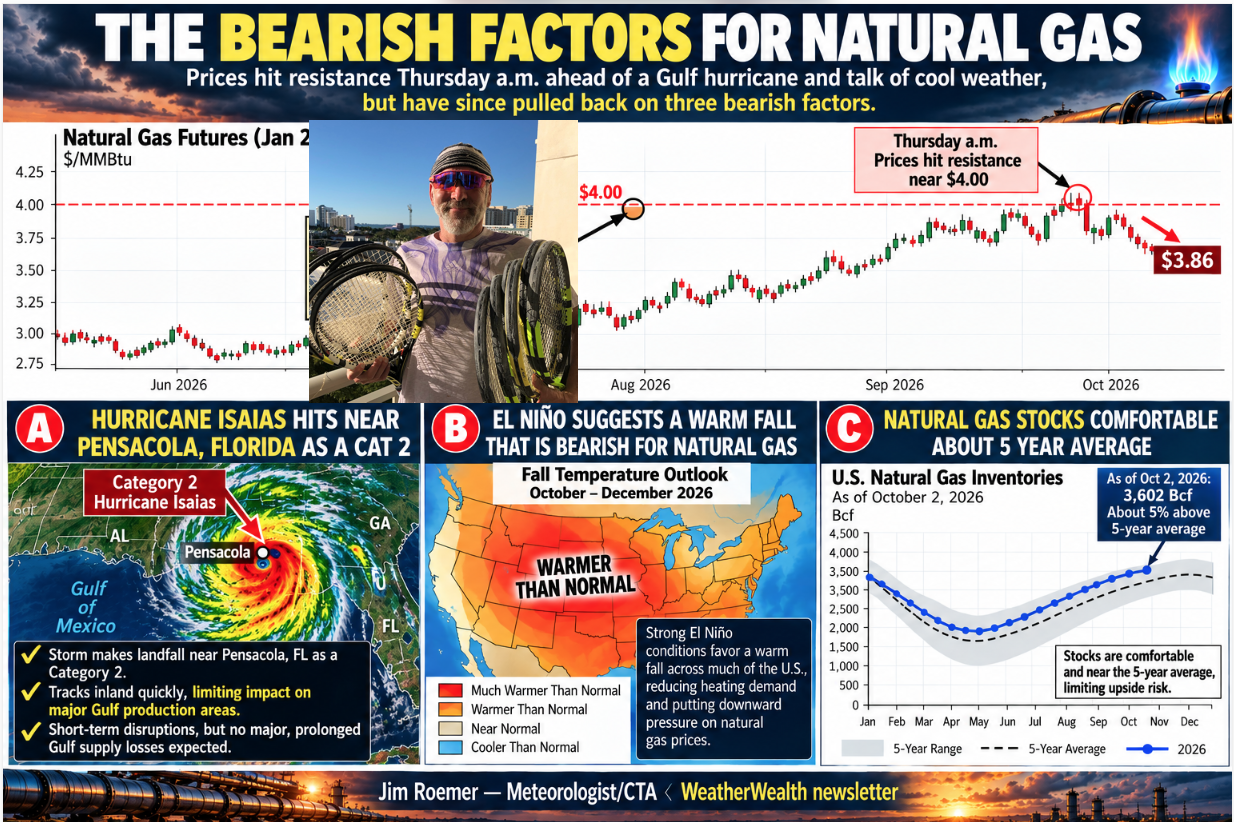
Recently, January 2027 natural gas futures approached $4.00 as traders worried about a Gulf hurricane and forecasts suggesting cooler weather.
However, our WeatherWealth clients received a sell recommendation near $3.99, reflecting our assessment that the bullish excitement was running ahead of longer-term fundamentals. By early October 9, prices had retreated toward $3.86.
Why the skepticism? Comfortable storage, the prospect of a relatively warm autumn, and the possibility of limited hurricane-related production disruptions suggested that the market could struggle to sustain its rally. Of course, a hurricane can disrupt offshore production and LNG terminals, while also impacting coastal infrastructure. But a storm can also reduce electricity consumption and temporarily weaken demand. The hurricane's actual track matters far more than its dramatic headlines.
The Bulls Have a Powerful New Friend: Artificial Intelligence
The explosive expansion of AI data centers is creating a potentially important structural source of electricity demand. Data centers operate around the clock, and natural gas-fired power plants can help supply reliable electricity when wind and solar generation fluctuate. Here is how I see the longer-term tug-of-war:
Bullish factors
- AI data centers and expanding electricity consumption
- Growing U.S. LNG exports to international markets
- Declining production growth or tighter drilling budgets
Bearish factors
- Mild El Niño-influenced winters reduce heating demand
- Comfortable inventories and continued strong U.S. production
- Renewable energy expansion and improving battery storage
- LNG export interruptions or weaker overseas demand
- Economic slowdowns reduce industrial consumption
The ClimatePredict Advantage
What makes natural gas particularly interesting is that both sides can be right — just at different times.
AI may create a bullish multiyear demand story, while a warm winter can still produce a sharp seasonal price decline.
For producers, anticipating these shifts can improve hedging decisions, drilling budgets, and cash-flow planning. For traders, understanding teleconnections can help identify when weather-driven rallies are overdone—or when a seemingly comfortable market is vulnerable to a sudden cold-weather shock.
ClimatePredict is designed to combine these climate relationships with changing weather patterns, historical analogs, and market fundamentals. No forecasting system eliminates uncertainty, but identifying risks before they become obvious can provide a meaningful decision-making advantage.
My bottom line: The natural gas market may increasingly be powered by artificial intelligence. However, its short-term fortunes will still be heavily influenced by Mother Nature.
After decades forecasting both weather and commodities, I've learned one thing: Never underestimate a stubborn Arctic air mass—or an overexcited natural gas bull!
Receive frequent updates and trading ideas at our WeatherWealth newsletter. Request a free trial subscription HERE
ORGet occasional free updates and Climatepredict forecasts at our new Climatelligence newsletter here >>> climatelligence.substack.com
Jim Roemer, Scott Mathews, and the BestWeather Team
Mr. Roemer owns Best Weather Inc., offering weather-related blogs for commodity traders and farmers. He is also a co-founder of Climate Predict, a detailed long-range global weather forecast tool. As one of the first meteorologists to become an NFA-registered Commodity Trading Advisor, he has worked with major hedge funds, Midwest farmers, and individual traders for over 35 years. With a special emphasis on interpreting market psychology, coupled with his short-term and long-term trend forecasting in grains, softs, and energy markets, he holds a unique standing among advisors in the commodity risk management industry.