


- On 29 September 2026, SNICKERS and adidas released their first cleat collaboration, a limited-edition ADIZERO ELECTRIC + II priced at US$180 for U.S. buyers, with Halloween themed design details and branding elements such as a ghoulish green insole and SNICKERS lace charm.
- The tie-up gives adidas another branded product aimed at peak football and Halloween demand, which can test how limited-edition collaborations support performance footwear sales and direct-to-consumer momentum.
- This report examines how adidas' broader investment narrative is influenced by this limited-edition SNICKERS cleat drop and its timing.
Scan how adidas uses branded partnerships to capture seasonal demand, then compare it with other consumer brands on our curated list of 618 high quality undiscovered gems that may still be off most radars.
adidas Investment Narrative Recap
To own adidas, you need to believe the brand can keep turning global sports and athleisure demand into steady volume growth and better profitability. That hinges on execution in performance categories, tighter direct to consumer distribution and disciplined control of sourcing costs as tariffs and supply chain complexity continue to pressure margins.
The SNICKERS cleat drop is more of a marketing and demand test than a needle mover for near term earnings. The key short term swing factor still sits in U.S. performance and lifestyle sell through and how pricing and promotions offset cost headwinds. The biggest risk remains margin pressure if tariffs and competition squeeze pricing power.
With no major new filings or guidance changes around this announcement, the SNICKERS partnership fits alongside adidas’ broader push into collaborations and product stories built for specific moments. It plugs into existing strengths in football, Halloween retailing and direct online channels rather than redefining the business model.
For catalysts, the value lies in execution data. Investors will watch how fast the limited run sells out, what it does for traffic into adidas’ own channels and whether similar capsules appear in running, training or basketball. Those readings feed back into the core questions on pricing power, demand durability and inventory risk in North America.
adidas' current analyst narrative points to forecast revenue of €32.0b and projected earnings of €2.4b by 2029, based on revenue growth assumptions of 7.1% per year. This profile implies an earnings increase of about €1.0b from current earnings of €1.4b to the 2029 consensus figure.
Uncover why adidas' fair value indicates a 33% potential upside to its current price, which could narrow quickly.
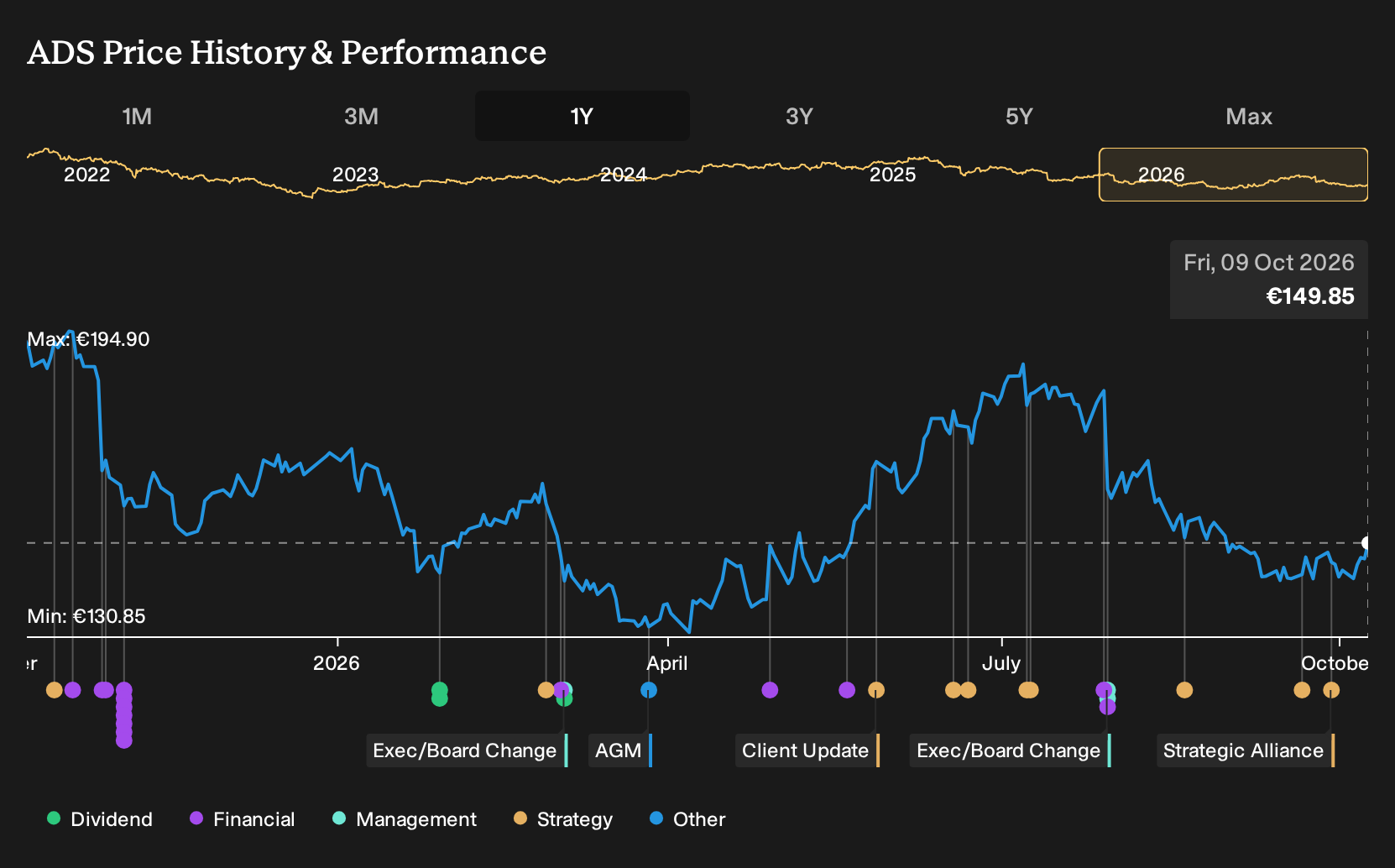
Exploring Other Perspectives
Some of the most optimistic adidas analysts were already framing a different story for you, treating collaborations as a long term catalyst. Before this cleat launch, they were pencilling in revenue of about €33.5b and earnings of €2.7b by 2029. This Halloween tie up might later push those upside narratives even further or challenge them entirely.
Explore 5 other adidas fair value estimates, including one that suggests potential upside of as much as 131% from the current price.
Reach Your Own Conclusion
Disagree with existing narratives? Extraordinary investment returns rarely come from following the herd, so go with your instincts.
- A great starting point for your adidas research is our analysis highlighting 4 key rewards and 1 important warning sign that could impact your investment decision.
- See our latest analysis for adidas. The report includes a comprehensive fundamental analysis summarized in a single visual, the Snowflake, making it easy to evaluate adidas' overall financial health at a glance.
Looking for more adidas investment ideas and peers?
Once you have a view on adidas, it helps to widen the field and compare it with other companies that match the kind of risk profile and income mix you want in your portfolio.
- For investors hunting for potential upside in smaller, more speculative situations, scan the 126 elite penny stocks with strong financials that pass fundamental quality checks instead of relying on hype alone.
- If capital preservation matters just as much as return potential, focus on companies with strong finances by reviewing the list of solid balance sheet and fundamentals (204 results) and see which ones complement a position in adidas.
- For those who want a smoother ride with fewer adverse surprises, filter for steadier businesses through the 222 resilient stocks with low risk scores and weigh how each one could sit alongside adidas in your portfolio.
This article by Simply Wall St is general in nature. We provide commentary based on historical data and analyst forecasts only using an unbiased methodology and our articles are not intended to be financial advice. It does not constitute a recommendation to buy or sell any stock, and does not take account of your objectives, or your financial situation. We aim to bring you long-term focused analysis driven by fundamental data. Note that our analysis may not factor in the latest price-sensitive company announcements or qualitative material. Simply Wall St has no position in any stocks mentioned.
Have feedback on this article? Concerned about the content? Get in touch with us directly. Alternatively, email editorial-team@simplywallst.com