


Tariffs have quietly reshaped the checkout price on everyday goods, and by October 2026 those policy shifts are still rippling through U.S. consumer stocks. Higher import costs pressure retailers that rely on foreign supply, while domestically focused producers can sometimes use that gap to defend pricing and protect profit pools. This piece walks through three U.S. consumer-focused stocks exposed to these tariff trends and explains why their stories might matter for your portfolio decisions.
The stocks that follow are just a first pass at this tariff angle, and the full screen surfaced 9 more U.S. consumer goods and retail companies with similarly interesting domestic-first stories that are not covered here. To see the wider field and identify which ones best fit your thesis, head straight to the U.S. Domestic-Focused Consumer Goods & Retailers screener.
Interparfums (IPAR)
Interparfums slots into this U.S. domestic-focused screen as a New York headquartered fragrance producer with brands on department store shelves and in e-commerce carts. This puts its pricing power and tariff exposure directly in play for U.S. consumers.
Interparfums manufactures and markets branded fragrances and related products across labels like Coach, Jimmy Choo, Montblanc and more. It generates about US$1.5b from this category in 2025, and the stock’s market cap sits around US$3.6b.
Interparfums illustrates how branded consumer goods can matter in a tariff heavy world, where label strength can help support pricing and protect margins against import focused rivals.
Interparfums is significantly expanding its e-commerce and digital marketing capabilities, including targeted programs for channels like Amazon and TikTok. This positions the company to capture incremental market share and drive international sales by engaging directly with global consumers, potentially supporting higher revenue and a richer gross margin mix over time.
What happens to that margin story will depend on how one unseen cost pressure interacts with those digital channel gains.
That hidden pressure is where the story really gets interesting, and the full narrative for Interparfums shows how tariff costs, channel mix and brand strength could be quietly decoupling.

AutoNation (AN)
AutoNation is a pure U.S. play on car buying and ownership, and its core appeal in this tariff tilted world comes less from the showroom and more from what happens after you drive off the lot.
Continued mix shift toward high margin aftersales and customer financial services, which already account for around 80% of AutoNation profit and nearly half of gross profit from aftersales alone, supports the view that a larger share of future revenue and net margins will come from recurring, less cyclical lines that some investors may underappreciate.
The real test is how one quiet pressure on those recurring earnings shapes what AutoNation can keep making on every customer over time.
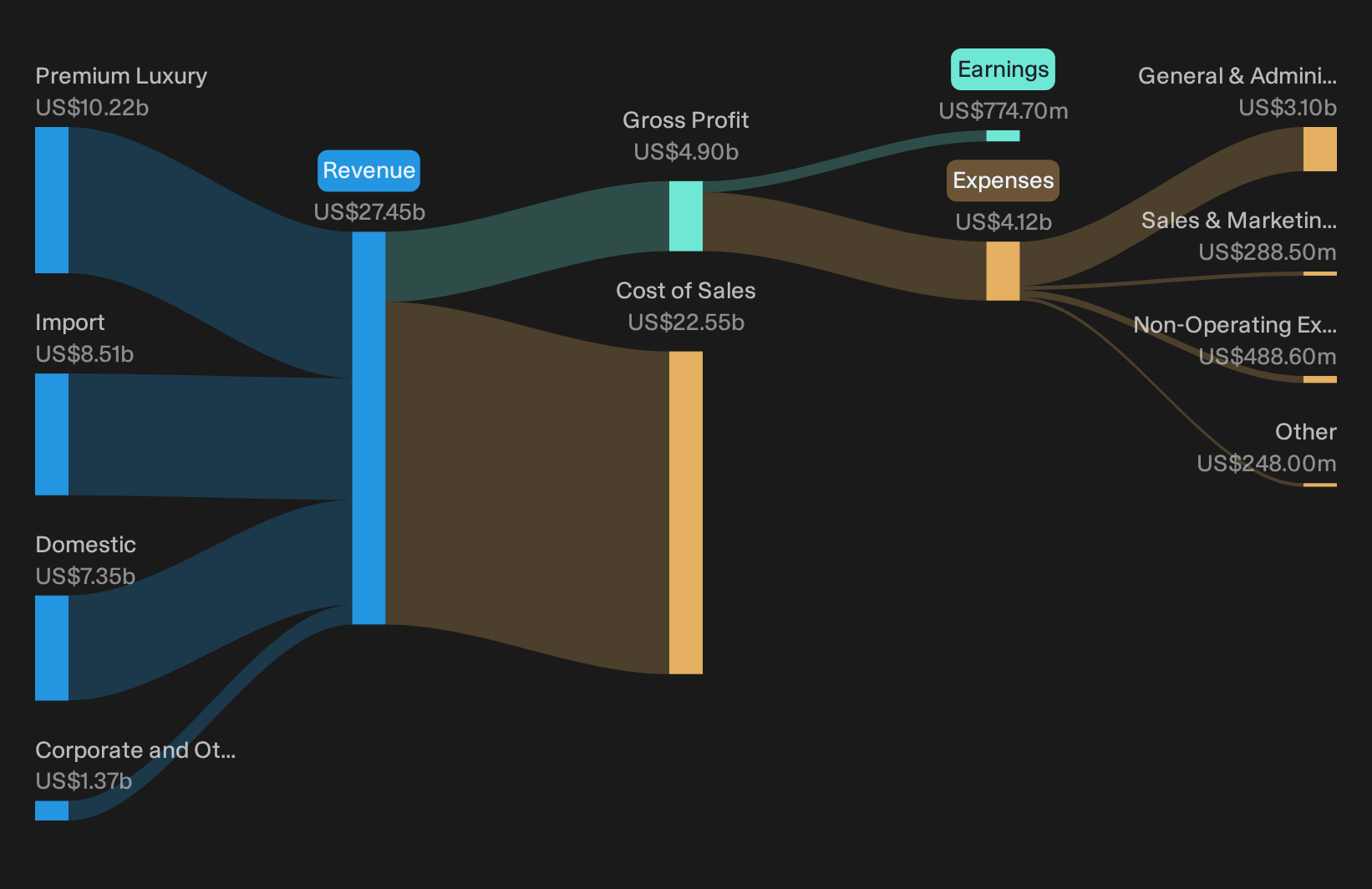
AutoNation is a U.S. automotive retailer headquartered in Fort Lauderdale with a market cap of about US$5.2b. It draws all US$27.4b of its revenue from domestic operations and spreads its US$28.4b in segment revenue across Domestic, Import, Premium Luxury and Corporate and Other lines.
That quiet pressure is exactly what the full narrative for AutoNation unpacks in detail, showing how AutoNation’s recurring engine could be accelerating or masked by current headline numbers.
Weyco Group (WEYS)
Weyco Group is a Glendale based footwear producer with a strong North American footprint that fits the U.S. Domestic Focused Consumer Goods & Retailers theme. It designs and sells mid priced dress and casual shoes plus outdoor styles under brands like Florsheim, Nunn Bush, Stacy Adams and BOGS. Most of its US$280 million or so in revenue comes from North American Wholesale at about US$219 million, with Retail at about US$36 million and Other income around US$25 million. The stock’s market cap is roughly US$485 million.
Here you are looking at a U.S. and Canada focused footwear group that earns most of its US$280 million business from North American wholesale and direct retail, backed by a roughly US$485 million market value. Tariff relief, refund flows and a lower but still present 10% surcharge leave one unresolved question around future footwear margins.
Those unresolved footwear margins make it worth pulling up the 3 key rewards and 1 important warning sign to see how Weyco Group’s tariff exposure and balance sheet strength really line up.

Seeking Alternatives Before Momentum Flies Past
Fresh ideas move first, and markets rarely wait. Some themes can be quietly building breakout momentum under the radar for now. Scan these curated lists before the window drops and consider them before momentum moves on.
- Look for cash rich businesses with room to move by running a screen of 29 high quality undervalued stocks, built to surface quality first rather than hype.
- Review companies with strong balance sheets and cleaner fundamentals through a curated list of solid balance sheet and fundamentals (25 results), so you focus on resilience while it still matters.
- Explore future facing infrastructure as compute demand continues to evolve by using a focused list of 92 AI infrastructure stocks before it becomes more widely followed.
This article by Simply Wall St is general in nature. We provide commentary based on historical data and analyst forecasts only using an unbiased methodology and our articles are not intended to be financial advice. It does not constitute a recommendation to buy or sell any stock, and does not take account of your objectives, or your financial situation. We aim to bring you long-term focused analysis driven by fundamental data. Note that our analysis may not factor in the latest price-sensitive company announcements or qualitative material. Simply Wall St has no position in any stocks mentioned.
Have feedback on this article? Concerned about the content? Get in touch with us directly. Alternatively, email editorial-team@simplywallst.com