


Energy headlines rarely collide this directly with household budgets. Trump’s surprise plan to tap Russian diesel, war-linked swings in fuel costs and the next round of inflation and retail data all feed into what consumers can afford and where they cut back. That ripple can help or hurt select stocks tied to travel, transport and shopping. This article unpacks how three picks from our screener look exposed to that story.
The three stocks discussed next are just a sample from this idea. The full screen surfaced 52 more U.S. consumer-linked companies with equally compelling stories that are not covered below. To go straight to the full U.S. Consumer-Linked Sectors Benefiting from Lower Energy Costs list, use the U.S. Consumer-Linked Sectors Benefiting from Lower Energy Costs screener to identify, filter and analyze the highest-conviction opportunities.
Ryder System (R)
Ryder System sits right in the sweet spot of this theme, running fuel hungry trucks and warehouses that keep goods flowing to U.S. consumers. Any relief at the diesel pump can quickly matter for its contracts, cash flows and the appeal of the stock.
Ryder System runs a global logistics operation built around Fleet Management Solutions, Supply Chain Solutions and Dedicated Transportation. FMS generates about US$6.0b of revenue, SCS about US$5.6b and DTS about US$2.3b, and the group is valued at roughly US$9.1b in market cap.
"Ryder System sustained investment and growth in its asset light Supply Chain and Dedicated solutions is now reflected in guidance that these segments will account for about 60% of 2026 revenue, with more than 90% of total revenue under long term contracts."
What happens to Ryder System margins and growth depends heavily on how one unseen pressure tied directly to operating costs and contract economics plays out.
That contract pressure is exactly what the full narrative for Ryder System unpacks in detail, including how Ryder System could still accelerate if fuel costs move against it.

United Parcel Service (UPS)
United Parcel Service is a consumer facing logistics giant that moves everything from e commerce parcels to urgent international freight, so shifts in fuel costs and household spending can quickly ripple through its delivery volumes and profitability.
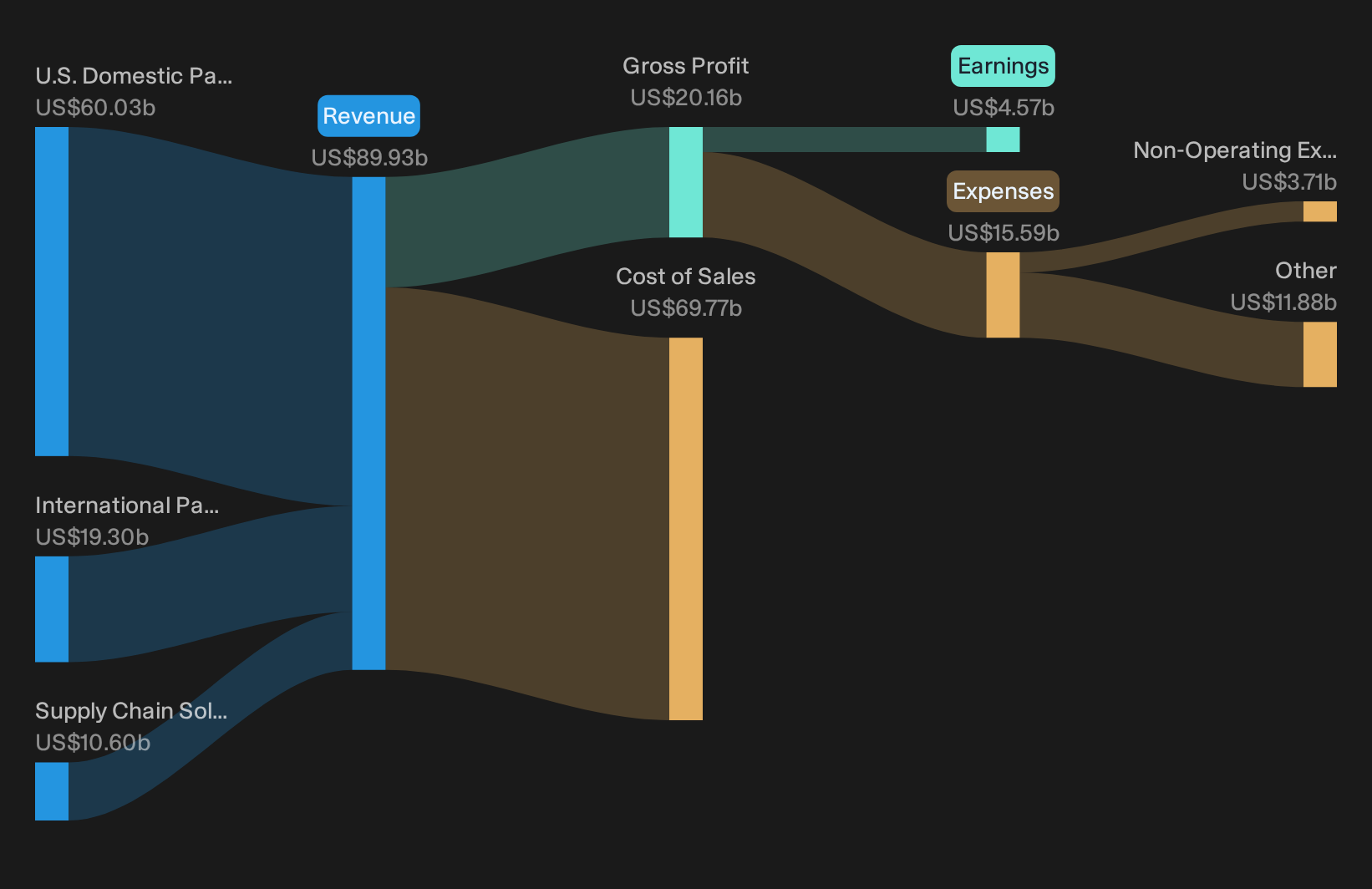
United Parcel Service runs a global package delivery and logistics network, with about US$60.0b in U.S. Domestic Package revenue, US$19.3b from International Package and US$10.6b from Supply Chain Solutions, and the group is valued at roughly US$80.5b in market cap.
"Launched in early 2025, UPS's "Efficiency Reimagined" outlined the company’s largest network overhaul in company history. This multi-year initiative describes management's goals to streamline domestic operations."
What happens when that overhaul meets lower fuel costs and a still fragile consumer will be central to where UPS margins settle.
That margin question is exactly what the full narrative for United Parcel Service unpacks, showing where UPS efficiency gains could accelerate, stall, or even decouple from fuel trends.
J.B. Hunt Transport Services (JBHT)
J.B. Hunt Transport Services is a pure play on U.S. freight tied to consumer demand, where diesel costs feed directly into what flows through to profit. This makes its recent operating progress an important test case for this lower energy cost theme.
J.B. Hunt Transport Services runs a broad U.S. trucking and logistics network focused on intermodal freight, dedicated contract fleets, brokerage and home delivery. It generates about US$6.3b from Intermodal, US$3.5b from Dedicated, US$1.3b from Integrated Capacity Solutions, US$835 million from Truckload and US$799 million from Final Mile, with a market value near US$21.5b.
"Record intermodal volume in Q2 2026, including over 578,000 loads and strong growth in the Eastern network, signals ongoing highway to rail conversion that could support revenue growth and intermodal operating margins as more of the identified conversion opportunity is captured."
What happens when that volume story collides with shifting fuel costs and one unresolved cost pressure will go a long way toward determining where margins land.
That unresolved pressure is exactly what the full narrative for J.B. Hunt Transport Services breaks down, showing whether J.B. Hunt Transport Services margins can keep accelerating while fuel, pricing and volumes start to decouple.

Seeking Alternatives Before The Crowd
Fresh ideas move first. Some gain momentum quietly, then reach a breakout phase while many investors are focused elsewhere. Scan these under the radar opportunities while it matters and consider them before they become widely followed.
- Identify sturdy businesses before the herd arrives by running the list of solid balance sheet and fundamentals (25 results), which highlights financially sound companies that may be positioned to hold up when momentum in other areas slows.
- Explore potential cash returns in a world of shrinking yields by checking the 8 dividend fortresses, which highlights income-oriented opportunities built around sizable payouts and resilient operations.
- Monitor early movers in AI infrastructure by scanning the 92 AI infrastructure stocks, which highlights suppliers supporting the hardware backbone before performance and demand become more widely recognized.
This article by Simply Wall St is general in nature. We provide commentary based on historical data and analyst forecasts only using an unbiased methodology and our articles are not intended to be financial advice. It does not constitute a recommendation to buy or sell any stock, and does not take account of your objectives, or your financial situation. We aim to bring you long-term focused analysis driven by fundamental data. Note that our analysis may not factor in the latest price-sensitive company announcements or qualitative material. Simply Wall St has no position in any stocks mentioned.
Have feedback on this article? Concerned about the content? Get in touch with us directly. Alternatively, email editorial-team@simplywallst.com