


The Zhitong Finance App learned that Bank of England interest rate policymaker Megan Greene said that the growth rate of the UK economy has exceeded expectations and the job market remains resilient, which is enough to show that the Bank of England is still not doing enough to curb inflation.
Speaking to the Atlantic Council while attending the International Monetary Fund meeting in Bangkok, the external member of the Monetary Policy Committee said that interest rates should be higher than the current 3.75%, and warned colleagues not to expect the financial market to complete this heavy responsibility of austerity. Prior to her remarks, the International Monetary Fund raised the UK's economic growth forecast for this year from 1% to 1.3%.
“Judging from the published GDP data, the current monetary policy tightening is not strong enough, and the economy's idle production capacity is limited,” she said. “Some recent labor market data also shows that the idle space in the labor market may have peaked, which means that the job market is still strong.”
According to reports, Greene is one of the more hawkish members of the Monetary Policy Committee. Over the past few months, she has voted to raise interest rates by 25 basis points to 4% to prevent a spiral rise in wages and prices, but in the nine-member monetary policy committee, her proposals have always been in the minority.
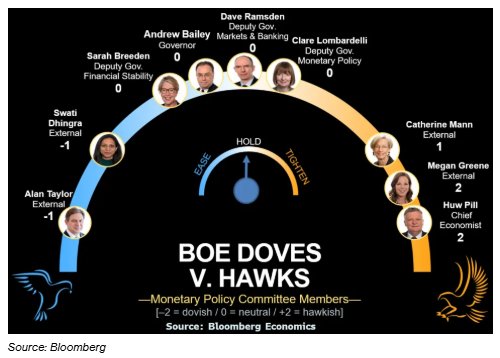
The current UK inflation rate is 3.1% and is expected to reach around 4%, double the 2% target due to the rise in energy prices due to the conflict in Iran. Markets expect the Monetary Policy Committee to raise interest rates at its next meeting in November.
Some members of the Monetary Policy Committee believe that the tightening financial environment and rising household borrowing costs are curbing inflation, but Greene warned that a laissez-faire attitude is excessive complacency.
“At a certain point, the central bank must be consistent in its words and actions. “If the market has absorbed expectations of interest rate hikes and you don't raise interest rates in the end, then the yield curve is bound to change,” she said. “I don't believe in the idea that one strategy can rely on a premium to get the job done for you. I think the central bank actually needs to develop a strategy.”
Greene said she is concerned that the longer inflation is above target, the more it will infiltrate people's expectations of prices and wages, leading to more enduring problems.
“What we've learned from the past few rounds of supply shocks is that when you go through several rounds of inflation, it really changes people's behavior,” she said. “What I'm worried about is that we have experienced continuous supply shocks, and now we are facing another round of shocks.”
She pointed out that the safest approach is to take pre-emptive action to “withstand the second-round effect” by raising interest rates. If it is proven later that interest rate hikes are unnecessary, “the central bank can adjust its policy direction and still be able to bring inflation back to the target level, and at the same time, the impact on economic activity will not be too drastic.”
When asked about the UK budget of October 28, she said that the Bank of England will pay close attention to whether the announced policies will push up prices. As it stands, “government spending has played a significant role in maintaining anti-inflationary pressure.”