


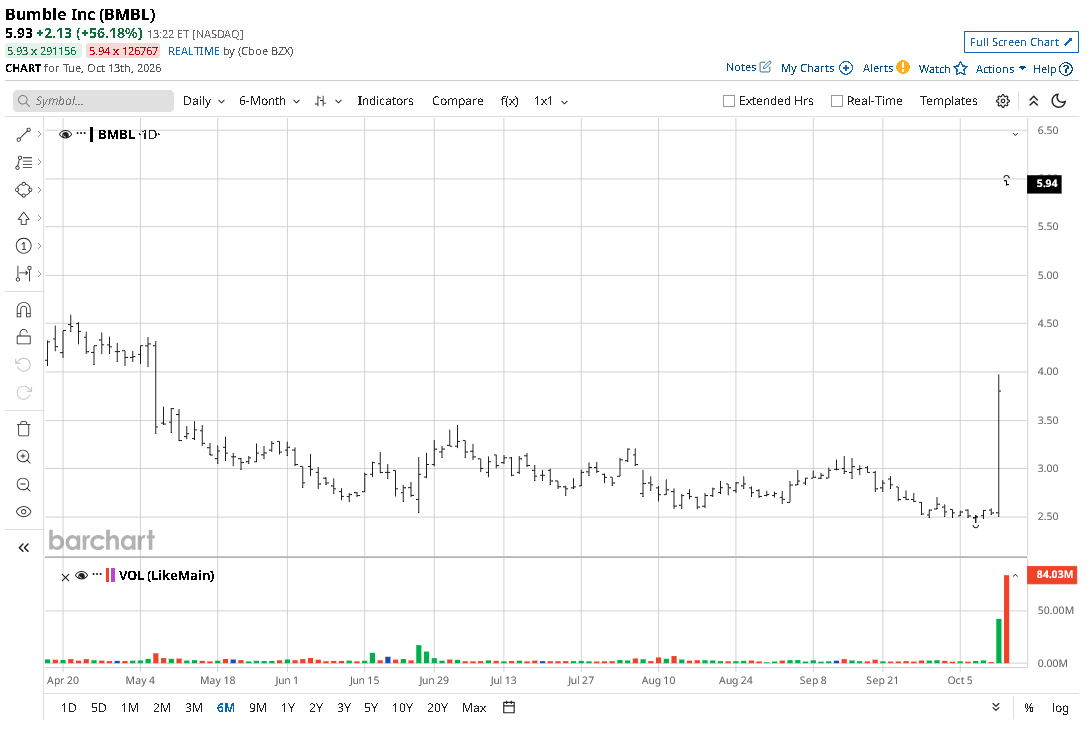
Bumble (BMBL) shares soared on Tuesday morning after the dating-app company agreed to a $1.3 billion acquisition by Ithaca Holdings. The all-cash transaction offers Class A investors $6.05 per share and is set to take Bumble private upon completion. Following today’s rally, Bumble stock is trading at a fresh 52-week high.
What We Know About Ithaca’s Offer for Bumble
Ithaca’s bid gives shareholders a concrete cash exit after a difficult stretch for the dating business.
Its $ 6.05-a-share offer represents about a 138% premium on BMBL shares’ Oct. 9 closing price, before takeover reports triggered a sharp rally.
Upon completion, Ithaca’s Ravi Gupta and John Hegeman will become Bumble’s co-CEOs, with founder Whitney Wolfe Herd remaining actively involved as the company enters private ownership
Private ownership could give Bumble more room to overhaul its product and invest in new features without the pressure of quarterly earnings expectations. Moreover, Ithaca’s focus on advanced technology could support more personalized matchmaking, which may help bring new users to the platform and improve engagement metrics over time.
Is There Any Further Upside Left in BMBL Shares?
Assuming the acquisition closes on the announced terms, the remaining upside in Bumble shares from their current price ($5.94) to the deal price ($6.05) is just 1.7%. That makes the remaining opportunity primarily a bet on deal completion, with limited room for another comparable rally.
Crucially, shareholder approval clears a key hurdle, but Bumble still identifies regulatory approval and other closing conditions as transaction risks.
A delay would extend investors’ waiting period, while a failed deal could undermine the takeover premium supporting the share price. A higher offer could change the arithmetic, but investors have no confirmed basis to count on one.
All in all, under the existing agreement, BMBL has already captured much of the available upside.
Wall Street’s Consensus View on Bumble Stock
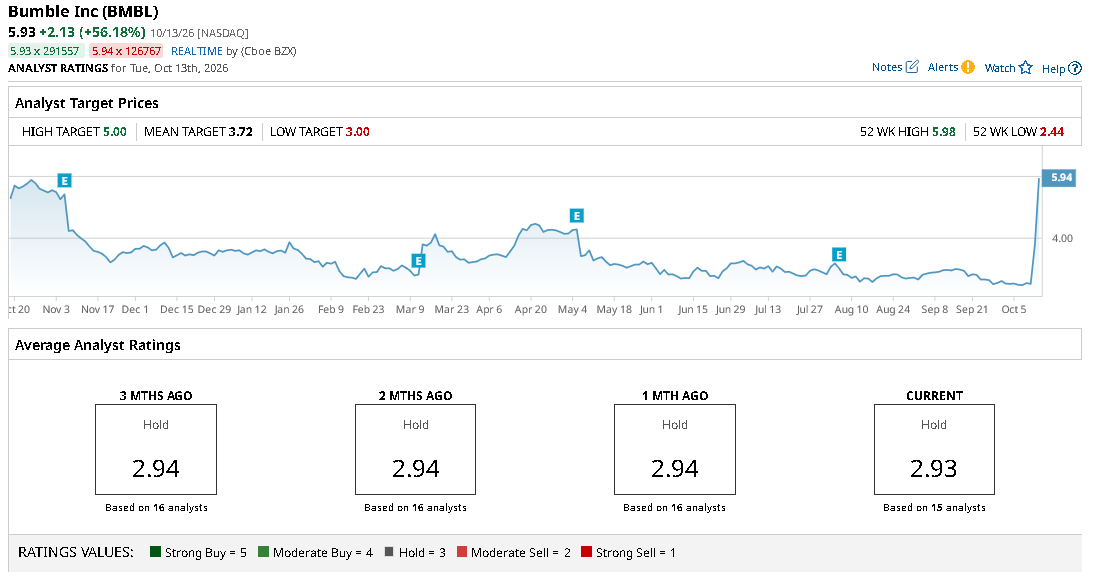
Heading into Oct. 13, Wall Street had a consensus “Hold” rating on BMBL stock with a mean price target of just $3.72.
This means Ithaca has agreed to value Bumble at a much higher price than analysts believed it could have been worth as a standalone company.
On the date of publication, Wajeeh Khan did not have (either directly or indirectly) positions in any of the securities mentioned in this article. All information and data in this article is solely for informational purposes. For more information please view the Barchart Disclosure Policy here.