


The Zhitong Finance App learned that at a time when the Philadelphia Semiconductor Index fell for five consecutive days and the cumulative retracement was close to 10%, the US consumer electronics giant Apple (AAPL.US) once rose to a record high of 348.15 US dollars on October 13. The market capitalization once again broke through 5 trillion US dollars. The closing price was 341.27 US dollars, and the market value was about 4.98 trillion US dollars. According to Wall Street financial giant Bernstein's strategist team, expensive high-end folding screens contribute extremely strong iPhone switching power and high-cost product portfolios, while AI smart homes significantly enhance Apple's consumer electronics ecosystem interaction and service touchpoints. Together, the two broaden sources of growth. The agency maintains Apple's bullish rating of “outperforming the market” and a target price of $370, which corresponds to a further potential increase of about 10%.
The strong contrast between the resilience of Apple's stock price and the “AI computing power beta strategy weather vane” — iShares semiconductor ETF trend can be described as further showing that Apple's latest AI smart home ambition hits the current market's most willing to pay a premium: when the AI infrastructure sector is being re-examined due to capital expenditure, financing arrangements, and ultimate return, Apple is showing investors a path to commercialize AI technology based on strong cash flow, based on existing terminals, user data, and the strongest ecological distribution capabilities. Demand for high-end folding screen iPhones starting in US dollars is expected to be positively catalyzed.
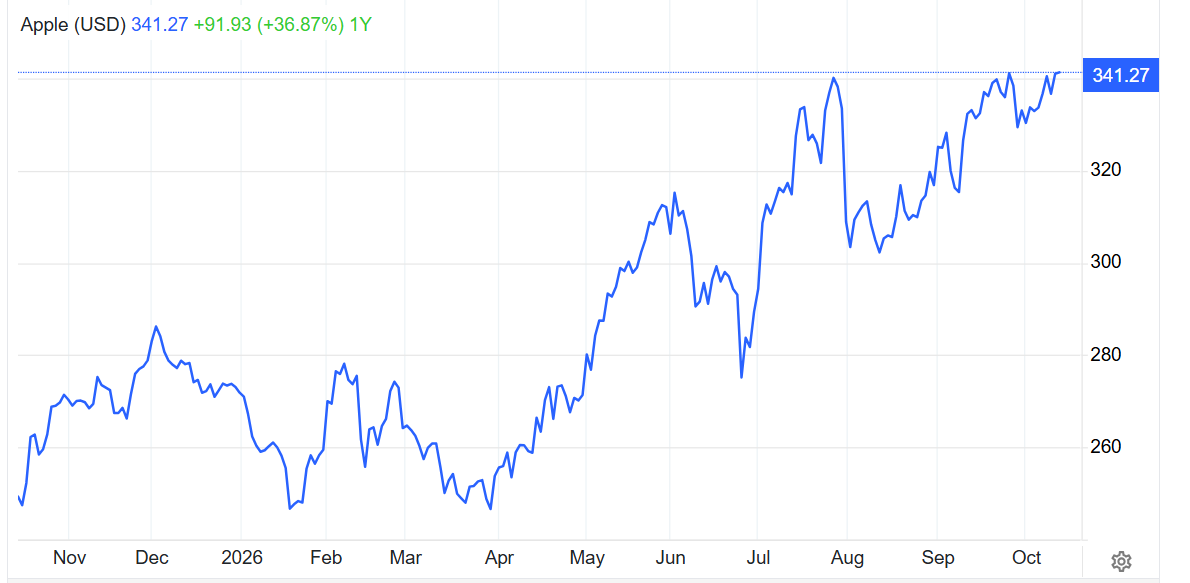
The core view of this bullish Apple research report recently released by Bernstein shows that the supply chain is credible, but orders in a single month were lowered compared to the original plan, and investors could not directly convert this into a year-on-year decline in unit sales; the wrong peak launch of basic models, rising memory chip prices, and weakening industry demand posed rare quarterly pressure. The expansion of the share of top-end models and Apple's strong iOS ecological stickiness, and the newly announced AI smart home blueprint supported long-term profits. The agency maintained Apple's “outperforming the market” rating and gave it a target price point of up to 370 US dollars.
On Tuesday, October 13, EST, Apple released its first smart home display, HomeView, and updated the Apple TV 4K and HomePod mini. Apple also launched the Apple Home Collection smart home accessories series, cooperating with LG Electronics and Schneider Electric to develop related hardware, covering indoor and outdoor cameras, floodlight cameras, video doorbells, thermostats, and smart door locks. On Tuesday, Apple can be described as fully demonstrating its ambition to further compete for the AI smart home market through the integration of hardware, Siri AI, and the Apple service ecosystem.
HomeView competes for a portal to interact and control the family's everyday tasks. Apple released this 7-inch smart display with an A18 chip on October 13, priced at $299 and launched on November 13; Siri AI connects natural language, personal context and home control on paired devices, and responds to requests through end-side processing and Private Cloud Compute. The Apple Home Collection, which was announced at the same time, was developed by Apple in collaboration with LG and Schneider. It covers cameras, doorbells, door locks, thermostats, and sensors, and has been on the market since December. This combination extends the personal assistant on a mobile phone to a permanent home interface. Its potential commercial value comes from device collaboration, service usage frequency, and user retention.
Is “Apple's unique strong ecosystem and cash flow” the answer to AI investment?
The “version answer” comes from the game context and refers to the most prominent choice for comprehensive combat power and competitiveness in a specific environment; in the current global technology stock trading boom, the “version answer under the AI investment boom” emphasizes that at a time when the global semiconductor stock sector is under pressure, Apple has shown strong stock price and market capitalization resilience with high-end consumer entry, ecological stickiness, and the new product cycle, and has repeatedly reached record highs. The market value even broke through the 5 trillion US dollar mark at one point. In contrast, the semiconductor sector, which has benefited the most since the generative AI outbreak in 2023, has continued to fall into a pullback trajectory. In particular, during the first half of the year when the memory chip theme was intense, it is getting farther and farther away from its highest point in history.
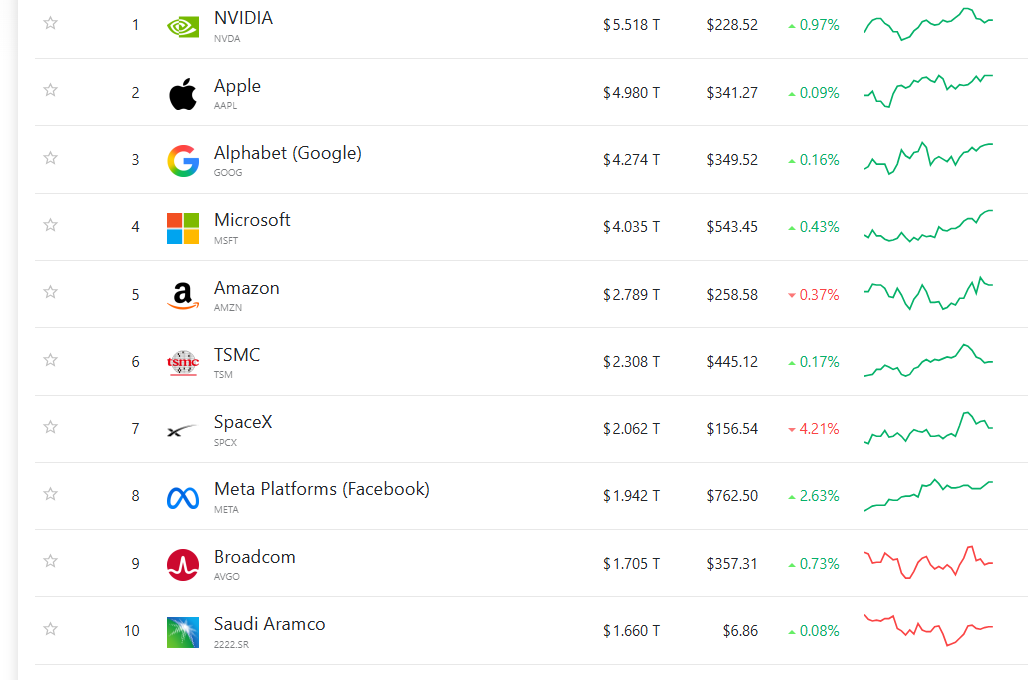
Bernstein's analysis report shows that supply chain order cuts need to be understood in combination with the wrong pace of listing, procurement distribution, and preparation. The impact is already partly reflected in the bank's cautious sales forecast and the previous Apple stock price correction trajectory; when memory chip price increases impact the entire industry, Apple's pricing capacity and user retention may also drive share concentration, while the AI computing power theme, especially semiconductor-type stocks, continues to attract technology investors with its extremely strong ecology, huge cash flow, and repeated innovative stock buybacks. At the same time, folding screen iPhones expand their high-cost product portfolio, and HomeView and Siri AI extend the ecosystem to the home interaction portal to jointly increase hardware sales and service monetization opportunities.
Currently, the market can be described as using “ecology and cash flow” to test the gold content of those super-growth stories in the AI bull market — the scale of the ecosystem directly determines how AI reaches users (this move can also be seen when the stock price soared after Facebook's parent company Meta released the Muse Personal AI Smart) and forms payments. Cash flow determines whether the company can continue to invest and allow shareholders to share the benefits.
Apple has a huge user base, mature hardware and service systems, and the ability to generate cash from existing businesses. An important reason why Bernstein is still bullish is that under supply chain cuts and rising industry costs, Apple's high-end share, pricing capacity, and user retention can still support profits. What the market places more importance on is that cutting-edge AI technology has the opportunity to enter a strong Apple ecosystem that can already continue to make money.
Following this logic, folding screen iPhones seek higher consumer spending through product upgrades, while HomeView and Siri AI extend Apple's user portal from the phone to the home. If device collaboration brings more frequent usage, stronger user retention, and more service revenue, AI only requires moderate investment in the early stages and can gradually transform into sustainable cash returns. In other words, Apple doesn't need to replicate the balance sheet expansion of hyperscale cloud vendors such as Google, Microsoft, and Amazon, and global capital flows are currently shifting from “who invests the most GPUs and data centers” to “who owns the end users, distribution channels, and verifiable cash flow.”
Bernstein reveals what is behind the cut order alert: How is the contraction in orders transmitted to sales expectations?
Nikkei media reports that parts orders in October were reduced by 15% to 20% compared to the original plan, causing Apple to drop about 3% before the market on Friday and about 1% at the close. Media reports also mentioned earlier that there were signs of careful shipping arrangements in early September.
The Bernstein stock strategist team originally expected 70.5 million iPhones to be shipped in the December quarter, down 16% from the previous year, and about 13% lower than the market consensus of 80.9 million units, mainly because they expected the launch of the new basic model to be delayed until next spring. If the 15% to 20% drop is applied to the Pro series, which accounts for about two-thirds of quarterly sales, the market consensus will drop to about 70.4 million to 73 million units, close to its current forecast. This means that the news of cutting orders may push market consensus closer to the cautious predictions led by Bernstein. Previously, Apple's pullback may have prepriced the negative factor.
Looking at the supply chain mechanism, supplier orders are simultaneously affected by terminal demand, purchase share, and preparation time. Apple procures screens, storage, cameras, and assembly services from multiple sources, and the A20 Pro, storage, and C2 baseband are also shared by Pro, Pro Max, and Duo. Orders from some manufacturers have declined, which may correspond to acceptance by other suppliers, or inventory is already sufficient before listing. Therefore, Bernstein's strategist team emphasized that order declines from multiple suppliers cannot be simply superimposed, and orders for common parts are also difficult to directly respond to changes in sales of a certain mobile phone.
Increased storage prices are reshaping the cost curve across the industry. The research report quoted the research institute IDC's forecast report as showing that smartphone shipments fell 16.7% in 2026, fell 27.2% in the second half of the year, and the average sales price rose 27.6%. At the same time, it was mentioned that Samsung's production may be cut by up to 30% in the fourth quarter. Some Chinese smartphone makers' annual targets fell from about 170 million units last year to 110 million units, and OPPO and vivo each predicted a drop below 90 million units. Low-cost models have limited profit margin to absorb component price increases. Price increases also reduce purchasing power, making it easy to withstand pressure on sales and profits at the same time. As a result, Apple may continue to further expand its relative market share with an expensive high-end AI smartphone product line while absolute sales decline.
From the pocket to the living room: Can the popularity of new products be converted into an increase in profit?
According to information, the starting prices of the Apple Pro and Pro Max were 1199 and 1,299 US dollars, respectively, up 100 US dollars, about 8% to 9%; compared to the 5% to 33% increase range for flagship models in the industry, the price increase was relatively restrained. Bernstein believes that certain user groups with tight budgets are more likely to delay switching or actively buy older iPhones rather than switching to other major competitor brands.
The folding screen iPhone Duo starts at 1999 dollars, and is pre-ordered on October 16 and sold on the 23rd; Counterpoint expects Apple to ship up to 6 million units in 2026, accounting for 25% of this category. Therefore, the foundation of Apple's bullish logic is still high-end share, pricing power, and ecological profit: folding screens contribute switching power and high-cost product portfolios, and AI homes increase interaction entrances and service touchpoints, and the two together broaden sources of growth.
Ultimately, valuation requires profit and cash flow to cover. The research report predicts that the adjusted EPS for the 2026 and 2027 fiscal years will be 8.85 and 9.90 US dollars, respectively, corresponding to the reported share price ratio of about 38 and 34 times the price-earnings ratio; the target price of $370 is based on 33 times the projected EPS, or 29.5 times the corporate value/free cash flow for the 2028 fiscal year. Recent pressure has focused on the impact of storage costs and the pace of listing on gross margin guidelines for the December quarter. Medium-term risks involve generative AI competition, new terminal forms, the Chinese market and supply chain, and ecological monetization supervision; the report suggests that the main regulatory risk of Google's judicial case has been significantly mitigated. Whether HomeView and the folding screen iPhone Duo can significantly and continuously increase single user revenue and leave more cash flow after additional hardware costs will determine how much valuation space the new product cycle can support.