


BP (LSE:BP.) updated investors on third quarter guidance, flagging lower expected net debt, stronger refining margins, asset sales including Castrol, and fresh production ranges plus impairments in its gas and low carbon operations.
The guidance sits against a strong run in BP’s shares, with the 90 day share price return of 20.15% and year to date gain of 39.30% pointing to firm momentum around £6.10. Over the longer haul, a 1 year total shareholder return of 54.08% and 5 year total shareholder return of 116.01% suggest investors who stayed invested have been well rewarded. Recent guidance, asset sales and balance sheet moves appear to be shaping how the market prices both future growth optionality and execution risk.
Scan for other energy stocks showing similar balance sheet repair and cash flow strength by running the curated 8 high quality undervalued stocks alongside BP in your watchlist.
BP now trades only slightly below average analyst targets, yet screens on some models at a far steeper discount. Is the market sensibly wary of execution risk, or mispricing the balance sheet reset and asset reshuffle?
Most Popular Narrative: 5% Undervalued
BP's most followed narrative pegs fair value at about £6.40, slightly above the £6.10 last close, which keeps the focus on whether cash generation and portfolio reshaping can support that gap.
The ramp-up of major upstream projects, breakthrough exploration successes in Brazil, West Africa, and other regions, and an ongoing focus on high-return organic growth provide BP with the ability to capture persistent global energy demand growth, particularly from emerging markets, supporting visible revenue and earnings expansion.
An accelerated and data-driven structural cost reduction program, enhanced by the use of AI, digitization, and supply chain optimization, is expected to materially improve BP's operating margins and free cash flow, positioning the company to benefit from technological advancements that reward scaled, efficient industry players.
See why 219 investors see BP as 5% undervalued.
Result: Fair Value of £6.40 (UNDERVALUED)
Still, BP's recent $1.2b impairments in hydrogen and biofuels, along with uncertainty around Castrol and other divestments, could easily unsettle that fair value story.
Find out about the key risks to this BP narrative.
Another View: BP Through Earnings Multiples
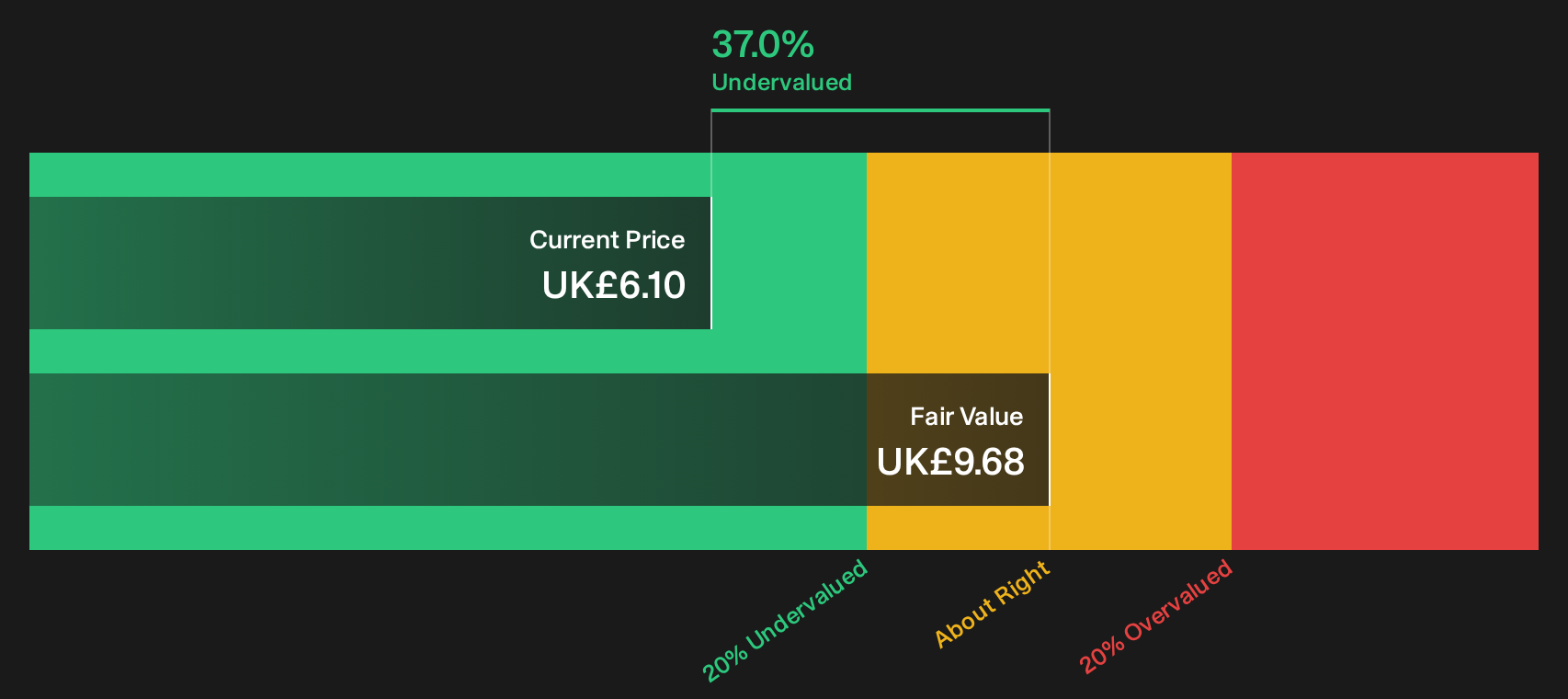
The SWS DCF model points to a large gap, with BP valued at about £9.68 per share versus the £6.10 market price. This frames it as heavily undervalued on future cash flows. Yet on earnings, the picture shifts. BP trades on a P/E of 23x, above both peers at 10.7x and the wider European oil and gas group at 14x, and only just under the 23.6x fair ratio. That mix of deep DCF upside and a rich headline multiple leaves you weighing which signal matters more for your own process.
Look into how the SWS DCF model arrives at its fair value.
Next Steps
Mixed messages in the BP story so far. If you want to move quickly and cut through the noise, start by weighing its 2 key rewards and 2 important warning signs.
Looking for more investment ideas beyond BP?
If BP has sharpened your focus, do not stop here. The next strong addition to your portfolio could be sitting in plain sight on a focused screener.
- Target resilient compounding potential by filtering for companies that score well on balance sheet strength and fundamentals through the list of solid balance sheet and fundamentals (9 results).
- Hunt for mispriced quality by scanning a curated 5 high quality undiscovered gems that most investors are still overlooking.
- Stack income potential on top of your BP thesis by reviewing a handpicked group of 2 dividend fortresses before the crowd catches on.
This article by Simply Wall St is general in nature. We provide commentary based on historical data and analyst forecasts only using an unbiased methodology and our articles are not intended to be financial advice. It does not constitute a recommendation to buy or sell any stock, and does not take account of your objectives, or your financial situation. We aim to bring you long-term focused analysis driven by fundamental data. Note that our analysis may not factor in the latest price-sensitive company announcements or qualitative material. Simply Wall St has no position in any stocks mentioned.
Have feedback on this article? Concerned about the content? Get in touch with us directly. Alternatively, email editorial-team@simplywallst.com