


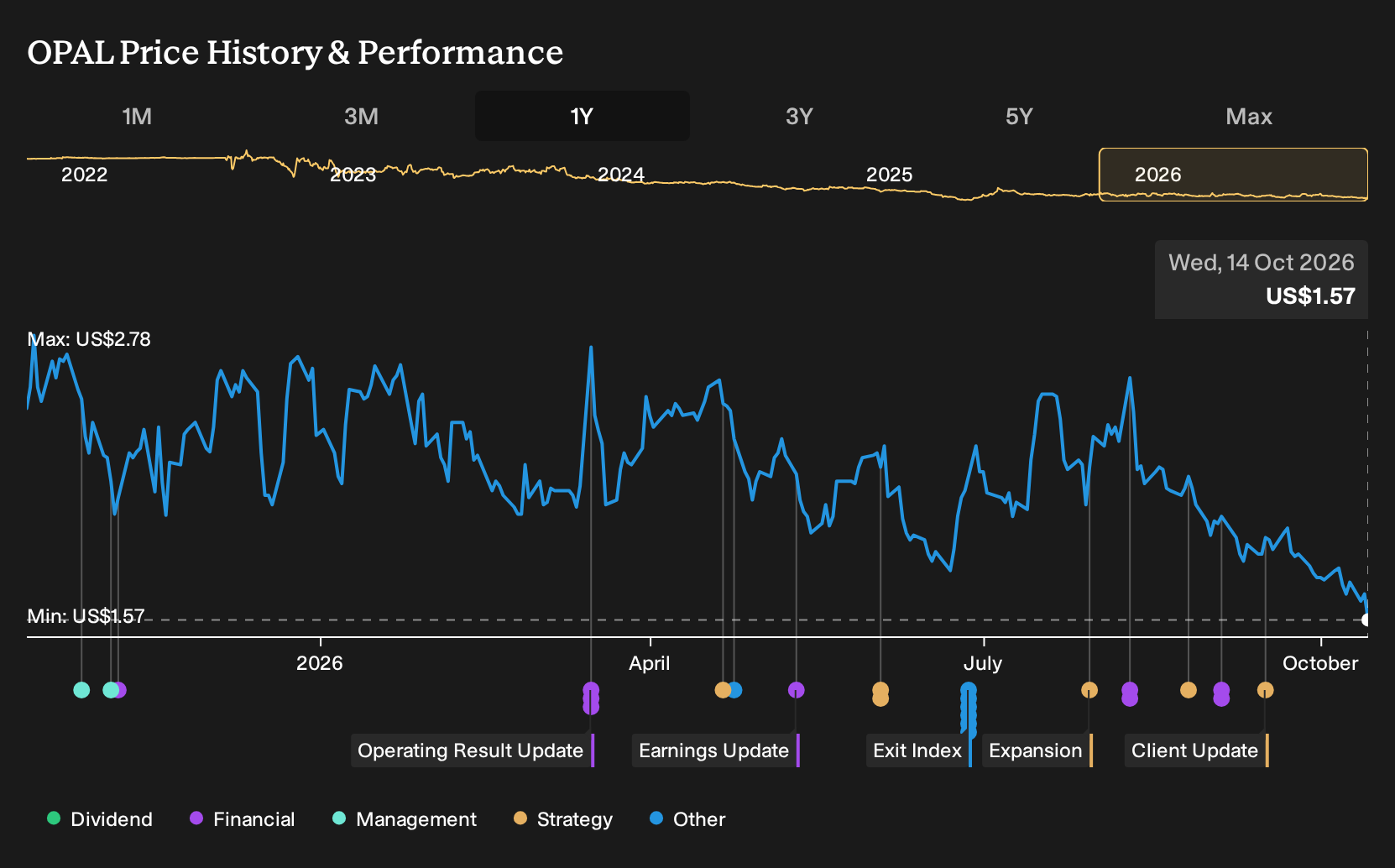
OPAL Fuels looked like a classic clean-energy opportunity, yet the scorecard for anyone who backed that story is harsh. For OPAL Fuels shareholders, the loss over the past year was 43.5%, including dividends. During the period, quarterly revenue reached US$83.399 million while the firm swung from a modest profit to a net loss and a weaker margin. If you had bought in on the upbeat landfill RNG thesis, what early clues, if any, hinted at this setback?
If the move has made OPAL Fuels harder to judge, start where the gap is still open and scan 33 high quality undervalued stocks.
The Two OPAL Fuels Stories Investors Were Weighing
The shares cost US$2.56 at the start of the period, and anyone looking at OPAL Fuels back then faced two sharply different stories built on the same landfill RNG platform.
The bullish view pointed to a Fair Value of US$7, essentially a price implied by expectations of accelerated landfill RNG expansion and deeper vertical integration, plus regulatory support that could underpin recurring cash flow.
The bearish side put Fair Value at US$2, tying that lower figure to concerns that accelerating electrification and heavier reliance on government incentives could cap demand and keep earnings volatile.
What The Results Changed For The OPAL Fuels Thesis
The clearest development was OPAL Fuels reporting quarterly revenue of US$83.399 million, up from US$80.456 million a year earlier, which supported the bullish focus on top-line expansion. The same report showed a swing from a modest profit of US$0.8 million to a net loss of US$1.501 million and a net margin moving from 1.0% to a loss of 1.8%, so the profitability side of the optimistic case remained unproven and the evidence cut both ways.
The lesson is simple. When a story leans heavily on future earnings quality, check whether net income and margin trends, not just sales, are moving toward that promise in each set of results.
What OPAL Fuels’ Lower Price Now Asks You To Believe
OPAL Fuels now trades at US$1.57, and the selected Narrative puts its Fair Value above that level based on landfill RNG buildout, deeper integration, and tax credit monetization.
To reach that higher figure, a buyer today would need to assume OPAL converts its current project pipeline into durable, less volatile cash generation.
"Recent bipartisan federal legislation and the extension of key production tax credits not only enhance short-term EBITDA but also reduce policy risk and extend policy support for at least four more years, providing support for high-margin cash generation and helping protect project returns during periods of volatile environmental credit pricing."
That disagreement has a full argument behind it. → Uncover the higher Fair Value this Narrative argues for
Where OPAL Fuels’ Gas Goes Next
OPAL Fuels focuses your attention on capturing and selling gas. The next question is what some large buyers need that gas to do.
Data centers and LNG projects both lean on steady natural gas flows. Those facilities cannot use low-pressure gas straight from gathering lines.
Another specialist steps in by compressing that gas so it reaches turbines and liquefaction units at workable pressures.
As more infrastructure leans on compression to keep running, that service can start to feel less like a project expense and more like essential plumbing for the entire system.
The case is on the record, with the assumptions it rests on. → See the Narrative that values this company 51% above its price
This article by Simply Wall St is general in nature. We provide commentary based on historical data and analyst forecasts only using an unbiased methodology and our articles are not intended to be financial advice. It does not constitute a recommendation to buy or sell any stock, and does not take account of your objectives, or your financial situation. We aim to bring you long-term focused analysis driven by fundamental data. Note that our analysis may not factor in the latest price-sensitive company announcements or qualitative material. Simply Wall St has no position in any stocks mentioned.
Have feedback on this article? Concerned about the content? Get in touch with us directly. Alternatively, email editorial-team@simplywallst.com