


- ICG plc recently presented its life sciences activity at the Sachs Associates 26th Annual Biotech in Europe Forum in Basel, led by Allan P. Marchington.
- The focus on life sciences sits alongside ICG’s fee related earnings base and higher fee rate strategies. This highlights how sector expertise supports its broader asset management model.
- We will now look at how ICG’s investment narrative could be shaped by its life sciences forum appearance and investor focus.
Compare ICG's life sciences push with other specialist asset managers and see which are already pricing in their next leg of growth using our curated screener of 5 high quality undiscovered gems.
ICG Investment Narrative Recap
To be comfortable owning ICG, you need to believe the fee engine keeps compounding. That means more of its £350m fee related earnings coming from higher fee rate strategies, timely deployment of the extra $19b of AUM that is not yet fee earning, and continued traction in areas like real assets and life sciences.
The near term swing factor is whether fundraising and deployment stay on track despite slower private equity realizations. The key risk is pressure on deal pricing and margins as competition for private market assets remains intense, which could limit further FRE margin expansion even if headline AUM still grows.
The Sachs Biotech in Europe Forum appearance is most relevant for readers watching ICG’s push into life sciences. Presenting alongside larger healthcare investors puts its specialist franchise in front of a focused LP audience and reinforces that higher fee rate strategies already account for more than 75% of management fees.
If that exposure helps channel part of the $19b undeployed pool into life sciences, the operational impact would appear in future management fees and potential scale benefits in that vertical. Execution risk is clear. Life sciences deals are complex and competitive, so any missteps on underwriting or pacing could affect returns and slow fee income conversion.
ICG's current analyst narrative centres on forecast revenues of £1.2b and earnings of £658.1m by 2029, based on an assumed 7.6% yearly revenue growth rate and an earnings increase of about £179.7m from the current £478.4m level.
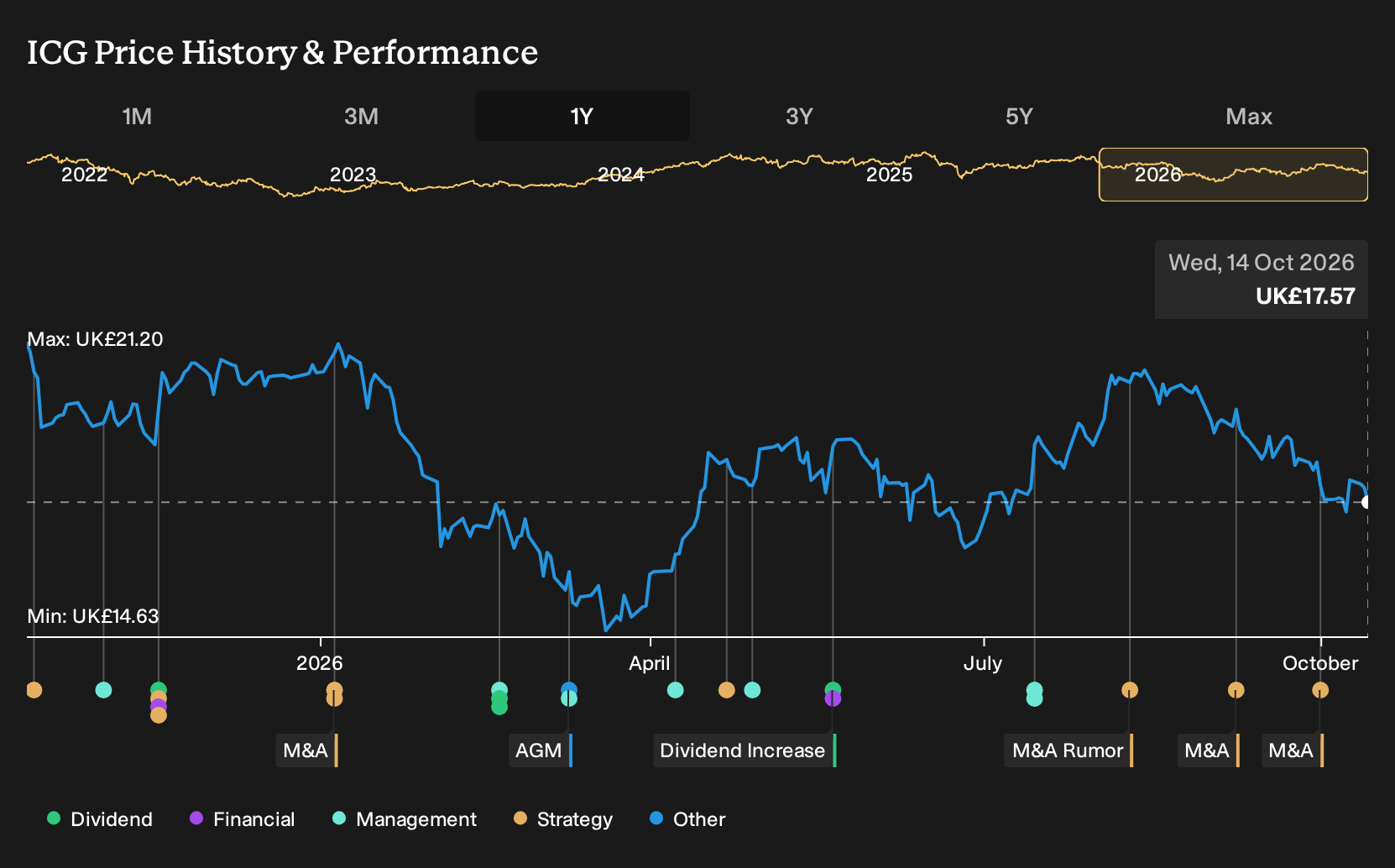
Uncover why ICG's fair value indicates a 43% potential upside to its current price that could narrow quickly.
Exploring Other Perspectives
One alternate angle on ICG highlights execution risk in its more complex life sciences and structured capital strategies, which some analysts think could slow fee earning AUM conversion after this Basel forum spotlight. The most cautious group still model revenue reaching about £1.2b and earnings near £652.6m by 2029, but they pair those figures with a much lower implied P/E and a price view close to £19. That contrast shows how far opinions can stretch. Consider using it as a prompt to test several narratives against your own expectations and to watch how forecasts shift once this new life sciences push filters into future models.
Explore 3 other ICG fair value estimates, including one that suggests it could be worth just £25.04!
The Verdict Is Yours
Don't just follow the ticker; dig into the data and build a conviction that's truly your own.
- A great starting point for your ICG research is our analysis highlighting 5 key rewards and 1 important warning sign that could impact your investment decision.
- See our latest analysis for ICG. The report includes a comprehensive fundamental analysis summarized in a single visual, the Snowflake, making it easy to evaluate ICG's overall financial health at a glance.
Looking For More Ideas Beyond ICG?
If the ICG story has sharpened your thinking about risk, income and valuation, the next step is to line it up against other opportunities using the Simply Wall St Screener. That way you can test whether ICG really deserves a spot in your portfolio or whether other businesses offer a better fit for your goals.
- For investors who care most about quality at a reasonable price, compare ICG with a wider set of businesses that currently screen as 8 high quality undervalued stocks.
- If capital preservation is top of mind, balance ICG against companies screened for resilience and steadier profiles using our 4 resilient stocks with low risk scores.
- Income focused readers can cross check ICG with alternatives that target robust payouts through our 2 dividend fortresses.
This article by Simply Wall St is general in nature. We provide commentary based on historical data and analyst forecasts only using an unbiased methodology and our articles are not intended to be financial advice. It does not constitute a recommendation to buy or sell any stock, and does not take account of your objectives, or your financial situation. We aim to bring you long-term focused analysis driven by fundamental data. Note that our analysis may not factor in the latest price-sensitive company announcements or qualitative material. Simply Wall St has no position in any stocks mentioned.
Have feedback on this article? Concerned about the content? Get in touch with us directly. Alternatively, email editorial-team@simplywallst.com