


Inflation is running hotter, Fed rate hike odds are rising, and cash is suddenly competing hard with risk assets. That mix can punish some stocks yet create fresh openings in very short-duration cash and money-market product providers that may benefit when investors park money on the sidelines. This article examines three stocks linked to that theme, all positively exposed to the latest CPI surprise, and explains what their stories could mean for your portfolio decisions.
The three stocks discussed below are just a sample of this theme. The full screen surfaced 11 more US-listed cash and money-market product providers with equally compelling narratives that are not covered in the article. To go beyond the shortlist and identify which businesses best match your own risk, yield, and quality preferences, head straight to the US Short-Duration Cash and Money-Market Product Providers screener.
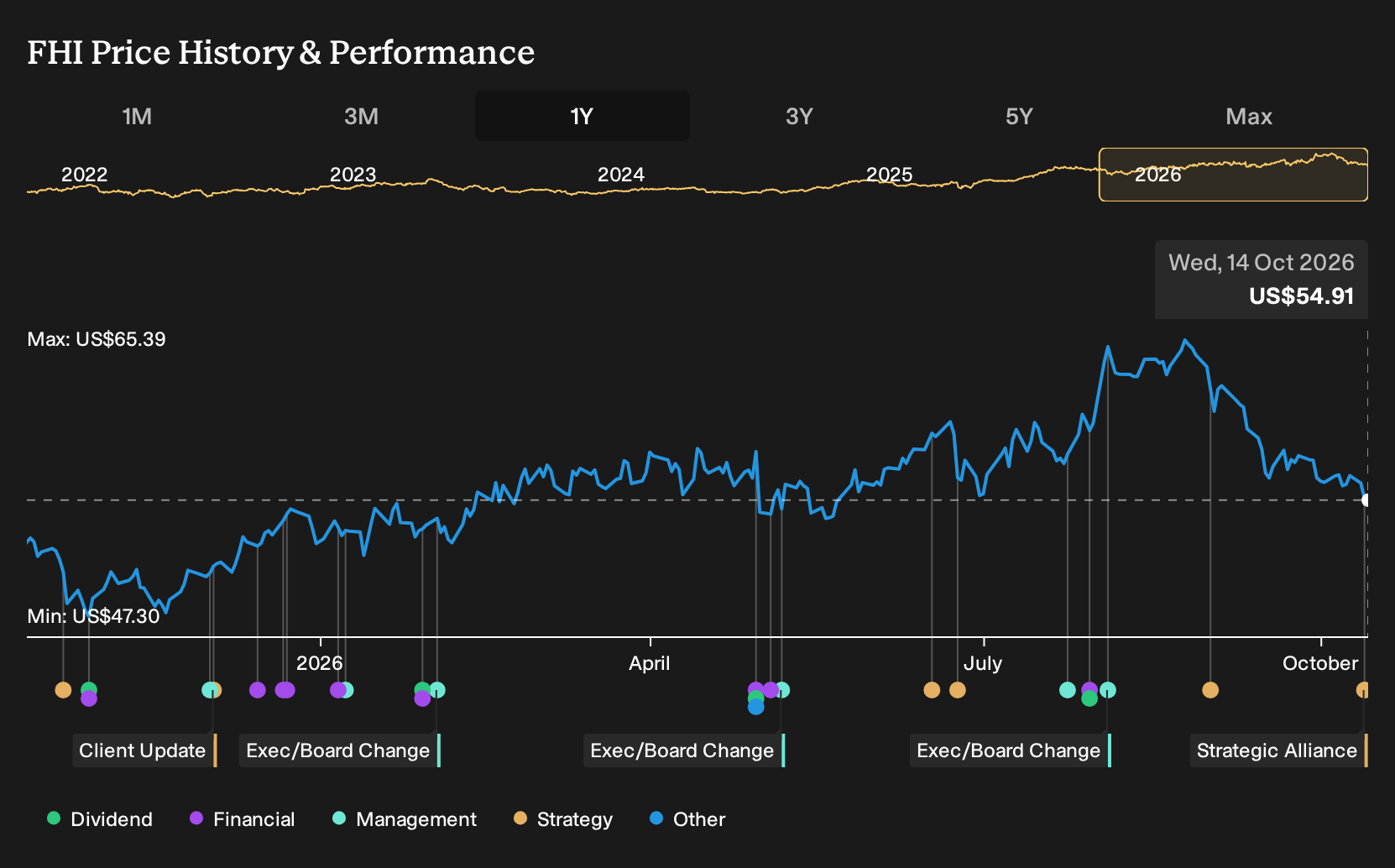
Federated Hermes (FHI)
Overview: Federated Hermes is an investment manager that runs large money market and cash-management funds alongside equity and fixed income portfolios worldwide.
Operations: Federated Hermes generates about US$1.9b from its Investment Management Business, with roughly US$1.7b from the United States and US$248 million from overseas clients.
Market Cap: US$3.9b
Federated Hermes is one of the clearest plays on the cash theme in this screen. Its core franchise is built around money-market and liquidity products that often become more attractive when short-term yields move higher and investors hesitate to commit to longer-term risk.
"The company's continued reliance on money market funds for a substantial share of AUM and revenue remains a risk, since recent slippage in money market fund market share and cash flow volatility could translate into weaker money fund related fees, softer total revenue and less support for steady earnings."
This raises a question about what happens if a single unseen pressure in this cash engine quietly shifts how sticky those short-duration balances really are.
If that reliance on short-duration cash looks more like a spring than a cushion, the full narrative for Federated Hermes shows how Federated Hermes could still turn volatility into opportunity.
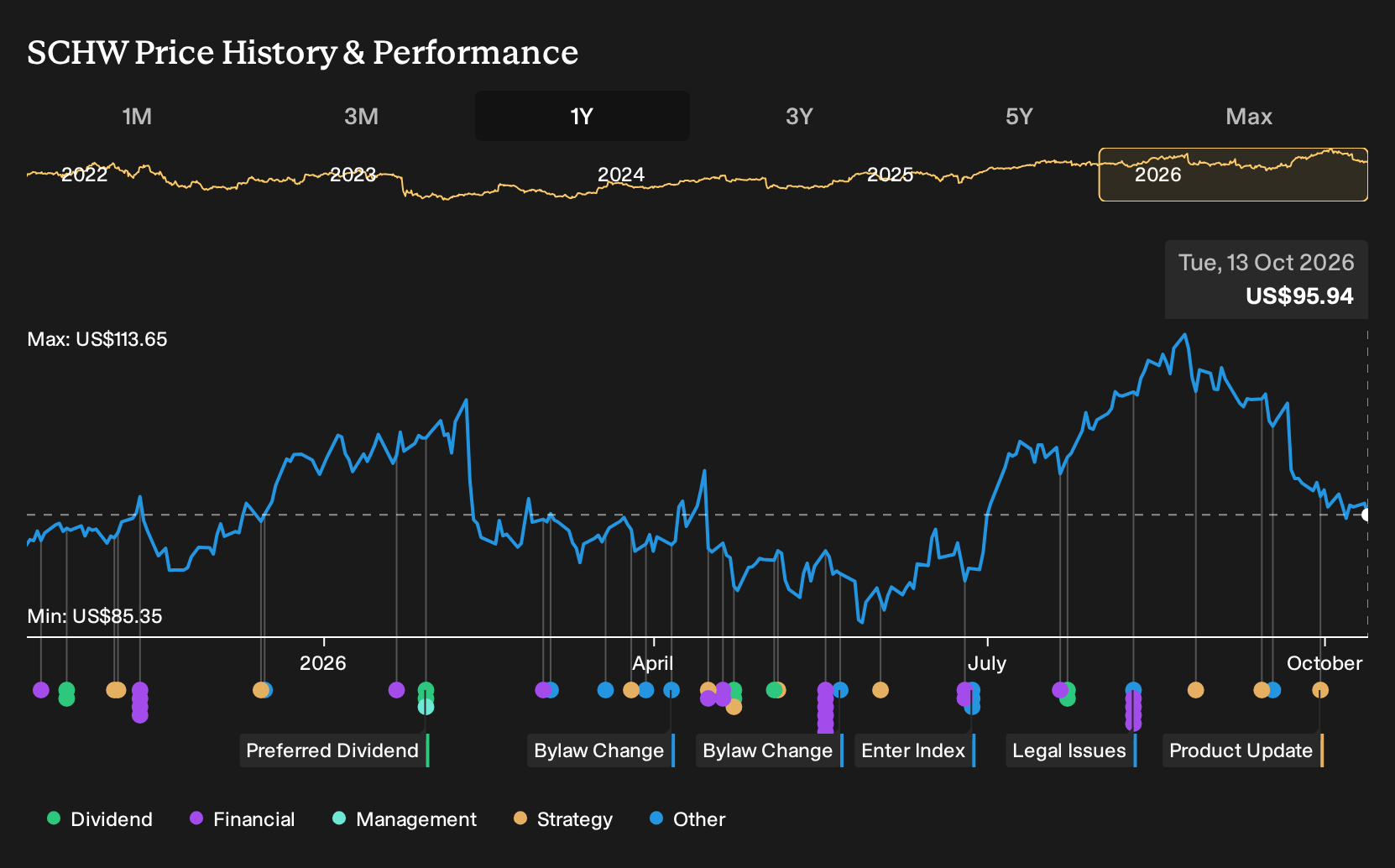
Charles Schwab (SCHW)
Overview: Charles Schwab is a major US brokerage and wealth platform handling trading, advisory, banking, and cash management for retail and advisor clients.
Operations: Charles Schwab generates about US$26.0b in revenue, with roughly US$20.5b from Investor Services and US$5.5b from Advisor Services, all in the United States.
Market Cap: US$165.9b
Charles Schwab sits right in the sweet spot of this cash themed screen, with sweep programs and money market options that tie its earnings closely to how client cash responds when short-term yields jump after an inflation surprise.
"As interest rates stabilize after a historically aggressive tightening cycle, the pressure on Schwab’s interest margins begins to ease."
What really matters next is how one unresolved shift in client cash behavior and sweep balances shapes those margins from here.
That unresolved shift in sweep balances sits right at the heart of the full narrative for Charles Schwab, where the full story weighs how cash mix, margins and client behavior could be quietly decoupling.
Bank of New York Mellon (BNY)
Overview: Bank of New York Mellon is a global custodian and asset servicer that safeguards institutional assets and manages large transactional cash balances.
Operations: Bank of New York Mellon generates about US$10.5b from Securities Services, US$7.4b from Market and Wealth Services, US$3.4b from Investment and Wealth Management, and US$61 million from Other activities.
Market Cap: US$95.7b
Bank of New York Mellon fits this cash focused screen because it sits in the plumbing of global markets, where higher short term yields ripple directly through client cash balances, liquidity mandates, and short-duration instruments.
"Leadership efforts in digital assets and stablecoin infrastructure, including the expanded Circle partnership that makes USDC the first supported stablecoin on BNY's Digital Asset Custody platform and participation in the Open USD initiative with shared reserve yield economics, create new fee and yield sharing channels that can influence future revenue growth and earnings diversification."
The real question is what happens to margins if a single key assumption about how institutional cash migrates onto these new rails proves too optimistic.
If that assumption proves fragile, the full narrative for Bank of New York Mellon shows how BNY Mellon might still turn shifting institutional cash rails into accelerating fee potential and resilience.

Curious About What You Might Be Missing?
Fresh themes are breaking out, momentum is already flying, and some ideas stay under the radar for now. Do not get caught watching from the sidelines. Consider taking action that fits your strategy.
- Spot companies where strong balance sheets meet improving sentiment by scanning the list of solid balance sheet and fundamentals (25 results) before the crowd prices in their next move.
- Track early developments in digital money rails by following under-the-radar fintechs and payment platforms inside the 18 cryptocurrency and blockchain stocks while the story is still forming.
- Explore potential income-focused names with yields that could matter if rates stay higher by combing through the 7 dividend fortresses before demand changes their pricing.
This article by Simply Wall St is general in nature. We provide commentary based on historical data and analyst forecasts only using an unbiased methodology and our articles are not intended to be financial advice. It does not constitute a recommendation to buy or sell any stock, and does not take account of your objectives, or your financial situation. We aim to bring you long-term focused analysis driven by fundamental data. Note that our analysis may not factor in the latest price-sensitive company announcements or qualitative material. Simply Wall St has no position in any stocks mentioned.
Have feedback on this article? Concerned about the content? Get in touch with us directly. Alternatively, email editorial-team@simplywallst.com