


Hotter inflation data, softer retail spending and a swing into bonds have pushed cash back into the spotlight, as investors rethink where every idle dollar sits. That shift creates a quiet race for yield and safety that can reward the right cash and money-market asset managers, and leave others behind. This article profiles 3 stocks from our U.S. screener that appear particularly exposed to these cross-currents.
The three stocks covered below are just a sample set, and the full U.S. Cash & Money-Market Asset Managers screen surfaced 31 more listed financial companies with cash-management angles and equally compelling narratives that this article does not cover.
If you want to identify, compare, and analyze cash-oriented players for your own watchlist, head straight to the U.S. Cash & Money-Market Asset Managers screener.
Prosperity Bancshares (PB)
Overview: Prosperity Bancshares is a Houston based bank holding company whose Prosperity Bank unit focuses on deposits, lending, and cash-management services for households and businesses.
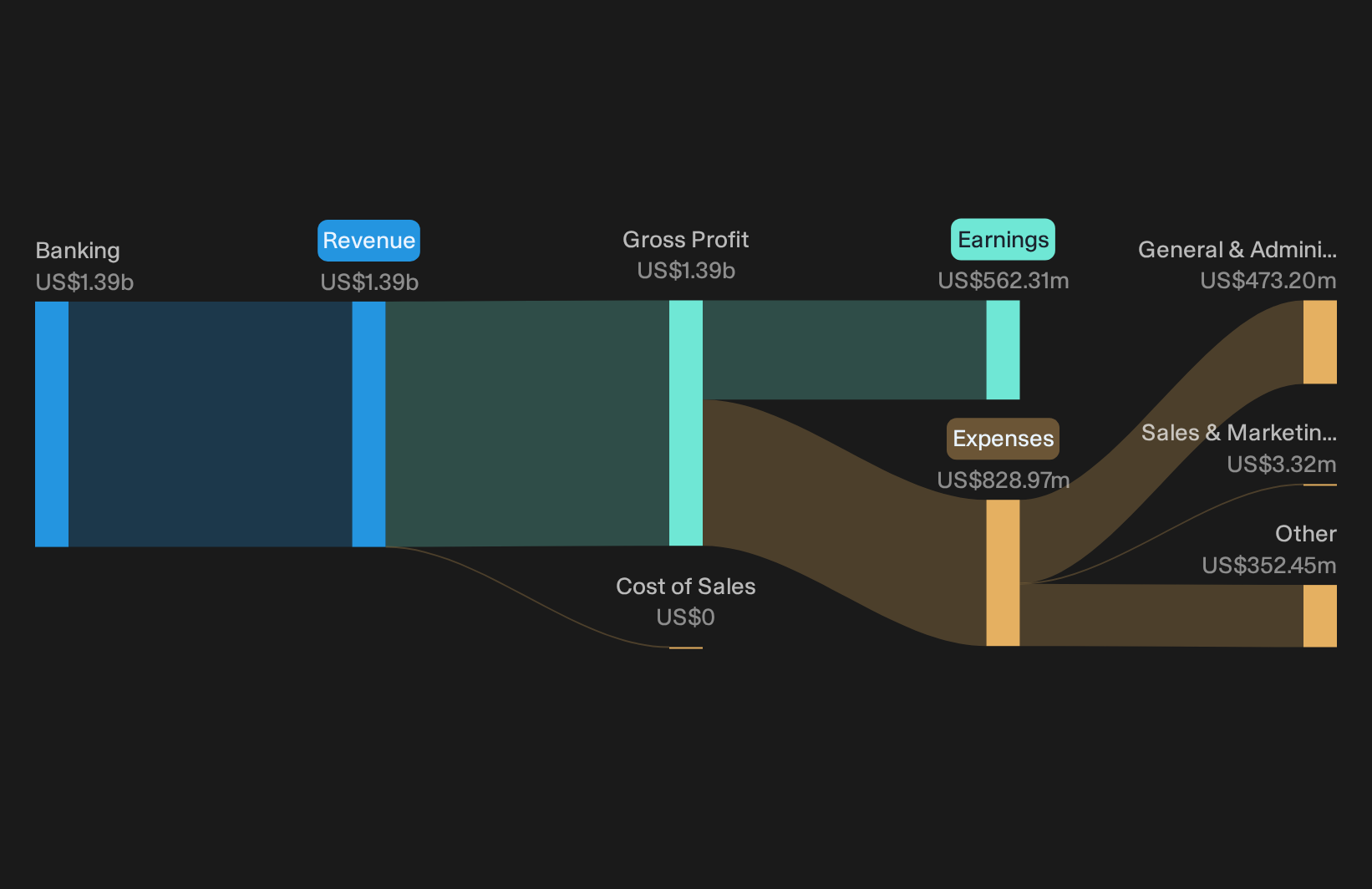
Operations: Prosperity Bancshares generates about US$1.4b of banking revenue entirely in the United States, tied to its deposit, lending, and cash-management activities.
Market Cap: US$8.0b
Prosperity Bancshares matters for this cash-management screen because its broad deposit base and sweep style products can become more attractive when investors move money toward higher yielding, short term options.
"Completion of the American Bank, Texas Partners and Stellar transactions positions Prosperity Bancshares to consolidate a larger Texas and Oklahoma footprint. Management has pointed to about US$100 to US$110 million of annual pretax cost savings that would directly support a lower efficiency ratio and higher net earnings power once integration is complete."
What happens to Prosperity Bancshares' margins and cash-management appeal depends heavily on how one unseen pressure on deposit pricing evolves.
That pressure point on funding costs is exactly where the full narrative for Prosperity Bancshares shows whether Prosperity Bancshares is quietly building leverage or masking future trade offs.
Pinnacle Financial Partners (PNFP)
Overview: Pinnacle Financial Partners is a regional bank holding company that blends deposits, lending and treasury-style cash management for individuals and businesses.
Operations: Pinnacle Financial Partners generates about US$2.9b of banking revenue, with total revenue of roughly US$3.3b earned entirely in the United States.
Market Cap: US$14.1b
For investors focused on cash and sweep products, Pinnacle Financial Partners sits in the flow of higher money-market yields and shifting client deposits. This makes the firm’s talent engine a key piece of how much of that cash it can capture.
"Ongoing hiring of experienced revenue producers, including 124 added year-to-date 2026 and a full-year target of 225 to 250, together with banker retention of around 94%, can extend above-peer balance sheet growth and support future earnings."
What happens when that hiring machine meets one unresolved pressure on funding costs will likely influence how much of those cash flows turn into lasting profitability.
That funding squeeze question is exactly what the full narrative for Pinnacle Financial Partners unpacks. It shows where Pinnacle Financial Partners could be accelerating cash inflows or quietly compressing returns.

Banc of California (BANC)
Overview: Banc of California is a Los Angeles based bank holding company that offers deposits, lending and treasury style cash management for clients who want short term cash solutions.
Operations: Banc of California generates about US$690 million of commercial banking revenue, all from customers in the United States.
Market Cap: US$2.7b
For the U.S. Cash & Money-Market Asset Managers theme, Banc of California matters because its treasury services and sweep style accounts sit where corporate and high net worth cash often parks when markets feel choppy and yields on short term products draw fresh attention.
"The successful merger integration with Pacific Western Bank is unlocking cost synergies, revenue cross-sell opportunities, and scale benefits, which are already contributing to tangible book value expansion and margin improvement and are likely to further boost future profitability."
What happens when that integration story collides with one unresolved pressure on funding costs could be crucial for future cash-management profitability.
That funding puzzle is where the full narrative for Banc of California shows whether Banc of California is quietly converting integration gains into accelerating cash returns, or masking new balance sheet risks.

Seeking Alternatives Before Momentum Flies
Fresh breakouts rarely stay quiet for long. Strong ideas get caught quickly, and prices start flying before the crowd reacts. Scan under the radar for now and act while conditions still look favorable.
- Spot resilient businesses before defensive money moves by reviewing the curated 32 resilient stocks with low risk scores that aim to hold up when volatility rises and confidence drops.
- Back fast movers with real earnings power by checking the hand picked 39 profitable AI stocks that aren't just burning cash that already pair AI momentum with positive bottom lines.
- Track the next potential infrastructure names by scanning the focused 43 power grid technology and infrastructure stocks for companies aligned with grid upgrades and electrification themes.
This article by Simply Wall St is general in nature. We provide commentary based on historical data and analyst forecasts only using an unbiased methodology and our articles are not intended to be financial advice. It does not constitute a recommendation to buy or sell any stock, and does not take account of your objectives, or your financial situation. We aim to bring you long-term focused analysis driven by fundamental data. Note that our analysis may not factor in the latest price-sensitive company announcements or qualitative material. Simply Wall St has no position in any stocks mentioned.
Have feedback on this article? Concerned about the content? Get in touch with us directly. Alternatively, email editorial-team@simplywallst.com