


The Pentagon is asking for $1.1 trillion in discretionary spending for fiscal 2027, including 188% more funding for missile purchases. Lockheed Martin (LMT) is already seeing strong demand. The company booked $65 billion in new orders in the second quarter, bringing its backlog to a record $230.4 billion. Sales also grew 11% year-over-year (YOY) to $20.1 billion.
Shareholders are getting a bigger dividend, too. On Oct. 9, Lockheed Martin’s board approved a Q4 dividend of $3.60 per share, up $0.15 from $3.45. That 4.3% increase brings the annualized payout to $14.40 per share and marks the company’s 24th-straight year of dividend increases. The payment is due Dec. 31 to shareholders of record on Dec. 1.
With orders growing and another dividend increase in place, does LMT stock now offer a stronger case for income investors? Let’s find out.
The Numbers Behind the Higher Payout
Lockheed Martin builds aircraft, missiles, space systems, and other defense equipment, mostly for government customers. Shares are up 6% over the past 52 weeks and 9% so far this year.
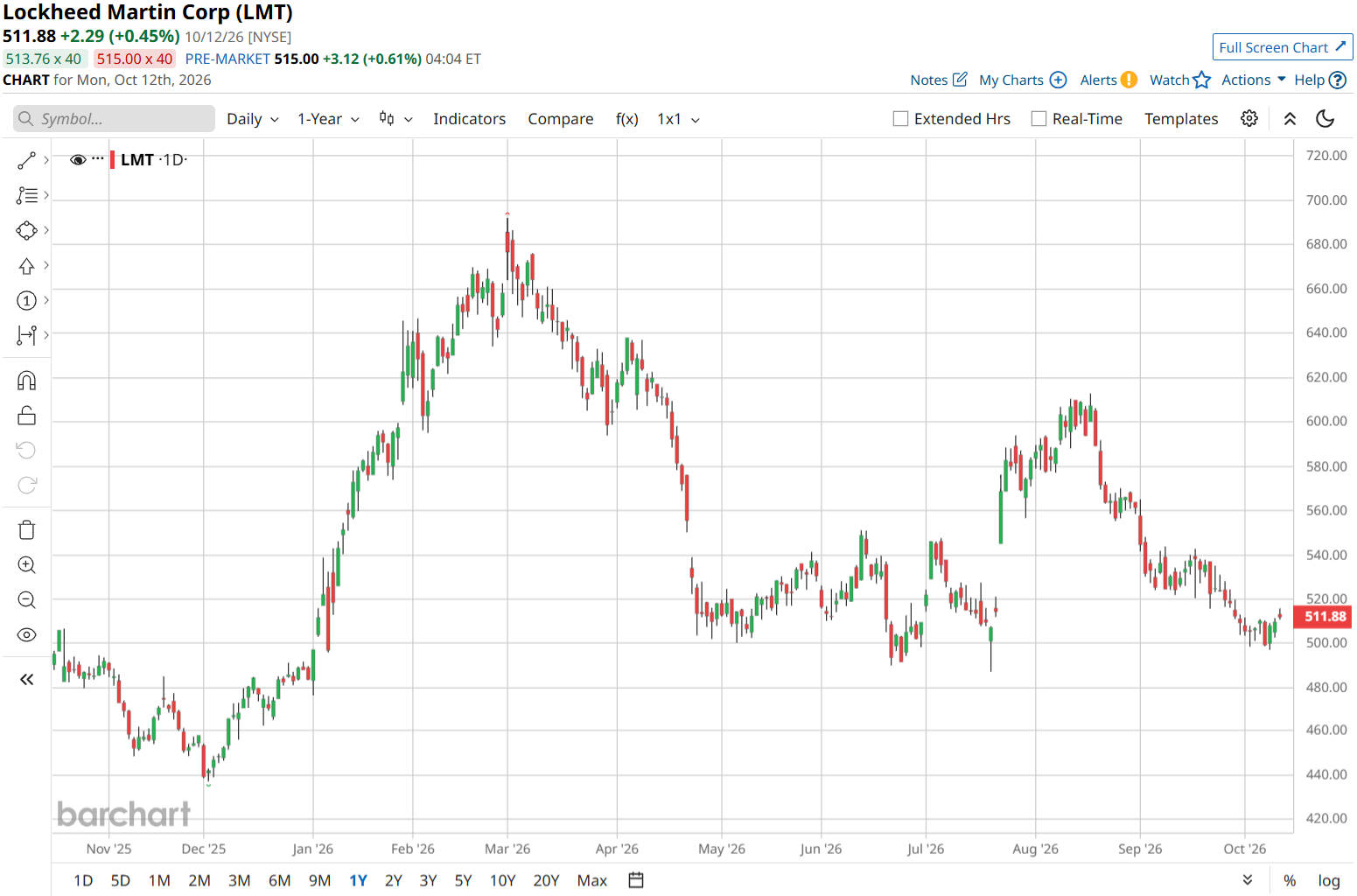
LMT stock trades at 16.5 times forward earnings, which is below the sector average.
The dividend gives investors another reason to consider the stock. Before the increase, Lockheed Martin paid $3.45 quarterly, or $13.80 annually, yielding 2.74% compared with the industrials' average of 2.3%. Its forward payout ratio was 47.25%, meaning dividends accounted for just under half of expected earnings.
The previous dividend went ex-dividend on Sept. 1 and was paid on Sept. 25. The latest 4.3% increase raises the quarterly payment to $3.60 per share and the annualized payout to $14.40, yielding about 2.7% at a share price of roughly $532. This extends Lockheed Martin’s dividend-growth streak to 24 years. The next payment is due on Dec. 31 to shareholders of record on Dec. 1.
Q2 earnings also improved. Sales grew 11% YOY to $20.06 billion from $18.16 billion. Consolidated operating profit rose from $748 million to $2.48 billion, while business-segment operating profit increased from $571 million to $2.16 billion. Net earnings climbed from $342 million to $1.84 billion, and diluted EPS rose from $1.46 to $7.94. Those gains look especially large because substantial charges hurt the previous year’s results.
Cash flow, which funds the dividend, also improved. Operating cash flow rose to $3.24 billion, while capital spending fell $33 million to $318 million. That helped free cash flow reach $2.92 billion, an improvement of about $3.08 billion from -$150 million a year earlier. Lockheed Martin also booked $65 billion in new orders, pushing its backlog to a record $230.4 billion and giving it more work lined up for future periods.
Defense Demand and the Growth Ahead
Lockheed Martin plans to make more missiles to meet demand. In July, a seven-year PAC-3 MSE award brought the program’s total multiyear contract value to $58.62 billion, supporting plans to triple production capacity by the end of 2030. Lockheed Martin also plans to spend $8 billion to $9 billion through 2030 upgrading more than 20 U.S. facilities, including new production centers in Arkansas and Alabama. Higher output could help grow sales and support future dividend increases.
In Europe, Lockheed Martin’s July agreement with Rheinmetall aims to create the region’s first center for making, integrating, and distributing ATACMS missiles. It would also be the only ATACMS production facility outside of the United States. Making missiles locally could help Lockheed Martin supply European customers faster and build closer ties with NATO’s defense industry.
Lockheed Martin also agreed to buy Ultra Maritime for $3.45 billion in July. The deal would add sonar systems, sonobuoys, torpedo-defense technology, radar products, and autonomous maritime-sensing platforms to its Rotary and Mission Systems business. That would expand its naval offerings and give the company more opportunities to benefit from allied spending on anti-submarine warfare. The deal still needs regulatory approval, and its success will depend on how well Lockheed Martin can bring the businesses together.
What Does Wall Street Think of Lockheed Martin Stock?
Lockheed Martin will report earnings on Oct. 22 before the market opens. Analysts expect September-quarter EPS of $7.48, up 8% from $6.95 a year ago. For all of fiscal 2026, analysts forecast EPS of $30.44, up 7% YOY from $28.52.
UBS analyst Gavin Parsons sees growth coming from missiles and munitions, F-35 maintenance and support, CH-53K helicopters, and the Trident program. On Sept. 8, Parsons upgraded Lockheed Martin from “Neutral” to “Buy” and raised his price target from $581 to $674. Jefferies took a more cautious view on Sept. 2, keeping a “Hold” rating and a price target of $595 per share.
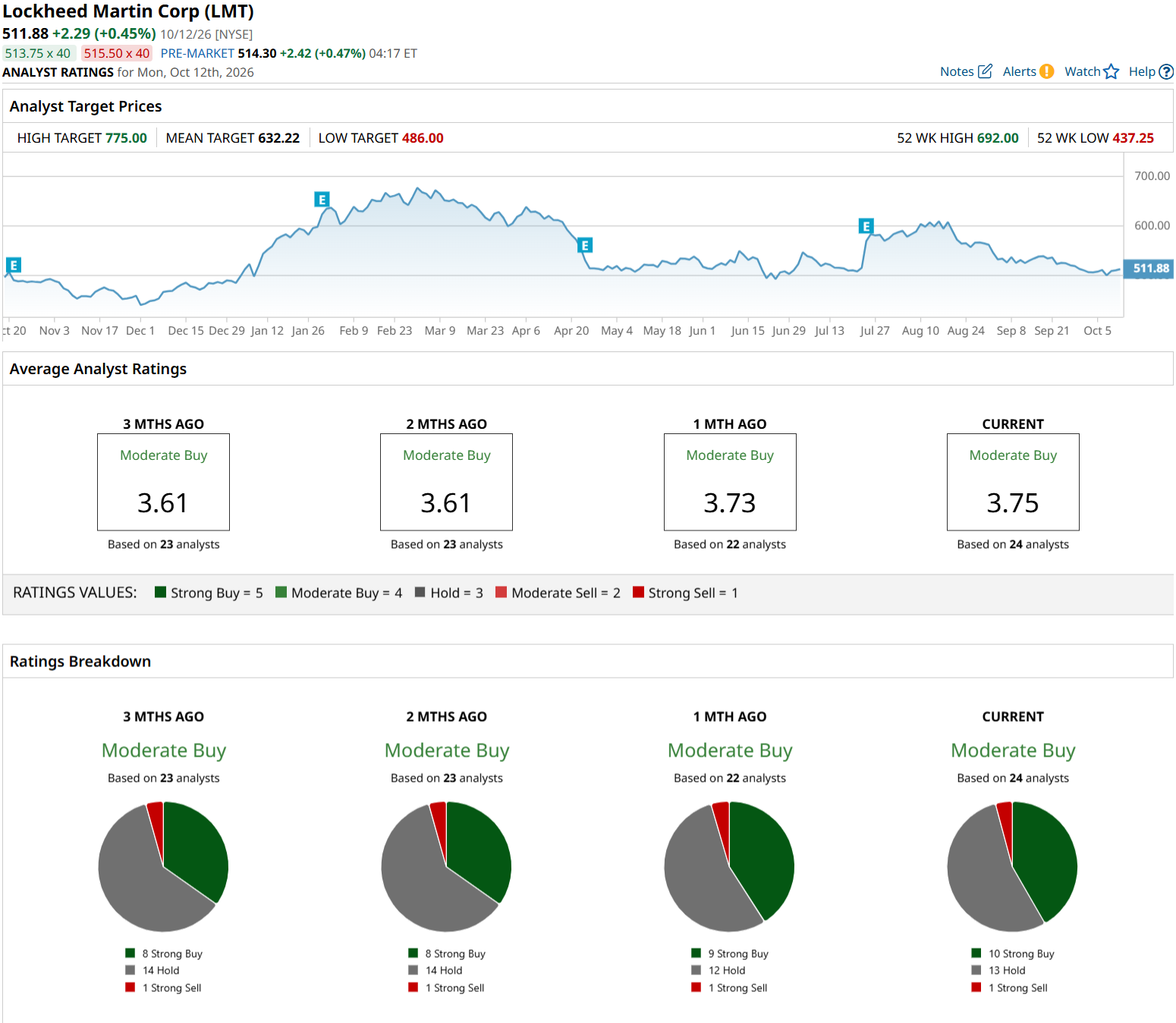
Based on 24 analysts with coverage, Lockheed Martin has a consensus “Moderate Buy” rating. The average price target of $628.83 suggests potential upside of 19% from current levels.
Conclusion
The dividend increase strengthens Lockheed Martin’s case as an income stock, especially alongside stronger cash flow, a record backlog, and a valuation below the sector average. The appeal is not just the bigger payout, but the business supporting it. I lean toward shares moving higher over time if Lockheed converts its orders into profitable growth and delivers on earnings expectations. Still, the rebound benefited from a weak prior-year comparison, and expansion plans carry execution risks. For patient investors, LMT stock offers a reasonable mix of dividend income and potential upside, rather than a guaranteed path to Wall Street’s target.
On the date of publication, Ebube Jones did not have (either directly or indirectly) positions in any of the securities mentioned in this article. All information and data in this article is solely for informational purposes. For more information please view the Barchart Disclosure Policy here.