


The Zhitong Finance App learned that Facebook and Instagram's parent company Meta Platforms (META.US) released Muse Spark Open on October 15, which is to fully open the weights of this big model that focuses on AI superprogramming and AI agent tasks. At the same time, the Muse Wonder, which was launched this week and has much more advanced comprehensive performance indicators, will maintain a closed source model. Meta's latest big model dynamic also means that the company's business logic at the level of AI applications and big models is gradually becoming clear — using an open weight model to attract more developers to the Meta community and expand computing power resource requirements and AI application deployment, while also focusing on cloud computing power loads with more powerful high-end models, development tools, and inference efficiency to take on more expensive AI paid subscriptions.
Meta said that Muse Spark Open is “the most capable open weighted AI model in the US so far,” so in terms of the expansion trend of AI computing power demand, the open source move is a major positive catalyst for semiconductor and AI computing power topics that have continued to plummet recently — from local workstations to enterprise private AI computing power clusters to public clouds. Open weighting is expected to allow intelligence to enter more scenarios that were previously difficult to cover due to cost, data control, and customization requirements, providing new impetus for the continued expansion of computing power demand for “closed source and open source AI”.
In the AI developer ecosystem, open-weight AI usually refers to an “open weight AI big model”, that is, developers can download parameters after model training and deploy, fine tune, and reason in their own server or cloud environment; however, model developers do not necessarily disclose training data, data processing methods, training code, and complete architecture details, and may also restrict commercial use or specific applications through licenses.
Open source AI in the strict sense of the word is broader: in addition to weight, it should also provide information sufficient to allow users to research, modify, and reproduce the system's code, architecture, and training data, and guarantee basic freedom of use, research, modification, and redistribution. Therefore, open weight is “the finished model can be used and modified”, while true open source AI further opens up “how the model is manufactured”; the former can be part of the latter. Currently, “open source” in the usual context usually refers to “open weight AI big model,” but open weight does not necessarily equal open source all technical aspects and code.
Meta's big announcement comes at a time when chip stocks are under pressure. By the close of the US stock market on October 15, the Nasdaq 100 had fallen 0.05%, with a cumulative decline of 3.07% during the week, down 1.56% since October, and still rising 18.56% during the year; down 4.13% from this month's closing record, it has yet to enter a technical correction usually defined by a 10% decline. The Philadelphia Semiconductor Index, which has the title of “AI Computing Power Themed Trading Trend Vane,” fell 0.88%, falling for seven consecutive years and retreating by a cumulative total of 12.38% into the technical correction zone. Since October, it has fallen 8.29% cumulatively.
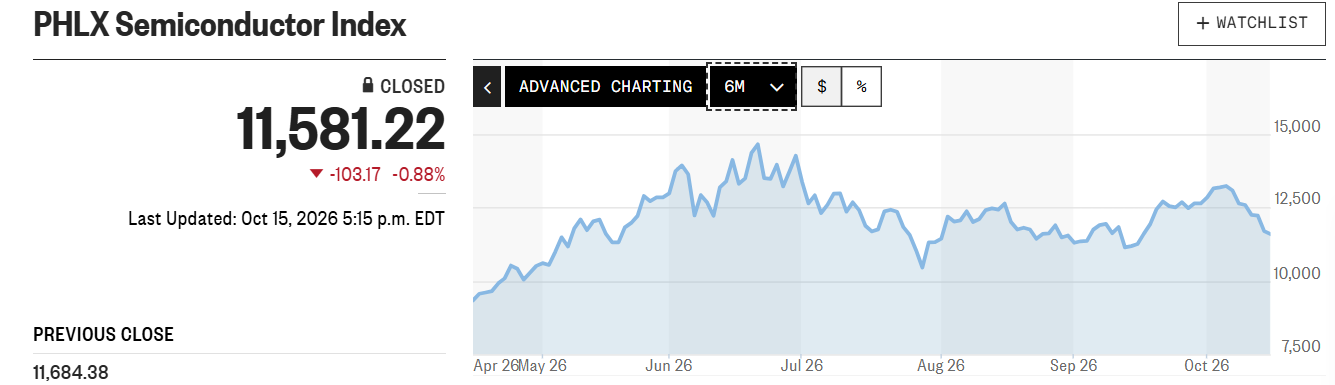
Currently, the market is re-evaluating the increasingly high global financing costs and blurred AI capital recovery cycle against the backdrop of a resurgence of high inflation, a sharp rise in 10-year US Treasury yields, and continuing to rank at the highest level in 20 years. Currently, long-term risk-free interest rates are still high, driving the credit risk premium to further expand and jointly raise financing costs. This is the core mechanism for suppressing the AI computing power theme and semiconductor stocks. On October 15, the US bond yield index for a period of 10 years or more declined. Combined with Hwang In-hoon's positive statement on CoreWeave's prospects, the pressure on selling has eased, but semiconductors still seem to have not stopped falling. Therefore, the potential investment significance of Meta's latest open model is whether it can expand the demand for AI applications with payment capabilities, improve the utilization rate of computing power, and ultimately respond to more solid cash returns on core AI infrastructure hardware such as AI chips, memory chips, and data center CPUs.
Meta's open model while retaining the closed source business model of the most advanced AI technology
Facebook and Instagram parent company Meta Platforms made a big announcement on Thursday local time to open a new AI model to global developers, allowing download and modification, while continuing to keep the most advanced technology closed source in an effort to turn AI investment into revenue.
On Thursday, Meta announced the release of Muse Spark Open's “open weights” — that is, allowing developers to run and adjust the model's parameter settings themselves. Meta said the model, which is designed to support programming and AI agents, is less advanced than the Muse Wonder, which was launched earlier this week. The release of this relatively weak open weighting model fulfilled Meta's previous promise that its technology would be widely used.
“We don't usually open source the most powerful models due to both safety and capability considerations,” Alexander Wang, Meta's chief AI officer, said in an interview. “But we do think it's important to continue to open source great models, and we intend to continue to do so.”
Leading Chinese AI models, including Alibaba Group and DeepSeek, have achieved great success in developing open source AI models that allow developers to make their own adjustments. The rapid adoption of these models, including their spread in the US, further intensified technological competition between the two countries.
Meta CEO Mark Zuckerberg has long advocated opening up AI models and their infrastructure to the developer community. But last year, after the company's open-weight Llama model disappointed Silicon Valley, Zuckerberg reorganized Meta's AI division and introduced Wang. Since then, Wang has helped develop a series of models that are more capable but remain closed.
Wang said he believes it is very important for US companies to release an open weight model, which will help ensure that they maintain their leading position with the Chinese AI model leaders in the rapidly developing AI competition. “Most of the world's AI will run on an open model,” he said. “These models should have come from America.”
At the same time, he expects Chinese AI developers to learn Muse Spark Open and continue to develop based on it. “It might even be a good thing if the Chinese model developer community incorporates some of our technical principles into their models,” he said.
When Muse Spark Open was released, Meta was also starting to establish its own cloud business to sell AI models and access services to computing infrastructure through this business. Wang said that providing Muse Spark Open for free would not weaken this business. Instead, he sees it as an entry point to attract customers: developers can first experiment on their own, then pay Meta to buy additional tools when they need more computing power.
Developers can currently use Muse Spark Open via platforms such as Baseten, Fireworks AI, Groq, Modal, Nebius, OpenRouter, and Together AI. Model weights can be downloaded at Amazon SageMaker AI, Google Cloud Model Garden, and Hugging Face.
Meta said the company collaborated with Apple to ensure that the model can run on two Mac Studio desktop computers equipped with the M5 Ultra chip, so developers can use their own hardware without having to rely on remote servers.
Open models broaden applications, and closed source models such as Astra are expected to continue to raise the upper limit of capability—that is, closed source competes for the upper limit of capacity, and open source broadens and strengthens the boundaries of computing power requirements
It is worth noting that “open weighting” is a delivery method, not a source of performance; openness changes how developers acquire, deploy, and transform models. “Open weighting” means that developers can obtain well-trained model parameters and deploy, fine-tune, and adapt the business themselves. Its industrial value is to lower the application implementation threshold, expand the model from services provided by a small number of platforms to computing power that more enterprises can use independently, thereby opening up a wider growth space for inference calls and computing power requirements.
The differentiated advantages of Muse Spark Open mainly focus on the combination of efficient tool execution related to AI agents, native multi-modality, and autonomous deployment. It uses a hybrid expert architecture (MoE), has 816 billion total parameters, about 42 billion parameters per token activation, supports 1 million token contexts, accepts text, images, audio, and video inputs, and outputs text. In the comparison published by Meta according to the inference levels specified by each model, its MCP-Atlas tool task score was 89.2, higher than GLM 5.3's 84.2 and Kimi K3's 82.3; however, the composite intelligence index was 39, lower than 45 and 44 of the two, and the Terminal-Bench 2.1 score of 76.4, which was also lower than 83.9 and 85.
Therefore, Meta's latest open source AI model, Muse Spark Open, has a competitive advantage in some intelligent tasks. The overall positioning is still lower than the closed-source Muse Wonder, and cannot be summed up as an overall leader in mainstream models. Apple collaborated to further expand deployment options: with MLX and quantitative versions, two M5 Ultra Mac Studios with 512 GB of unified memory each can run the model, providing a path for private data processing and local R&D.
Looking at the demand mechanism, the closed source frontier model expands the set of tasks that AI can complete, and the open model lowers the deployment threshold for these capabilities to enter actual business. Enterprises can carry out field fine-tuning, intelligent development, and private deployment without having to redo expensive basic pre-training; when the cost of effective tasks per unit falls, jobs that are not worth automating may also gain commercial value. The key to the full establishment of the so-called “Jevens Paradox,” which has recently been hotly discussed in the market, can be described as being that the number of new tasks exceeds the savings in computing power per task. Performance improvements alone do not guarantee an increase in total computing power, but the simultaneous emergence of stronger capabilities, lower costs, and wider deployment will significantly increase the possibility of demand expansion.
The so-called Jevons Effect (Jevons Effect), also known as the Jevons Paradox, is a counterintuitive economic theory: when current technological advances improve the efficiency of the use of certain resources (such as energy, raw materials, or AI computing power infrastructure resources), it will reduce the unit cost, thereby stimulating large-scale expansion of market demand, which ultimately causes the total consumption of all types of resources to increase rather than decrease. The concept was first proposed by the English economist William Stanley Jevons (William Stanley Jevons) in the book “The Coal Problem” in 1865.
As for the AI computing power industry chain and AI super bull market investment trend that global investors are focusing on, open weight, model routing, and architectural efficiency together significantly increase and reduce the cost of intelligence per unit, but it is possible to amplify total computing power demand through the “Jevans paradox.” As simple call costs decrease, enterprises will deploy more continuously running agents, parallel sub-agents, long context analysis, code automation, and real-time multi-modal services; a single task may consume less computing power, but the number of tasks, inference steps, and deployment nodes may grow faster. As a result, the large-scale accelerated popularization of major open rights models will spread the demand for computing power from a few closed source laboratories to global cloud computing service providers, sovereign clouds, giant AI data centers and local inference clusters for enterprises.
Stock prices have pulled back, and the growth logic is still expanding! As Meta broadens application boundaries, are semiconductors preparing a counterattack?
Recent research by Google's parent company Alphabet clearly indicates that a reduction in the unit token price, an extension of task execution time, and an increase in the number of applications can occur simultaneously, driving up the total demand for AI inference and the total value of inference, which can be described as an accurate response to the so-called “Jevens paradox.” According to the forecast report of TrendForce, a well-known market research agency, in 2027, shipments of NVL72 racks increased by more than 50% year on year. The total output value of GB200/GB300 and next-generation NVL rack systems around Nvidia AI GPUs based on the Vera Rubin architecture is expected to exceed US$710 billion, an increase of 214% year over year, including the impact of product upgrades and price increases.
The core change brought about by the recently popular Meta Muse AI agent and the OpenAI Astra large model/AI agent “comparable to AGI” is that a single user command can trigger continuous, multi-stage computational work. A research, programming, or office task may in turn include planning, retrieving, reading documents, calling tools, executing code, checking results, and fixing errors. Multiple steps require re-calling the model, and complex tasks may also use parallel exploration and verification. Such an almost endless and increasingly complex AI workload will accelerate the transmission of growth opportunities to a complete AI inference load computing power system beyond the GPU.
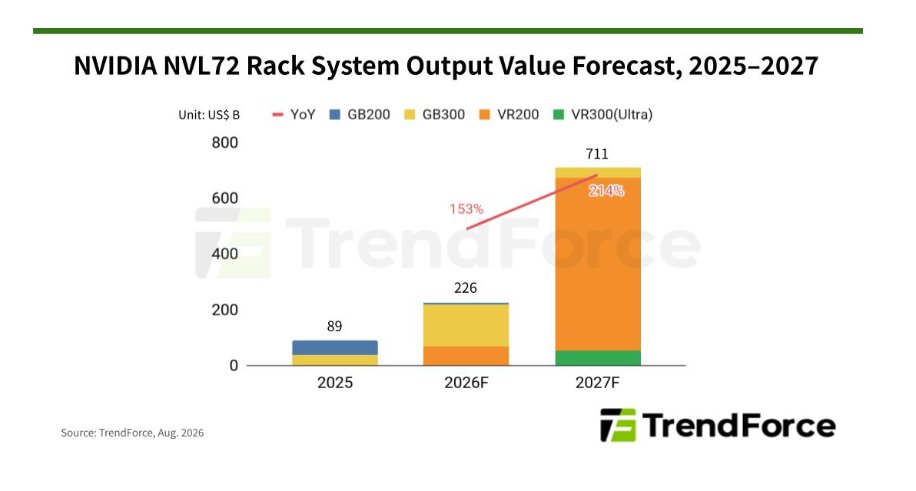
Meta's opening of Muse Spark Open can be described as providing a new technological impetus for application proliferation and growth in inference demand. With Meta Muse and OpenAI's GPT-6 Astra fully detonating a wave of AI agents, and as shown in the latest news, the Muse Spark Open, which also focuses on cutting-edge AI intelligence workloads, the “AI FOMO transaction” (meaning investors are worried about missing out on rising opportunities in AI-related assets, so buying up or making up for previously lowered positions) is likely to make a comeback in the near future.
Looking at the underlying architecture of AI computing power infrastructure, Muse, Astra, and Meta's latest open source Muse Spark Open are expected to jointly further expand the scope of use of AI agents. The massive expansion of AI inference workloads brought by them will also increase the demand for model inference, tool execution, and state management, while deepening the competitive pressure on some software companies. Accelerators such as GPUs and TPUs undertake model computation; high-performance server CPUs run browsers, virtual machines, product search, database queries, and transaction orchestration; HBM and server DRAM carry model data, context, and concurrent working environments; enterprise-grade SSDs store product indexes, task records, and persistent states, and high-speed networks and optical interconnections support distributed data exchange.
Wall Street financial giant J.P. Morgan Chase recently said that what the agency's global stock market strategist team is optimistic about is a rearrangement opportunity formed by easing position congestion, falling valuations, and profit resilience. In particular, they prefer semiconductors. According to the latest research report released by the agency, since June, the earnings forecast for semiconductors per share for the next 12 months has been raised by about 30% to 40%, and the profit forecast for the global software sector has not improved accordingly; the capital expenditure forecasts for hyperscale cloud computing vendors recently quoted by the agency are: about 950 billion US dollars in 2026, about 1.4 trillion US dollars in 2027, at least 3 trillion US dollars in 2030, and it is expected that the pace of AI-related revenue growth in 2027 will show a blowout expansion trajectory.
Goldman Sachs technology industry expert Peter Callahan also pointed out in a recent research opinion that the long-term investment trend in AI is still complete, semiconductor valuations have been compressed, and the development of personal assistants and consumer-grade AI is expected to help the sector stabilize again during the third quarter earnings season. The latest research reports from Goldman Sachs and J.P. Morgan Chase can be described as supporting the bullish judgment that “AI computing power and semiconductors have strong conditions for counterattack,” and they have added key evidence in terms of capital and profit, respectively.
Goldman Sachs is concerned about when incremental buyers will return. Another J.P. Morgan Chase research report on optimistic prospects for a rebound in the Korean stock market determined whether the high profit level of memory chips, which is essential for AI computing power trading, can last longer than expected by the market.
The “three major reinforcements” described by Goldman Sachs are expected to improve the financial environment for AI assets to be re-priced. The Goldman Sachs capital flow team pointed out in the latest report “Witching Hour” that according to “Witching Hour” estimates, about 48% of the S&P 500 constituents will re-enter the open repurchase window at the end of October; historically, November contributed about 10.1% of the annual repurchase execution volume, combined with the subsidence of mutual fund tax sales pressure at the end of the fiscal year, retail capital inflows at the end of the year, and overseas allocation requirements after the midterm elections, and the relationship between supply and demand for stocks may gradually improve. Among them, overseas purchases of about 190 billion US dollars are a potential scale extrapolated by historical laws. For semiconductors that have experienced concentrated position reductions, buying recovery means that the company may trigger position recovery even if it only proves that orders and profits have not deteriorated significantly. However, the technology sector's buyback execution volume fell 40% year over year, indicating that capital expenditure is competing with shareholders to return capital; if AI stocks are to continue to attract incremental allocations, it is still necessary to prove that capital investment related to investing in key AI infrastructure resources such as GPUs, network infrastructure, and data center optical interconnects and CPUs can form higher future cash flows.
J.P. Morgan Chase's bullish logic falls more directly on “whether the market is prematurely depreciating and storing profits.” According to a semiconductor research report on the Korean stock market released by the agency on October 15, concerns about the sustainability of AI investment at the macro level are clearly out of touch with the storage industry's bottom-up supply and demand data. Therefore, the third quarter is regarded as an “expected reset season”. The next six months will be overequipped with Samsung Electronics, SK Hynix, and Kioxia, and extended to Samsung Motors, AI PCBs, and test sockets. The “long-term deal” here is betting that the upward cycle will last longer and that high profits will last longer: even if the price increase slope slows down, as long as demand for HBM, server DRAM, and enterprise-grade SSDs continues to absorb new production capacity, the rapid decline in profits previously included in the market may need to be revised again. This also explains why storage stocks can peak and fall before profit, but they may rebound early after the profit duration is verified; what determines the opportunity is the gap between the actual profit path and implied stock price expectations.
Meta's open model adds an application-side basis for “the duration of profit may be underestimated.” Closed source cutting-edge models such as Muse Wonder expand the boundaries of tasks that agents can complete, while open weighting models such as Muse Spark Open lower the threshold for enterprise customization, private deployment, and migration, making more workflows economically viable.
Judging from the underlying AI infrastructure technology mechanism, a complete task of the most advanced AI agent task system may include repeated planning, code execution, search, tool call, and result verification. It consumes not only GPU/TPU/ASIC calculations, but also CPU execution resources, KV cache, host memory, SSD, and high-speed interconnection. MoE sparse activation reduces the amount of computation per token, nor does it mean that the weight storage and communication requirements of the entire model disappear in the same proportion. It is deduced from this that when the increase in the number of new tasks, concurrency, and length of workflow exceeds the decrease in computing power consumption per task, the Jevans effect may drive the expansion of total computing power requirements; the significance of open and closed source collaborative development is simultaneously increasing the maximum capacity and application coverage.