


There is a metaphor that has been around for a long time in the biomedical industry — in the gold rush, it is not necessarily gold diggers who make steady profits, but water sellers. Bepsis, on the other hand, is a typical “water seller” in the field of recombinant proteins upstream of the innovative drug industry chain.
On September 30, this “water seller” officially submitted a listing prospectus to the Hong Kong Stock Exchange to begin the A+H dual capital platform journey.
This isn't the first time it's here. On January 26 of this year, Pepsis submitted a statement. It expired at the end of July due to the expiration of the application period. The company was listed on the A-share GEM in October 2021. By the close of trading on October 15, the total market value of the company was about 17.7 billion yuan.
Unlike many domestic biotechnology companies, Bepsis chose the global route from the early stages of development. Overseas customers and overseas revenue account for an important share, and it is one of the few domestic recombinant protein manufacturers that have achieved large-scale overseas products. Standing at the center of global innovation drug iteration and supply chain restructuring, what kind of investment value does Bepsis have behind its A+H launch, and what are the unavoidable shortcomings lurking?
83% high gross margin vs. 81% revenue depends on recombinant proteins
According to Zhitong Finance, Bepsis is mainly engaged in R&D, production and sales of recombinant proteins, antibodies, and analytical test kits.
Specifically, the company mainly uses recombinant protein as its core product, and has a diverse portfolio of other biological reagents, including antibodies, analytical test kits, functional cell lines, and cell culture media. The application end of these products covers oncology, autoimmunity, cardiovascular, infectious diseases, cranial nerves, etc., and extends from drug screening optimization, preclinical, clinical, CMC to diagnostic reagent development. In addition, it is also complemented by a series of technical services, such as molecular interaction analysis according to the customer's professional R&D needs to form a comprehensive product+service model.
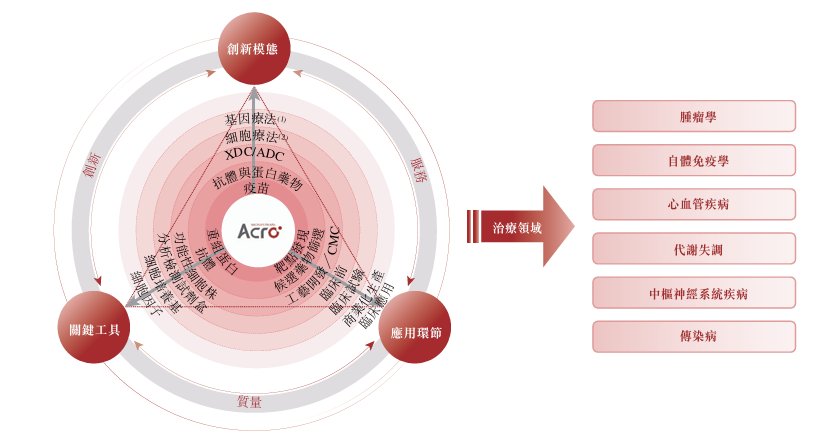
(Image source: Bepsyth's prospectus)
Looking through the prospectus, you can see that the most obvious label of Pepsis is the continuous and stable high gross profit margin. This is also the most intuitive reflection of technical barriers on the upstream biological reagent circuit.
According to the prospectus, from 2023 to 2025, Baipsis achieved operating income of 544 million yuan, 645 million yuan and 838 million yuan respectively, with year-on-year increases of 18.6% and 29.9% respectively in the next two years; profit for the period was 148 million yuan, 120 million yuan (down 18.9% year on year), and 165 million yuan (up 37.5% year on year), respectively, which is quite variable compared to revenue. In the first 7 months of 2026, the company achieved operating income of 606 million yuan, an increase of 31.1% year on year; profit for the period was 123 million yuan, an increase of 36.7% year on year, further highlighting the steady growth trend.
It is worth mentioning that compared to the steady increase in revenue, Baipsys' gross margin has remained at a very high level for a long time. From 2023 to 2025, the company's gross margin was 84.3%, 84.8%, and 83.5%, respectively. The first seven months of 2026 was 83.1%, and the net profit margin for the same period was 20.3%. This level is in the top range for the entire biological reagent circuit.
Along with the increase in revenue and profit, Baipsys' operating leverage has also continued to be repaired: as of the first 7 months of 2026, the company's net cash flow from operating activities was 118 million yuan, cash and cash equivalents at the end of the period was 324 million yuan, and the balance to liability ratio was only 3.9%.
However, under the bright background of profit, Baipsis is still facing the risk of “walking on one leg”.
Looking at the split revenue structure, Bepsis's revenue is basically firmly tied to the recombinant protein business, while the second-growth curve business, such as antibody products, test kits, and related technical services, is currently still small, still in the cultivation stage, and is not yet able to take the lead in revenue. According to the prospectus, in 2025, the company's recombinant protein revenue will account for about 81%, antibodies and kits will account for about 15%, and the rest will be technical services.
This poses a very real problem: performance is highly dependent on a single category. Once downstream demand fluctuates and competition on the racetrack intensifies, the company's performance will be directly impacted. Even if recombinant proteins themselves require strong toughness, a single product structure is always a risk point in the long run.
However, the customer and revenue structure is one of the highlights of Bepsyth. The company's products cover a large number of leading pharmaceutical companies around the world, and the customer stickiness is strong; the global layout of the business accounts for a relatively high share of overseas revenue. The US market is its most important overseas market. In 2025, the company's revenue from mainland China accounted for 36.2%, and revenue from the US accounted for 40.1%. This is clearly different from many upstream reagent companies that only rely on orders from domestic pharmaceutical companies. It is also this kind of layout that supports the company's strategic choices for Hong Kong stocks and international investors.
In other words, Bepsis has proven that it can sell recombinant protein products to global pharmaceutical companies, but the next test is whether it can do the same with other product lines and break the “walking on one leg” pattern.
Behind domestic No. 1 and global No. 3, there is still a gap with overseas giants
Bepsis makes recombinant proteins, close relatives of antibodies, upstream of kits, and a handful of “flour” at the cutting edge of the biomedical research and development chain. It doesn't determine whether a drug can be produced, but pharmaceutical companies cannot bypass it at every step, from target verification to clinical sample preparation.
This also determines the “growth height” of the market where Bepsis is located.
According to Frost & Sullivan data, the global biological reagent market was US$18.2 billion in 2020, and grew at a compound annual growth rate of 7.7% to US$26.4 billion in 2025. It is expected to expand to US$39.5 billion by 2032, with a compound annual growth rate of 5.9%.
Meanwhile, China's biological reagent market is growing faster, close to three times the market — the size of China's biological reagent market was 2.2 billion US dollars in 2020, and grew at a compound annual growth rate of 16.2% to 4.6 billion US dollars in 2025. The market size is expected to grow to 13.4 billion US dollars in 2032, with a compound annual growth rate of 16.8%.
Among them, biological reagents can be divided into three types, namely cells, proteins, and nucleic acids. Protein reagents are further divided into antibodies, recombinant proteins, and others. In 2025, in terms of revenue, the protein biological reagent sector accounted for 36.3% of the total global biological reagent market; the global recombinant protein sector accounted for 36.0% of the total global protein biological reagent market. In 2025, recombinant protein reagents accounted for 13.1% of the global biological reagent market, which is the main growth engine for the industry.
As can be seen, the recombinant protein reagent market in which Bepsis is located is in the midst of a triple trend of steady global growth, rapid expansion in China, and leading recombinant proteins. For the company, this is a “water seller” track with strong growth certainty.
Among these, Bepsyth's market share, which is number one in the country and number three in the world, has undoubtedly left a strong footnote for it in this market competition.
According to relevant statistics, Bepsis is number one among domestic suppliers, ranking third among all manufacturers in the world, with a global market share of 2.7%. This report card represents the first time that a domestic recombinant protein manufacturer actually stands at the entrance of the world's first tier.
Specifically, the current global competitive landscape can be clearly divided into two major camps. The first tier is established overseas giants such as Thermo Flex and Bio-Techne. They have long occupied the world's major market share. Their advantages are a complete product matrix accumulated over decades, global warehousing and localization services, and deep brand awareness. Many overseas pharmaceutical companies have formed usage habits over the years. Customer migration costs are very high, and they are rivals that Bipsyth needs to face for a long time.
The second tier is domestic peers represented by Bepsis. The differentiated advantages of domestic manufacturers are very clear: faster response time, short communication cycle for customized projects, and obvious cost performance advantages. However, the shortcomings are also prominent: there is still quite a gap between overall revenue volume, the richness of the complete product line, and overseas giants.
Bepsyth's differentiated style of play is a combination of domestic substitution and active overseas outing. At the same time, the company laid out an AI protein design platform and GMP grade recombinant protein products in advance to target the needs of next-generation innovative drug circuits such as CGT, and advance the reagent requirements of cutting-edge racetracks in an attempt to seize opportunities in emerging racetracks and find opportunities to overtake corners.
From the above, it can be seen that although Bepsis has occupied a certain market share on the circuit where it is located, this does not mean that it can be settled once and for all, because the giants will not allow their share to continue to be lost, and subsequent price competition and new product racing will continue.
epilogue
In summary, judging from the three dimensions of the industry circuit, business performance, and global market position, Bepsis is clearly a representative overseas leader in the domestic upstream biological reagent circuit.
The company's “water seller” business model is resilient and has already received the third highest ranking in the world, proving that domestically produced recombinant protein products have been recognized by global pharmaceutical companies. However, the single product structure and continued competition from overseas giants are two problems that span the long-term development path.
However, A+H's listing in Hong Kong this time is only a node, not the end point, of the company's globalization journey. The short-term market may hype up A+H and globalization stories, but the long-term investment logic ultimately depends on whether the company can continue to broaden its product boundaries and grow from a single-category manufacturer focusing on recombinant proteins to a comprehensive global biological reagent platform.