


UniCredit’s green light from the ECB to build a controlling stake in Commerzbank turns a long discussed idea into a live banking shake-up across the eurozone. Large lenders suddenly look more exposed to takeover talk, capital questions and cross-border ambition, which can move prices quickly. This article walks through three eurozone large cap banks that sit close to this UniCredit and Commerzbank story and shows how the same news can hit each one very differently.
The three eurozone banking groups highlighted below are only a starting sample, and the full UniCredit and Commerzbank themed screen surfaced seven more large cap institutions with equally detailed narratives that are not covered here. If you want to identify potential beneficiaries or vulnerable peers from this shift in eurozone banking, head straight into the Eurozone Large-Cap Banks screener.
Alpha Bank (ATSE:ALPHA)
Overview: Alpha Bank is a Greek universal bank offering everyday retail accounts, lending, business banking, wealth services and cross-border financing across Greece and selected international markets.
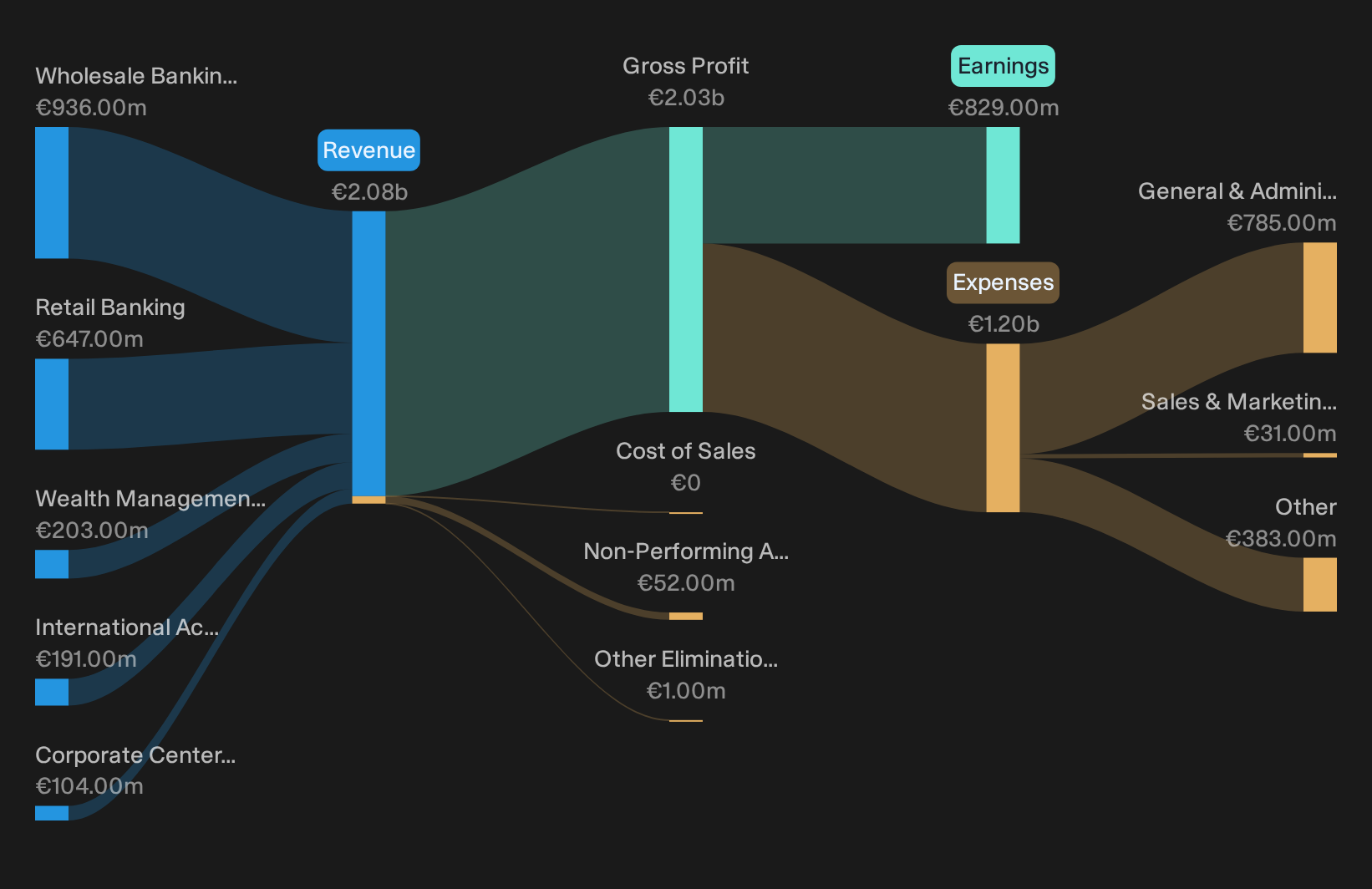
Operations: Alpha Bank generates revenue mainly from €936 million in Wholesale Banking and €647 million in Retail Banking, with additional contributions from Wealth Management, International Activities and its Corporate Center.
Market Cap: €9.45 billion
Alpha Bank matters in this eurozone large cap banks screen because it operates as a core commercial lender in Greece while connecting clients to wider cross-border flows through its partnership model.
"The build out of capital light transaction banking, including market share gains of around 10 percentage points in import letters of credit and over 11 percentage points in foreign guarantees alongside a 38% rise in transaction banking revenues, positions Alpha Bank to grow non interest income and support margins."
What happens to those margins if one unseen pressure on how Alpha Bank deploys its capital shifts more quickly than expected?
If that capital squeeze is on your mind, read the full narrative for Alpha Bank to see how Alpha Bank’s transaction engine and risk trade offs really line up.
Banco Bilbao Vizcaya Argentaria (BME:BBVA)
Overview: Banco Bilbao Vizcaya Argentaria is a large Spanish banking group providing retail, corporate, investment and digital banking, plus insurance and asset management, across Europe, Mexico, Turkey, South America, the United States and Asia.
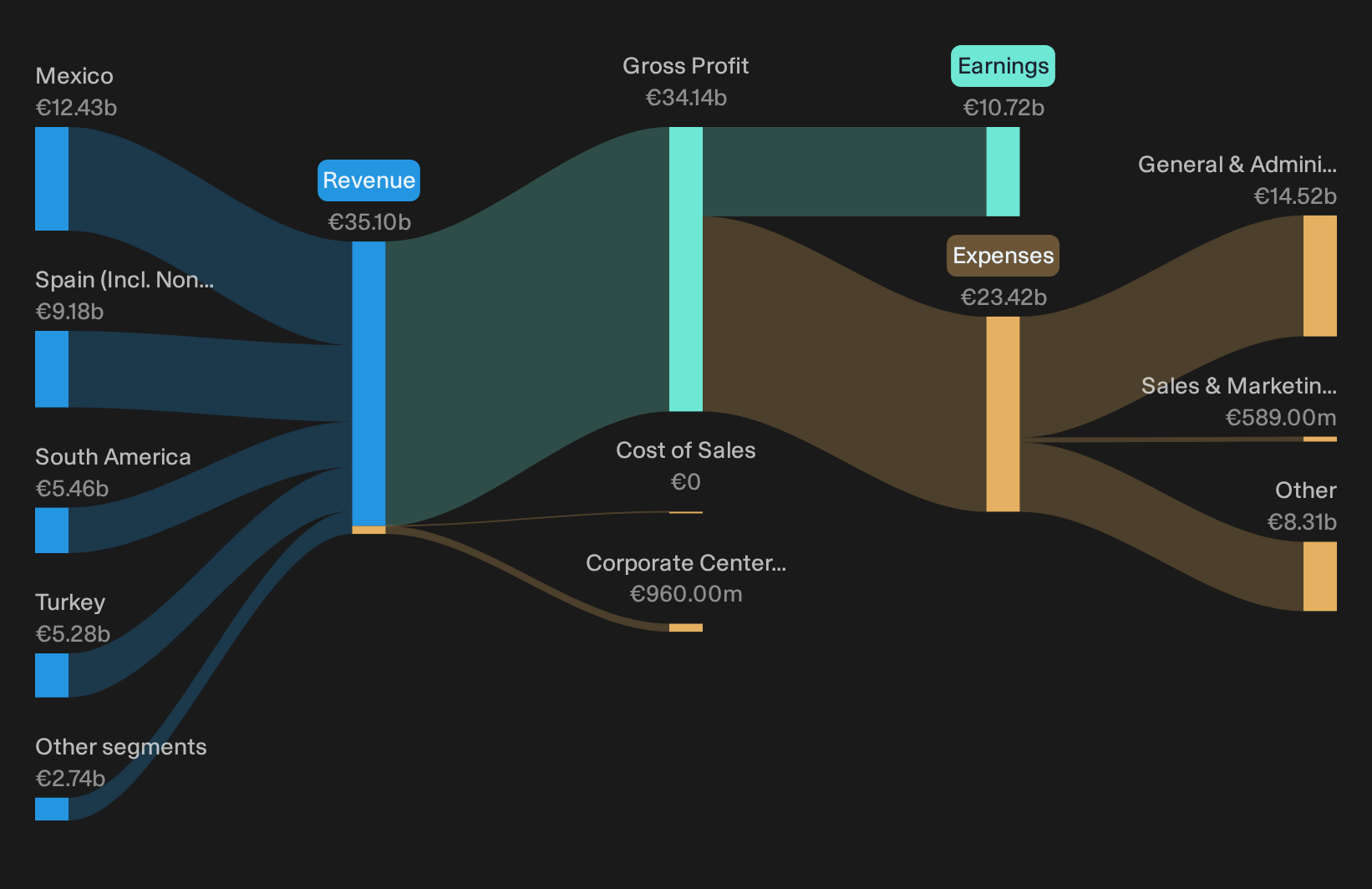
Operations: BBVA generates revenue mainly from Mexico at €12.4b and Spain at €9.2b, with Turkey at €5.3b, South America at €5.5b, Rest of Business at €2.1b and a Corporate Center loss of €1.0b.
Market Cap: €126.4b
BBVA fits the Eurozone Large Cap Banks theme as a sizeable Spanish lender that combines a home market retail base with wide international reach. This positioning puts it directly in the conversation when investors think about who could benefit from a more open approach to cross border consolidation.
"Ongoing investment and leadership in digital transformation is now reinforced by concrete AI programs that already support contact centers, risk processes and software development. Taken together, these initiatives are expected to improve productivity, reduce unit costs and support net margins as more of the bank’s activity shifts to these tools."
What happens to that cross market profitability story if one legal and emerging market risk channel tightens faster than management currently plans for?
That legal and emerging market squeeze is exactly what the full narrative for Banco Bilbao Vizcaya Argentaria unpacks, including areas where BBVA’s digital and AI push could still be underappreciated.
CaixaBank (BME:CABK)
Overview: CaixaBank is a large Iberian universal bank focused on everyday retail, business and corporate banking across Spain, Portugal and selected international markets.
Operations: CaixaBank generates about €12.1b from Banking, €2.0b from Insurance and €1.2b from Portuguese Investment Bank BPI, mainly sourced in Spain.
Market Cap: €82.8b
CaixaBank matters in this eurozone large cap banks theme because it is a sizeable Iberian universal lender. Its domestic reach and cross border corporate banking footprint keep it squarely in the conversation whenever regulators signal more openness to consolidation across the bloc.
"The bank is adding almost 400,000 net new clients in Spain and gaining market share in areas like payroll deposits, consumer lending, SMEs and wealth management. If this wider and deeper client franchise is sustained it could support long term revenue and fee income more than a bearish view assumes, with a supportive effect on earnings."
The real test comes if a single assumption about how that wider franchise converts into profitable, repeat business proves too optimistic.
If that assumption worries you, read the full narrative for CaixaBank to see whether CaixaBank’s growing client base is quietly accelerating value or masking pressure points.

Seeking Alternatives Before Others Notice
Fresh themes move first, prices follow later. Some ideas gain momentum quietly, then fly once the crowd catches on. Scan these under the radar lists while it matters and consider acting before they become widely followed.
- Spot cash rich compounders early by running the list of solid balance sheet and fundamentals (202 results), which filters for robust finances before wider attention tightens entry points.
- Track future facing infrastructure as AI demand builds and use the curated 94 AI infrastructure stocks to see which enablers still trade before momentum fully bites.
- Follow the power grid upgrade story by scanning the hand picked 41 power grid technology and infrastructure stocks and keeping an eye on where capital could move next.
This article by Simply Wall St is general in nature. We provide commentary based on historical data and analyst forecasts only using an unbiased methodology and our articles are not intended to be financial advice. It does not constitute a recommendation to buy or sell any stock, and does not take account of your objectives, or your financial situation. We aim to bring you long-term focused analysis driven by fundamental data. Note that our analysis may not factor in the latest price-sensitive company announcements or qualitative material. Simply Wall St has no position in any stocks mentioned.
Have feedback on this article? Concerned about the content? Get in touch with us directly. Alternatively, email editorial-team@simplywallst.com