


From October 13 to 14, Guoen Technology (02768) faced financial “pressure”: the Hong Kong stock Guoen Technology had a cumulative decline of nearly 45% over the two days, and A-share Guoen shares fell to a standstill for two consecutive days. In stark contrast to the sharp drop in stock prices, the company's first three quarterly report forecasts disclosed on the evening of October 14 showed that net profit to the mother is expected to reach 950 million yuan to 1.1 billion yuan, an increase of 54.45% to 78.84% over the previous year, reflecting high growth in modified plastics and composites in the main business.
The Zhitong Finance App believes that market fears are not without reason. The change in stock price directly triggered the 1,504 billion yuan cash acquisition of 80% of the shares in Sichuan Fluorine Energy announced by the company on October 12 — the assessed value-added rate of the target exceeds 200% and is involved in trade secret lawsuits; at the same time, the company is also facing large cash payment pressure and computing power business guarantee risks.
Against the backdrop of steady and improving performance fundamentals, is this “cross-border” gamble a precise card for domestic replacement of semiconductor materials, or is it an aggressive adventure in the asset-heavy expansion cycle?
Cash flow stress testing under high-premium mergers and acquisitions
According to the Zhitong Finance App, Guoen Technology has now purchased 80% of Sichuan Zhongfluorine Energy's shares with 1.504 billion yuan in cash. The transaction structure itself forms a stress test on the balance sheet.
According to the announcement, the transaction was assessed using the income method. The assessed value of the total equity of the shareholders of the target company was about 1,883 billion yuan, an increase of about 1,256 billion yuan over the net assets of about 628 million yuan, with a value-added rate of 200.07%. After the acquisition is completed, it will form a large goodwill in the consolidated statements. More importantly, this is a full cash transaction: the first instalment of 110 million yuan, the second installment of 792.4 million yuan, and the third installment of 601.6 million yuan must be paid centrally within a short period of time after the agreement comes into effect and delivery, directly consuming the company's freely disposable monetary capital.
The problem is that Guoen Technology's current cash flow situation is not generous. As of the end of the first quarter of 2026, the company's monetary capital was about 4.06 billion yuan, and the net cash flow from operating activities was 132 million yuan, a year-on-year decrease of 28.94%. Based on current liabilities of about 7.736 billion yuan for the same period, monetary capital/current liabilities were about 51.94%, net cash flow/current liabilities from operating activities were about 1.71%, and the short-term liquidity safety margin was weak.
In this context, the 1.5 billion yuan cash outflow superimposed on the company's PEEK project, aviation acrylic glass project, Guoen Chemical (Dongming) test run and commissioning, and the subsequent investment of nearly 1 billion yuan, as well as a guarantee limit of up to 15 billion yuan for the computing power business, and the company's liquidity safety margin has been significantly reduced. Although the deal set a performance promise (the cumulative net profit from 2026 to 2028 is not less than 400 million yuan) and double cash compensation clauses, the market naturally has doubts about the ability of cross-border mergers and acquisitions to deliver results — China Fluorine Energy's net profit in 2025 is only 71.21 million yuan, which means that the performance is nearly doubling, and the growth slope is steep. Once future performance falls short of expectations, goodwill impairment will directly impact profit statements and form a negative cycle of “high premium purchases - poor performance - impairment of goodwill”.
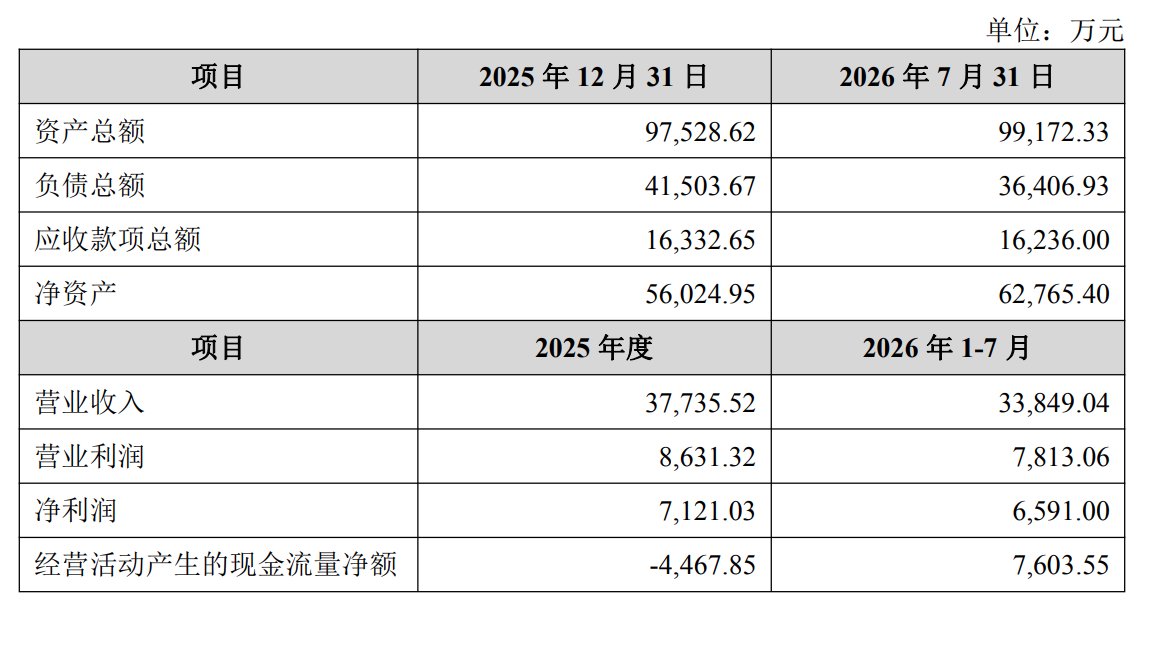
Misalignment between profit and hidden worries: bright book profits and pressure on free cash flow expectations
According to the forecast for the first three quarterly reports disclosed on the evening of October 14, Guoen Technology's net profit to mother is expected to reach 950 million yuan to 1.1 billion yuan, an increase of 54.45% to 78.84% over the previous year. The high increase in modified plastics and composites in the main business is unquestionable. As soon as the profit came out, the stock price rose in response on the 15th. At one point, it rose by more than 18% in the intraday period, but then fell back to the closing price of 29.48, or 9.84%. What the market is concerned about is that the hard-earned profits from the main business will be used to buy new assets that are still uncertain at a premium, and there is a risk that ROE will be diluted in the future.
From a racetrack perspective, electronic specialty gas does have a long-term narrative of “domestic replacement+AI drive” — the global supply of tungsten hexafluoride has shrunk due to the withdrawal of production capacity in Japan and South Korea, prices have risen sharply, and industry prosperity has increased. According to TECHCET data, global demand for tungsten hexafluoride has grown from about 4,500 tons in 2020 to nearly 9,000 tons in 2025, nearly doubling in five years; Business Research Insights predicts that the global tungsten hexafluoride market size is about 740 million US dollars in 2026, and is expected to rise to 3.45 billion US dollars by 2035, with a compound annual growth rate of about 19% during the period. At the same time, the overall market size of China's electronic specialty gas market is expected to exceed 42 billion yuan in 2030, and the average annual growth rate is significantly higher than the global average.
On the supply side, the global supply chain is undergoing structural reshaping. High-purity tungsten powder, the core raw material of tungsten hexafluoride, accounts for 60% to 70% of production costs, while China controls more than 80% of the world's tungsten resources. As domestic export controls on tungsten related items become stricter, Japan's two leading manufacturers, Kanto Denka and Chuo Glass, which together account for about 25% of the world's production capacity, have permanently stopped production since July 2026 due to a shortage of raw materials, creating a global supply gap of about 2,000 tons/year. Due to the mismatch between supply and demand, the price of tungsten hexafluoride rose sharply in 2026. The price of grade 5N products increased by more than 100% compared to the beginning of the year. The spot price of grade 6N once reached 2.2 million to 3 million yuan/ton, and the 7N grade long-term agreement price even exceeded 3.3 million yuan/ton.
In this historic window period, the industry is moving from “overseas monopoly” to “domestic production domination,” and enterprises with first-mover advantages in technological reserves and production capacity will fully enjoy the dividends of a sharp rise in volume and price. China Fluorine Energy is planning a 900 tons/year tungsten hexafluoride project. Currently, the 100 ton/mid-year test device is in progress. This is the key layout of the scarce racetrack. Although it still takes time from process verification to customer introduction, standing at the starting point of the reversal of the industry's supply and demand pattern, this forward-looking card is expected to open up a second growth curve for Guoen Co., Ltd. in advancing from traditional new materials to core semiconductor consumables.
However, the electronic specialty gas industry is ushering in a wave of expansion of production by domestic companies, and there are doubts about the sustainability of the profits of new entrants against the backdrop of increased competition. CSIC currently has a production capacity of 2,000 tons/year of tungsten hexafluoride, and net profit increased 95.63% year-on-year in the first half of 2026; Haohua Technology, Zhongjuxin, and Heyuan Gas are also actively promoting capacity expansion and customer certification.
In other words, Guoen Technology's favorable performance was “in the past” — contributed by mature businesses; while market pricing was “in the future” — concerns about deteriorating free cash flow, dilution of ROE, and the risk of cross-border integration overwhelmed the appeal of book profits. Whether Guoen Technology's current cross-border gamble is an accurate card position for domestic replacement of semiconductor materials or an aggressive adventure in the asset-heavy expansion cycle, it will still take time and performance to verify.