


Global central bankers are openly wrestling with the idea that interest rates may stay higher for longer as AI investment and government borrowing soak up capital. That kind of backdrop can punish stretched balance sheets and weaker business models. It also can reward Japanese companies that already run lean, generate solid returns on equity and carry clean financials. This article highlights three such stocks from our quality filter.
The three stocks below are just a starting sample from this quality screen, and the full filter surfaced 18 more businesses with similarly compelling fundamentals and stories that are not covered here.
If you want to identify and analyze those additional candidates with robust returns on equity and sturdy balance sheets, head straight to the Solid Balance Sheet and Fundamentals screener.
ASICS (TSE:7936)
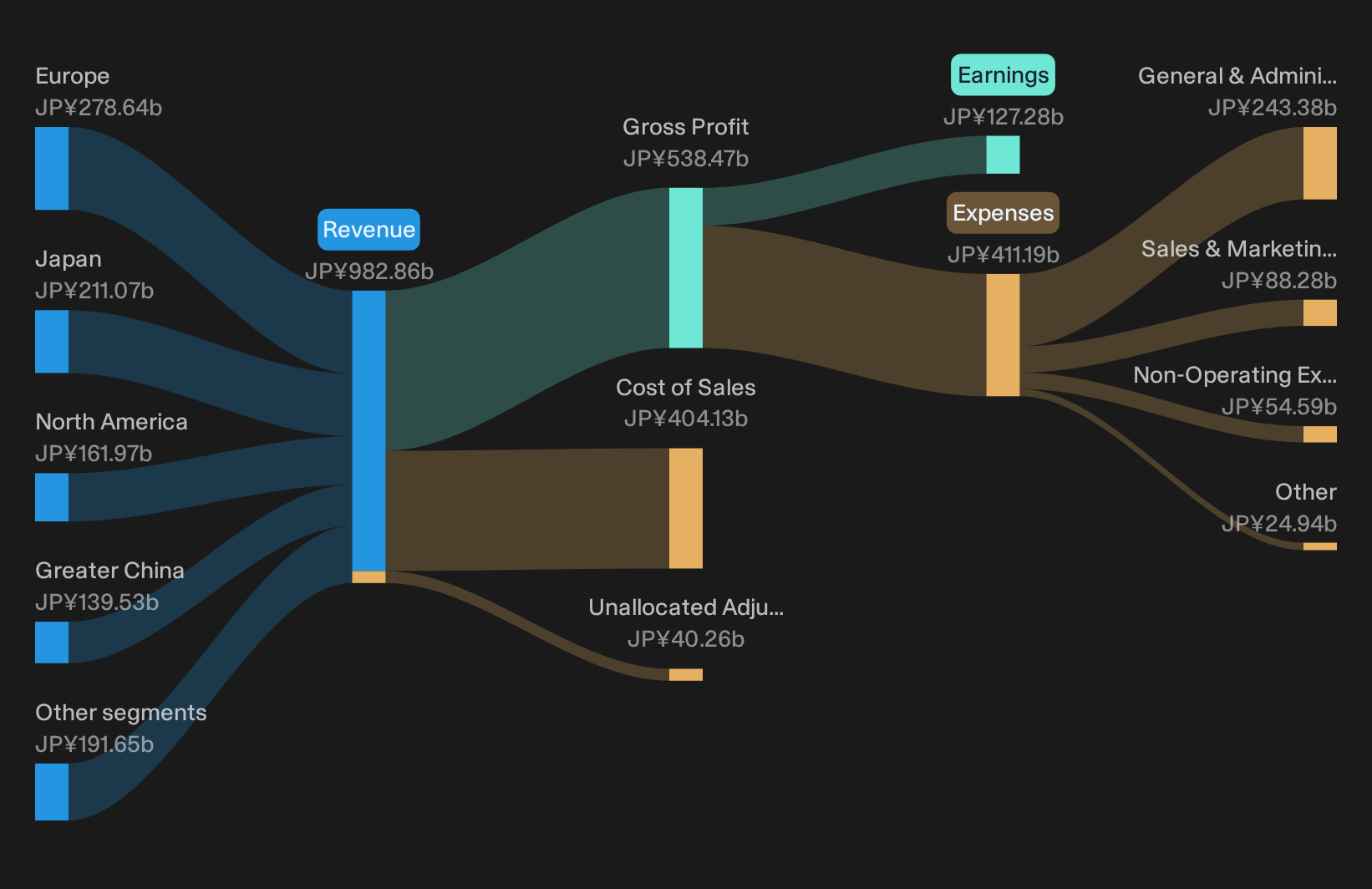
ASICS is a Kobe based sportswear group best known for its running shoes, a cash generative line that supports strong returns on equity and balance sheet strength. It earns about ¥278.6b in Europe, ¥211.1b in Japan and ¥162.0b in North America, and has a market value near ¥3.25t.
ASICS fits into the Solid Balance Sheet and Fundamentals theme, with high ROE supported by a cash rich running-shoe franchise and improving margins. Investors who focus on durable returns and disciplined capital use may want to watch what happens when that profitable footwear engine encounters an unseen pressure on future pricing power.
That kind of pressure point is exactly why you might want to scan the 4 key rewards and 1 important warning sign before pricing power and ROE start to decouple.
Sansan (TSE:4443)
Sansan runs a cloud platform that turns business cards and contracts into shared sales data, with its Sansan and Bill One segment generating about ¥48.9b and the Eight unit adding ¥7.1b, all from Japan. The stock carries a market value near ¥251.5b.
Sansan converts contact and invoice data into recurring SaaS income, which supports high returns on equity and an asset light profile that fits a Solid Balance Sheet and Fundamentals screen. Earnings and margins are improving off a stronger Q1 FY2026. However, long term ROE still hinges on what happens when cross selling into Bill One and Contract One reaches its next test.
When that test arrives for Sansan, go straight to the 3 key rewards and 1 important warning sign to see where recurring revenue strength could be masking emerging pressure points.

Oracle Corporation Japan (TSE:4716)
Oracle Corporation Japan runs a broad software, hardware and cloud toolkit for Japanese enterprises, with its high margin cloud and database services driving the Solid Balance Sheet and Fundamentals screener fit. It carries a market cap of about ¥1.3t.
For Oracle Corporation Japan, the appeal of the Solid Balance Sheet and Fundamentals theme is tied to how efficiently its cloud and database engine turns long term customer relationships into high returns on equity and strong profitability.
"Continued mix shift at Oracle Corporation Japan toward cloud services, with cloud already representing around one third of revenue and management expecting cloud growth to more than offset a gradual decline in license revenue, could support higher total revenue and earnings over time."
The real swing factor is whether one quiet shift in the cost base can keep profit margins as resilient as the cloud story suggests.
That quiet shift could be the real story, and the full narrative for Oracle Corporation Japan shows how Oracle Corporation Japan's margin engine might accelerate or stall from here.
Curious About The Next Alternatives?
Fresh stock ideas can move from quiet to crowded quickly. Spot potential breakouts while they are still under the radar for now. Do not delay, consider getting in early.
- Track where early momentum could be building by scanning 14 high quality undervalued stocks before the crowd starts reacting and potential entry points get caught in fast repricing.
- Look for structural shifts in energy and infrastructure by using 16 nuclear energy infrastructure stocks while sentiment is still forming and quality operators are not yet in the headlines.
- Target long term cash flow support with 29 dividend fortresses before yields change, so you can assess income focused opportunities while the numbers still look fresh.
This article by Simply Wall St is general in nature. We provide commentary based on historical data and analyst forecasts only using an unbiased methodology and our articles are not intended to be financial advice. It does not constitute a recommendation to buy or sell any stock, and does not take account of your objectives, or your financial situation. We aim to bring you long-term focused analysis driven by fundamental data. Note that our analysis may not factor in the latest price-sensitive company announcements or qualitative material. Simply Wall St has no position in any stocks mentioned.
Have feedback on this article? Concerned about the content? Get in touch with us directly. Alternatively, email editorial-team@simplywallst.com