


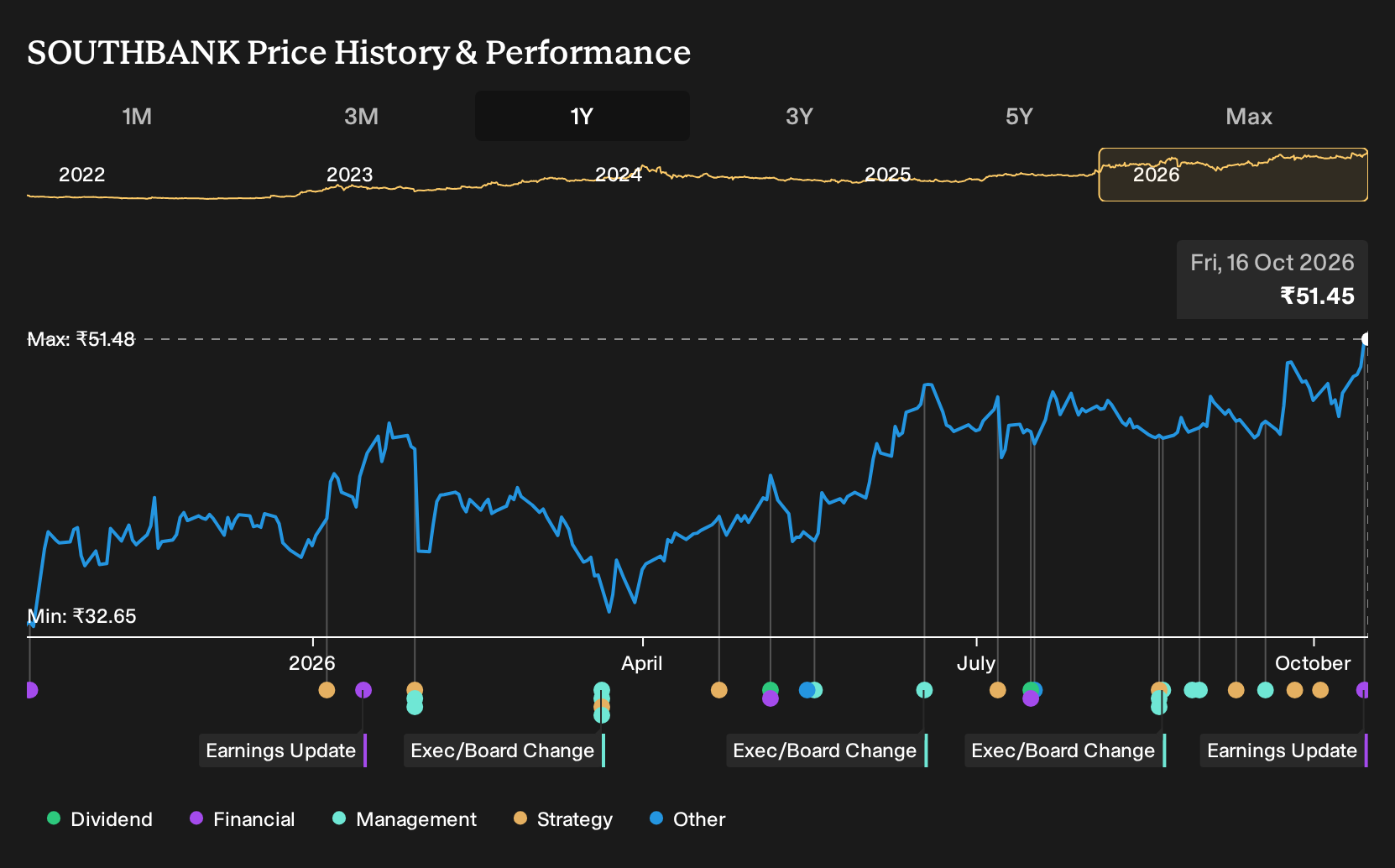
South Indian Bank looked pulled in two directions over this period. On one side, analysts were split between upbeat digital lending hopes and worries about fintech pressure and compliance costs. On the other, the latest results show higher revenue, higher profit and a wider net margin. Holding South Indian Bank over the past year would have returned 59.1%, including dividends. If you had bought at the start, what exactly in 2025 would have justified taking that risk?
A Narrative on Simply Wall St is one investor's written case for a company, with its growth, margin and multiple assumptions spelled out. Those assumptions imply an estimated Fair Value.
South Indian Bank has already moved. See which of 193 high quality undervalued stocks still trade below our estimates.
The Argument South Indian Bank Investors Were Really Having
Shares in South Indian Bank cost ₹32.95 at the start of the period, and investors were weighing two very different stories about what might come next.
The upbeat narrative saw fair value at ₹35.57. It assumed new digital lending platforms and MSME expansion outside Kerala would lift transaction volumes and fee income, with higher CASA growth lowering funding costs.
The pessimistic view put fair value at ₹25. It focused on slower digital progress, rising fintech competition and tighter regulation increasing compliance costs and pressuring profitability over time.
What The Results Changed For South Indian Bank
The clearest new fact was South Indian Bank reporting total revenue of ₹12,610.3m in Q2 2026 and ₹14,248.5m in Q2 2027, with net income rising from ₹3,515.9m to ₹4,263.4m. Net margin moved from 27.9% to 29.9%. Taken together, these figures supported the more optimistic view that focused on improved profitability.
The key lesson is where to look first. When a story turns on efficiency and pricing power, track net margin across periods and see whether it actually widens alongside revenue, rather than relying on headline growth alone.
What Today's South Indian Bank Price Already Expects
South Indian Bank now trades at ₹51.45. The selected Narrative places its Fair Value below that mark and argues the recent one year gain leaves less room for error in how capital, funding and fee income trends play out.
A buyer today effectively assumes current profitability and balance sheet growth remain resilient. The question is how that squares with concerns around higher risk retail and MSME exposure, softer fees and the coming CEO change.
"Despite very low reported NPA ratios and high provision coverage, the planned redeployment of a roughly 19.6% capital adequacy buffer into higher risk density MSME and retail exposures raises the possibility that even a modest rise from currently low credit costs would have a larger impact on profitability than consensus expects, since higher risk weighted assets can dilute net margin and earnings if loss rates worsen from this trough."
Not everyone reads the same price the same way. → See the lower figure this Narrative lands on, and how it gets there
Looking Beyond South Indian Bank
Once you understand South Indian Bank, it is natural to look sideways. Your question quietly becomes whether similar digital models travel well.
One adjacent player focuses on mobile banking from the start. It strips out branches and leans on software, data and automation.
That approach aims to keep servicing costs lean while expanding product breadth. Customers manage spending, saving, borrowing and even insurance through a single app.
If that kind of platform keeps compounding features and trust, the role can shift. You are no longer just watching a lender, but a broader financial hub.
That argument has a Narrative and a number behind it. → See the company one Narrative values 54% above its price
This article by Simply Wall St is general in nature. We provide commentary based on historical data and analyst forecasts only using an unbiased methodology and our articles are not intended to be financial advice. It does not constitute a recommendation to buy or sell any stock, and does not take account of your objectives, or your financial situation. We aim to bring you long-term focused analysis driven by fundamental data. Note that our analysis may not factor in the latest price-sensitive company announcements or qualitative material. Simply Wall St has no position in any stocks mentioned.
Have feedback on this article? Concerned about the content? Get in touch with us directly. Alternatively, email editorial-team@simplywallst.com