


Older Americans now hold the bulk of US wealth, and their spending power is increasingly shaped by what happens to housing and financial markets. That tilt creates a powerful current that can help or hurt companies serving affluent retirees. Miss that current and you miss where a lot of real demand is coming from. This article walks through three stocks from our screener that appear especially exposed to this story.
The three stocks below are just a sample from this theme. The full screen surfaced 23 more US-listed companies tied to affluent older consumers that carry similarly detailed business stories not covered here yet.
If you want to identify and analyze the wider opportunity set around senior housing, healthcare, and leisure for retirees, head straight into the US Companies Serving Affluent Older Consumers screener.
Welltower (WELL)
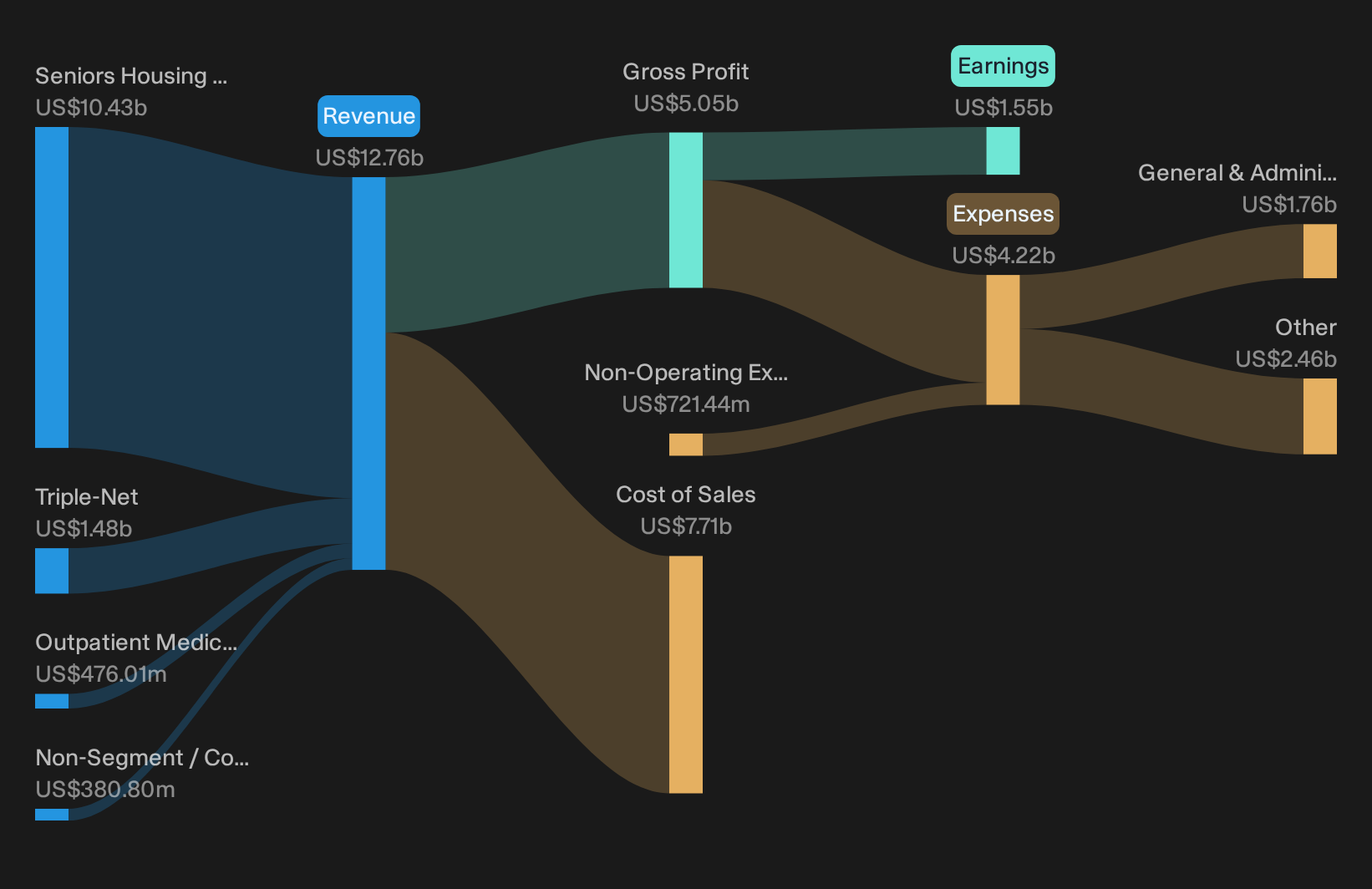
Welltower is one of the clearest plays on affluent seniors choosing purpose built rental communities, with most of its money coming from seniors housing operating assets that generated about US$10.4b, alongside US$1.5b from triple net leases and US$476 million from outpatient medical properties. This gives the REIT a roughly US$169.1b market value.
Affluent retirees with rising housing and portfolio wealth are not just buying financial assets, they are renting lifestyle, care, and community. Welltower leans directly into that shift by owning and operating the places where older, higher net worth households choose to live.
"Welltower has launched a private fund management business that now includes a fully committed US$2.5b U.S. seniors housing equity fund and an approximately US$750m debt fund. This can add fee-based, capital-light revenue alongside rental income and support earnings growth."
What that could mean for margins and demand hinges on how one quiet pressure in the seniors housing market resolves over the next few years.
That pressure point is exactly where Welltower’s story gets interesting, and the full narrative for Welltower shows how fee income, capital flows, and demand could be decoupling from old cycle patterns.
LTC Properties (LTC)
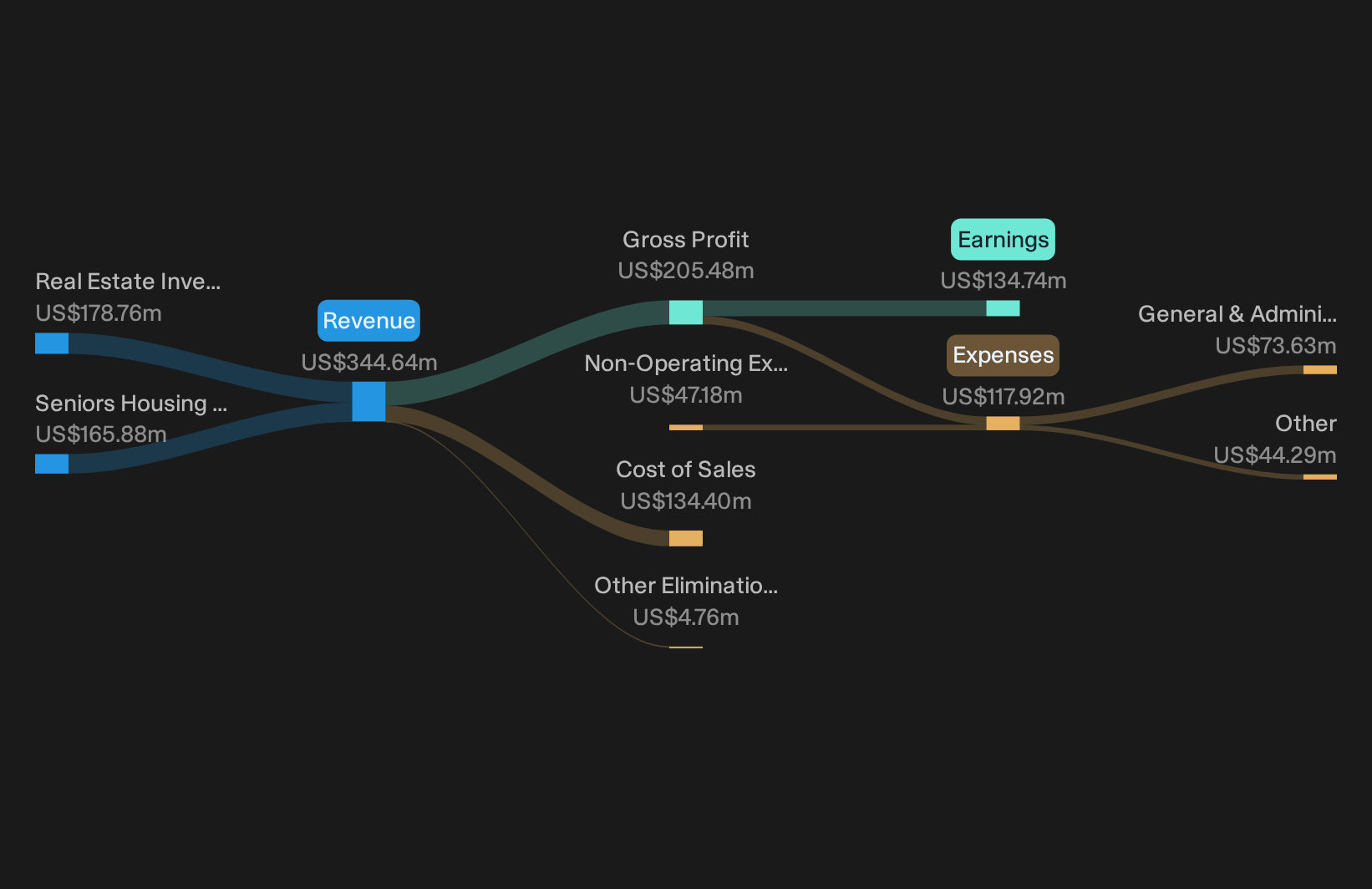
LTC Properties offers a cleaner way to tap into affluent seniors’ housing and care spending, pooling nearly 180 US communities into a single REIT that earns US$178.76 million from its real estate investment portfolio, US$165.88 million from its SHOP segment, and holds a roughly US$2.3 billion market value.
For investors tracking how wealthier retirees are reshaping demand for assisted living and healthcare real estate, LTC Properties is a direct line into that trend and its next phase of portfolio reshaping.
"LTC Properties is rapidly reallocating capital from skilled nursing and other triple-net assets into SHOP assets, with guidance that SHOP could reach 50% of NOI by the end of 2026 and a pathway to 75% by 2028."
What happens if one quiet assumption about how those newer SHOP communities fill up and price their rooms proves only half right will matter a lot.
If that assumption is only half right, the full narrative for LTC Properties lays out how LTC Properties’ SHOP pivot could still accelerate or stall under different demand and pricing scenarios.
Ensign Group (ENSG)
Ensign Group plugs directly into the affluent aging theme, running skilled nursing and senior living facilities where older adults pay for higher-acuity, longer-stay care, with about US$5.3b from Skilled Services, US$147 million from Standard Bearer, US$250 million from All Other, and a roughly US$10.3b market value.
For Ensign Group, that surge in wealth and healthcare spending among older Americans is not an abstract macro story. It shows up in beds filled, case complexity, and the length of stay across its skilled nursing and senior living facilities. Together, these operations anchor its role in this screener.
"Ageing demographics and growing post acute care needs are supporting higher patient volumes, which can sustain occupancy and skilled mix levels across Ensign Group facilities and influence long term revenue growth and earnings."
The real swing factor is how one quiet shift in reimbursement and care mix shapes what those higher patient volumes actually mean for future margins.
That reimbursement shift is exactly where Ensign Group’s story sharpens, and the full narrative for Ensign Group explains how pricing, care mix, and volume could be quietly accelerating or stalling.

Curious About Seeking Smart Alternatives
Fresh ideas move fast. Some themes build quiet momentum, and others start breaking out before headlines catch up. Scan these curated lists while it matters and get in early.
- Track resilient operators with strong cash generation and sturdy balance sheets by running your eye over the list of solid balance sheet and fundamentals (25 results).
- Explore structural demand for secure payments and blockchain infrastructure by working through the curated 18 cryptocurrency and blockchain stocks.
- Look for income ideas with payout strength and staying power by zeroing in on the 8 dividend fortresses.
This article by Simply Wall St is general in nature. We provide commentary based on historical data and analyst forecasts only using an unbiased methodology and our articles are not intended to be financial advice. It does not constitute a recommendation to buy or sell any stock, and does not take account of your objectives, or your financial situation. We aim to bring you long-term focused analysis driven by fundamental data. Note that our analysis may not factor in the latest price-sensitive company announcements or qualitative material. Simply Wall St has no position in any stocks mentioned.
Have feedback on this article? Concerned about the content? Get in touch with us directly. Alternatively, email editorial-team@simplywallst.com