


- Recent announcements from partners such as Bloomberg Law, Trellis, Wood Mackenzie, Resilinc and Tucuvi show Microsoft Copilot and Azure being embedded directly into legal, energy, healthcare and supply chain workflows, tying AI usage to real operational tasks rather than stand alone pilots.
- This spread of domain specific connectors and plugins suggests Microsoft is turning its AI infrastructure into a cross industry utility layer, which can reinforce recurring usage as customers run more specialized, data intensive work through the same cloud and Copilot stack.
- We will now look at how Microsoft’s AI driven workload expansion through Copilot connectors shapes the broader investment narrative around the business.
Microsoft Investment Narrative Recap
To own Microsoft, you need to believe its huge AI and cloud buildout will translate into durable usage across Azure, Copilot and the wider software portfolio. The recent wave of Copilot connectors in legal, energy and supply chain points in that direction, but does not change the near term picture where AI demand needs to keep filling rapidly expanding capacity.
The key short term swing factor remains whether this AI driven workload ramp can offset pressure from heavy capital spending and mix driven gross margin strain. The main risk stays the same. If AI or cloud usage slows versus Microsoft’s US$175b to US$190b 2026 capex plans, free cash flow and margins could be squeezed.
The Wood Mackenzie integration into Microsoft Copilot looks especially relevant. It shows how AI services are being wired into deep, domain specific datasets, not just generic productivity use cases. For energy and natural resources clients, that means more work flowing through the same Azure and Copilot backbone as part of everyday analysis, not side projects.
For investors watching catalysts, that kind of embedded usage is what needs to scale to justify Microsoft’s AI infrastructure spend and support recurring cloud income. It also highlights an execution risk. The firm must keep these MCP based connectors secure, reliable and easy to deploy at enterprise scale. Any stumble there could feed existing concerns about regulation, security and capital intensity.
Microsoft's narrative centres on analysts expecting revenues of US$570.0b and earnings of US$216.7b by 2029, which corresponds to 19.8% yearly revenue growth and an earnings increase of about US$83.0b from US$133.7b today.
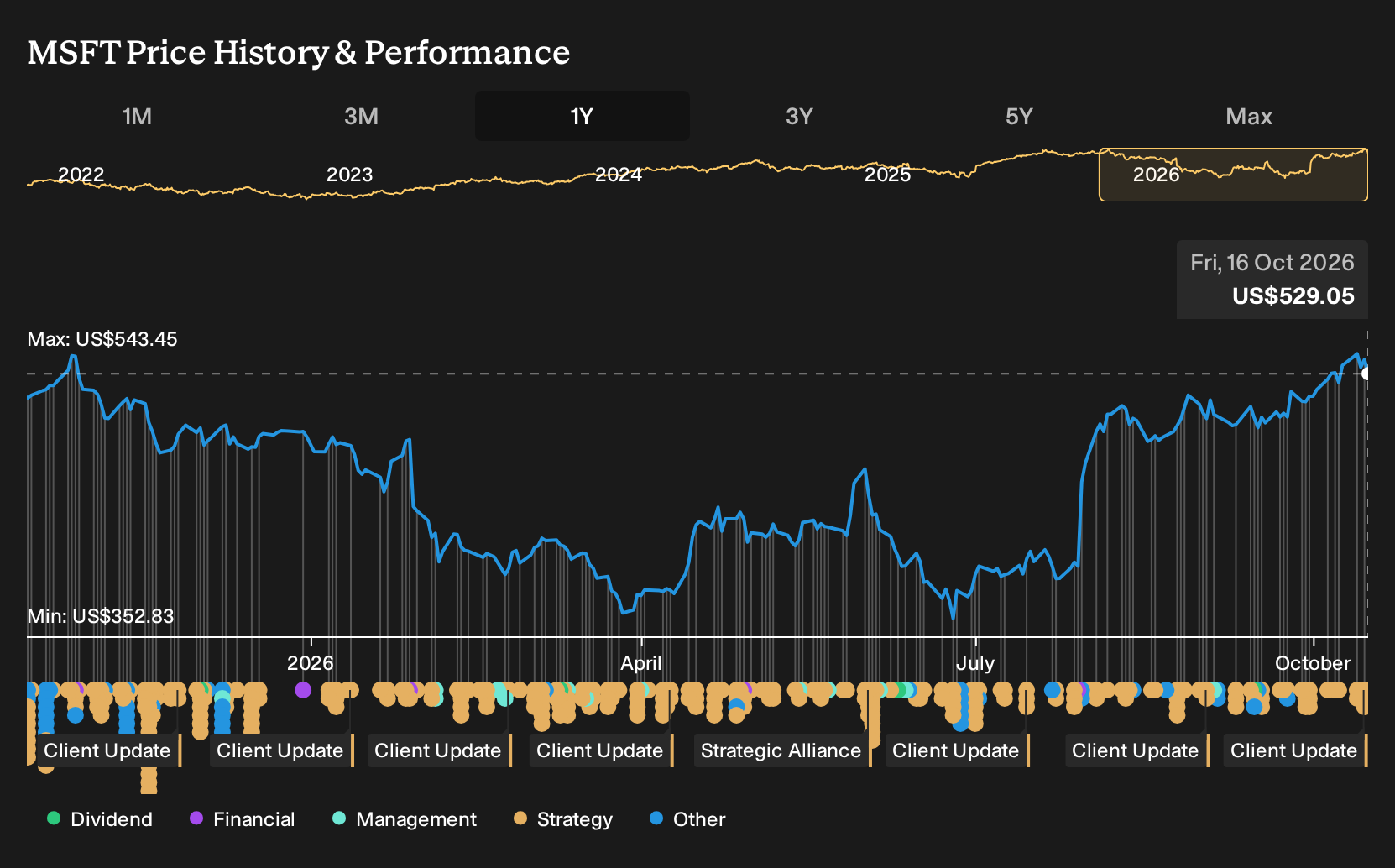
Uncover why Microsoft's fair value points to a 13% potential upside to its current price, which could narrow quickly as investors reassess Microsoft's AI rollout.
Exploring Other Perspectives
One alternate view focuses on margin pressure rather than the Copilot connector momentum you are seeing today. The most cautious analysts were assuming Microsoft would reach about US$508.6b in revenue and US$204.6b in earnings by 2029, with a lower P/E of 20.9x, reflecting concern that heavy AI capital spending could weigh harder on returns. Those expectations were formed before these MCP integrations. You may want to compare both narratives and decide which assumptions feel closer to how you think this AI rollout evolves from here.
Explore 59 other Microsoft fair value estimates, including one that suggests as much as 25% downside from the current price!
Form Your Own Verdict
Don't just follow the ticker. Dig into the data and build a conviction that's truly your own.
- A great starting point for your Microsoft research is our analysis highlighting 3 key rewards and 1 important warning sign that could impact your investment decision.
- See our latest analysis for Microsoft. The report includes a comprehensive fundamental analysis summarized in a single visual, the Snowflake, making it easy to evaluate Microsoft's overall financial health at a glance.
Looking For More Investment Ideas Beyond Microsoft?
Once you have a view on Microsoft, it can help to cross check that thesis against other opportunities using the Simply Wall St Screener so you can see how different business models and balance sheets stack up side by side.
- If you care most about quality at a sensible entry point, scan our hand picked set of 33 high quality undervalued stocks that combine strong fundamentals with prices that still look reasonable on the numbers.
- If capital preservation sits high on your list, filter for stability and lower risk profiles using a 32 resilient stocks with low risk scores that focuses on more resilient financial and volatility characteristics.
- If you want to broaden the opportunity set beyond well known giants like Microsoft, cast a wider net across 20 high quality undiscovered gems that pair solid fundamentals with relatively low market attention.
This article by Simply Wall St is general in nature. We provide commentary based on historical data and analyst forecasts only using an unbiased methodology and our articles are not intended to be financial advice. It does not constitute a recommendation to buy or sell any stock, and does not take account of your objectives, or your financial situation. We aim to bring you long-term focused analysis driven by fundamental data. Note that our analysis may not factor in the latest price-sensitive company announcements or qualitative material. Simply Wall St has no position in any stocks mentioned.
Have feedback on this article? Concerned about the content? Get in touch with us directly. Alternatively, email editorial-team@simplywallst.com