


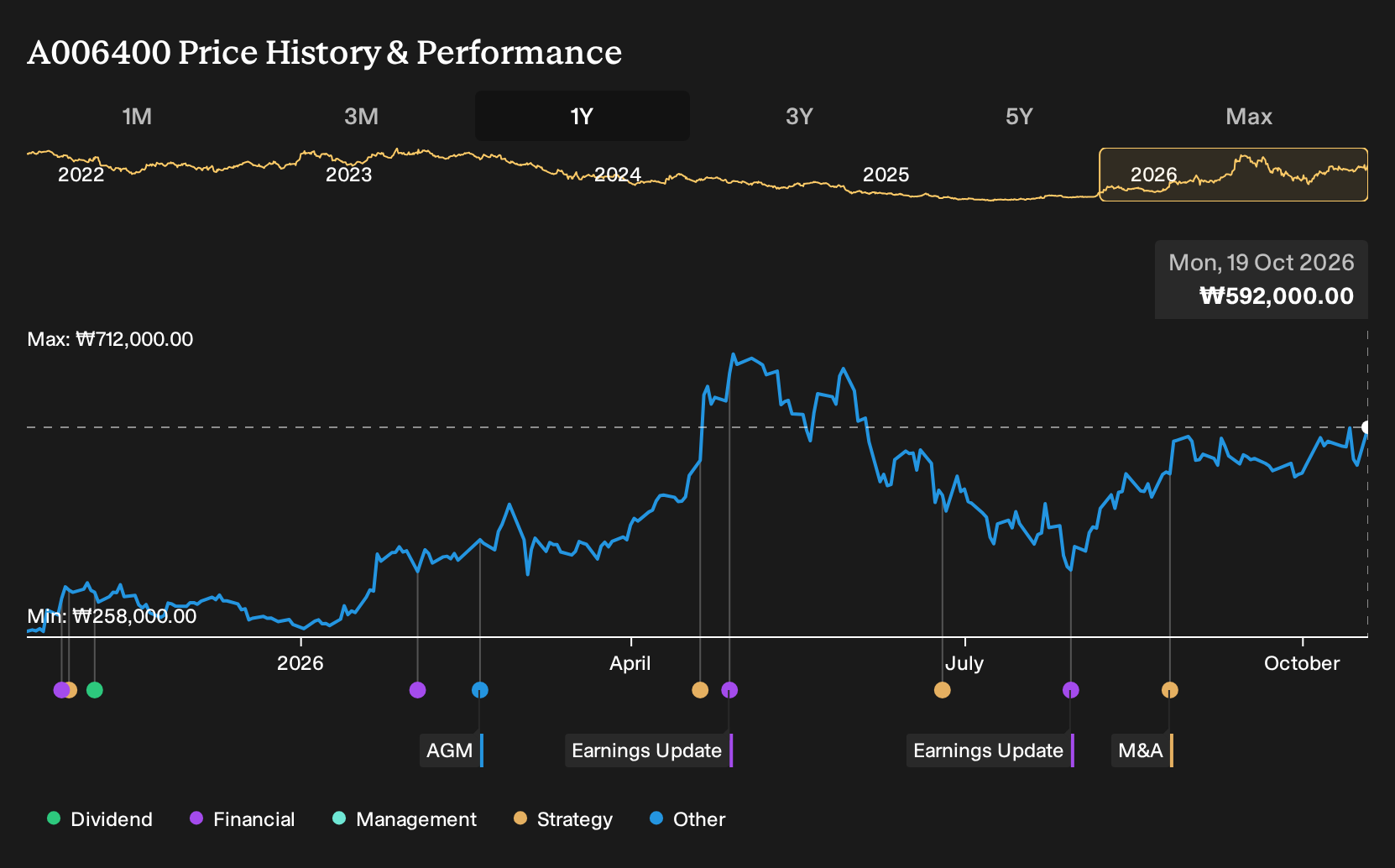
Fresh concern over how to fund huge AI infrastructure projects recently hit Asian tech stocks, and Samsung SDI dropped 6.8% in that selloff even as the market absorbed stronger Q2 2026 revenue and a swing from loss to profit. Holding Samsung SDI over the past year would have returned 126.9%, including dividends. If you had been weighing a purchase back on 19 October 2025, what would have needed to feel credible before that outcome looked possible?
The useful thing about a Narrative is that the reasoning is checkable: the assumptions sit beside the argument, and together they imply an estimated Fair Value you can disagree with.
The easy part of this move is behind Samsung SDI. Zero in on 192 high quality undervalued stocks for companies trading below our estimates.
The Argument Samsung SDI Investors Were Really Having
The shares cost ₩256,000 at the start of the period, and anyone eyeing Samsung SDI then had to choose between two very different but reasonable stories about where the business might head next.
The bullish Narrative put Fair Value at ₩440,565 and leaned on the idea that prismatic and 46-phi cylindrical batteries, ESS projects, and premium device cells could support revenue growing 28.6% a year with margins moving from a loss to 10.9%.
The more cautious Narrative set Fair Value at ₩236,595 and treated 16.4% annual revenue growth with an 8.0% margin as more realistic, while flagging that heavy reliance on EV batteries and localization hurdles could keep profitability under pressure.
What The Results Changed For Samsung SDI
Quarterly numbers did the heavy lifting. Samsung SDI reported Q2 2026 revenue of ₩3,768,808.12m versus ₩3,179,406.07m a year earlier, and net income moved from a loss of ₩161,287.50m to a profit of ₩335,931.99m. Net margin shifted from a -5.1% loss to 8.9%. That profitability swing supported the optimistic case more than the cautious one.
The key lesson is about testable assumptions. When a story leans on margin repair, you can track it directly in net income and net margin, rather than only watching top-line growth or share price moves.
What Samsung SDI’s Price Already Assumes
Samsung SDI now trades at ₩591,000 after a 126.9% gain over the past year, and the selected Narrative’s Fair Value sits below that market price.
The Narrative centres on whether energy storage, European auto clients and electronic materials can carry the load while battery losses, high R&D and heavy CapEx persist. For today’s valuation to hold, an investor would need confidence that ESS related demand keeps funding those large battery investments before operating cash flow fully covers them.
"The numbers imply the current Samsung SDI share price reflects confidence that ESS demand tied to AI data centers, localized supply chains and new chemistries will more than justify the ongoing R&D and CapEx burden that is not yet covered by operating cash flow."
Not everyone reads the same price the same way. → See the lower figure this Narrative lands on, and how it gets there
How Could You Get There Earlier?
What if your next investment idea came before the headlines? Go straight to the companies whose prices and our estimates still disagree. Three places to start, with the names waiting behind the link.
- Company 1 - 42% below our estimate - helps clients resolve AI failures, regulatory investigations and complex technical product incidents.
- Company 2 - 32% below our estimate - pushes electronics shoppers from physical outlets into its upgraded, data-driven ecommerce channel.
- Company 3 - 46% below our estimate - turns expanding data center and modular construction work into recurring mechanical service contracts.
That is three of the list. See all 203 companies with the balance sheet to back it up →
This article by Simply Wall St is general in nature. We provide commentary based on historical data and analyst forecasts only using an unbiased methodology and our articles are not intended to be financial advice. It does not constitute a recommendation to buy or sell any stock, and does not take account of your objectives, or your financial situation. We aim to bring you long-term focused analysis driven by fundamental data. Note that our analysis may not factor in the latest price-sensitive company announcements or qualitative material. Simply Wall St has no position in any stocks mentioned.
Have feedback on this article? Concerned about the content? Get in touch with us directly. Alternatively, email editorial-team@simplywallst.com