


The Zhitong Finance App learned that Goldman Sachs Group said that due to the Middle East war, global crude oil shipping costs have risen seven times that of a year ago, and freight rates may remain high for some time. Analysts, including Yulia Zhestkova Grigsby, pointed out in the report that the average rate of crude oil shipping has risen from $3 per barrel a year ago to more than $20 per barrel. This increase in freight rates includes a number of costs: the war risk premium in the Strait of Hormuz is $7 per barrel; the impact of rising fuel costs and ship-to-ship transfers is $4 per barrel, respectively.
Analysts said that freight rates remained high for a longer period of time, posing a certain upward risk to their Brent crude oil price predictions. At the same time, more intense shipping attacks, damage to oil infrastructure, and more entrenched geopolitical risk premiums are also risk factors to pay attention to. Currently, Goldman Sachs's baseline forecast for Brent crude oil is to drop to $90 per barrel by the end of the year.
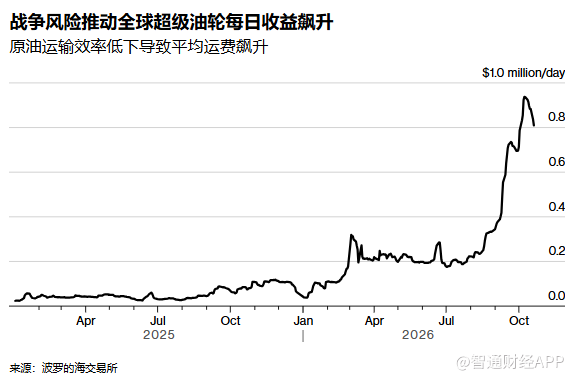
After the outbreak of the US-Iran War, ships were attacked in the Persian Gulf and surrounding waters, and the global shipping market was impacted. At the beginning of the conflict, the volume of goods transported through the Strait of Hormuz dropped sharply, but since then it has recovered somewhat. The ship is still shuttling through the disputed waterways, transferring the goods to large tankers, and then delivering them to refiners for processing.
Goldman Sachs analysts believe that high crude oil freight rates may reduce refiners' overall demand for crude oil because the “effective price” of crude oil delivery rises. The report also said that refiners may switch to closer suppliers, thereby changing the established trade model.
Regarding freight prospects, Goldman Sachs analysts said that as long as the Middle East conflict remains in its current state, the factors supporting crude oil freight rates will generally continue to exist. The report also mentioned that currently in the Persian Gulf and the Gulf of Oman, nearly one-sixth of oil tankers are used for ship-to-ship transfers every day.